Background - 18.09.2026 - 14:00
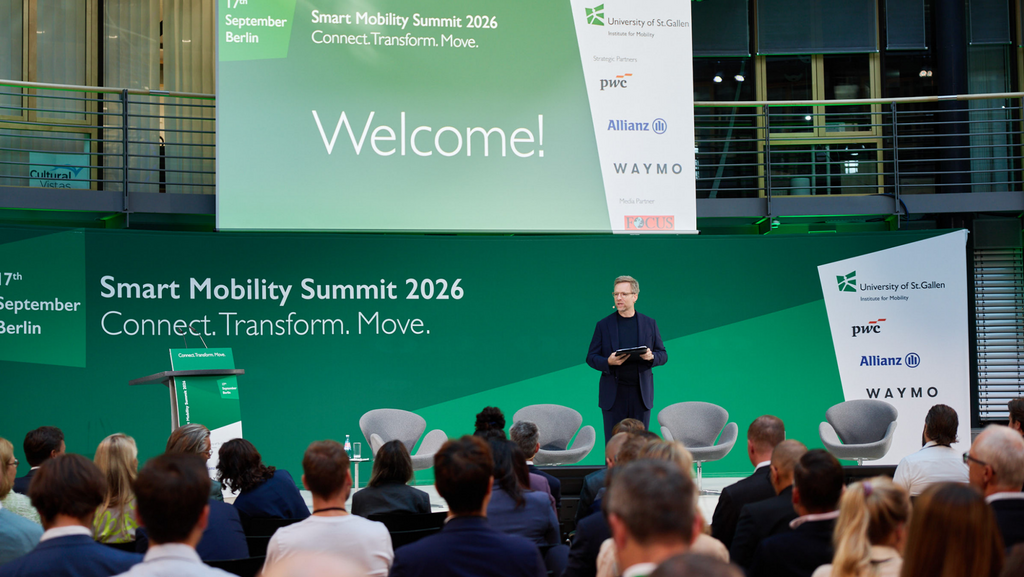
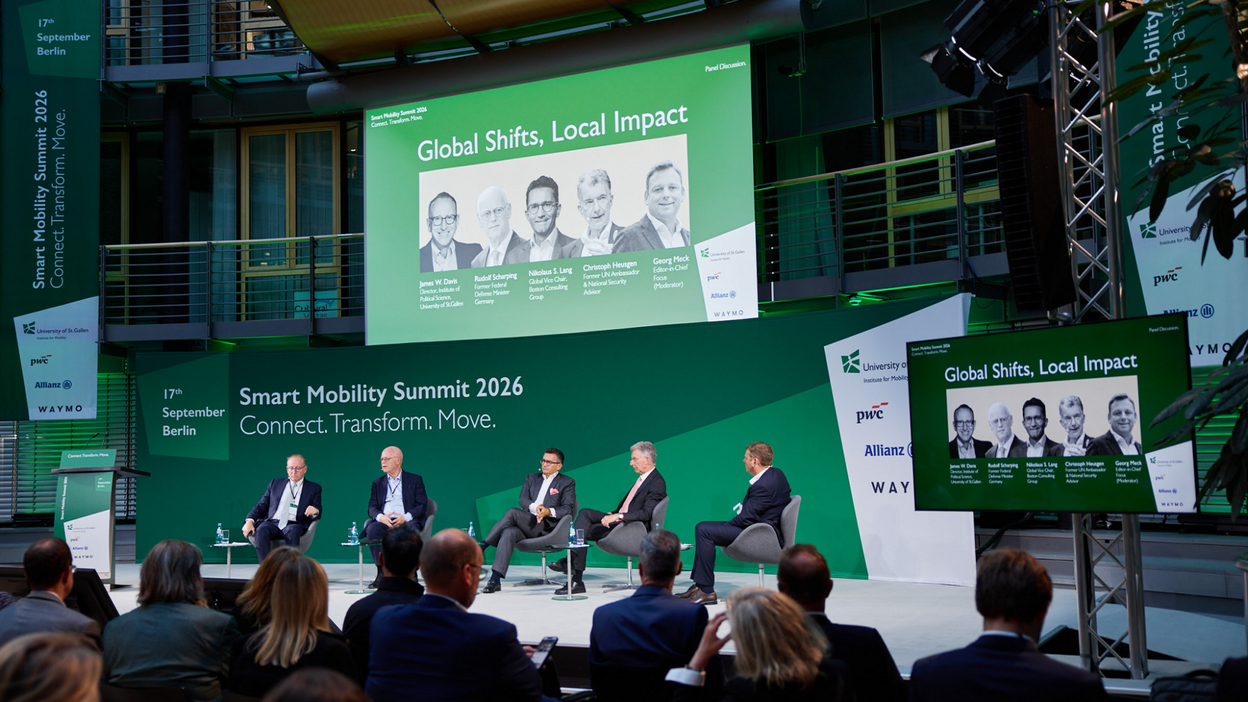
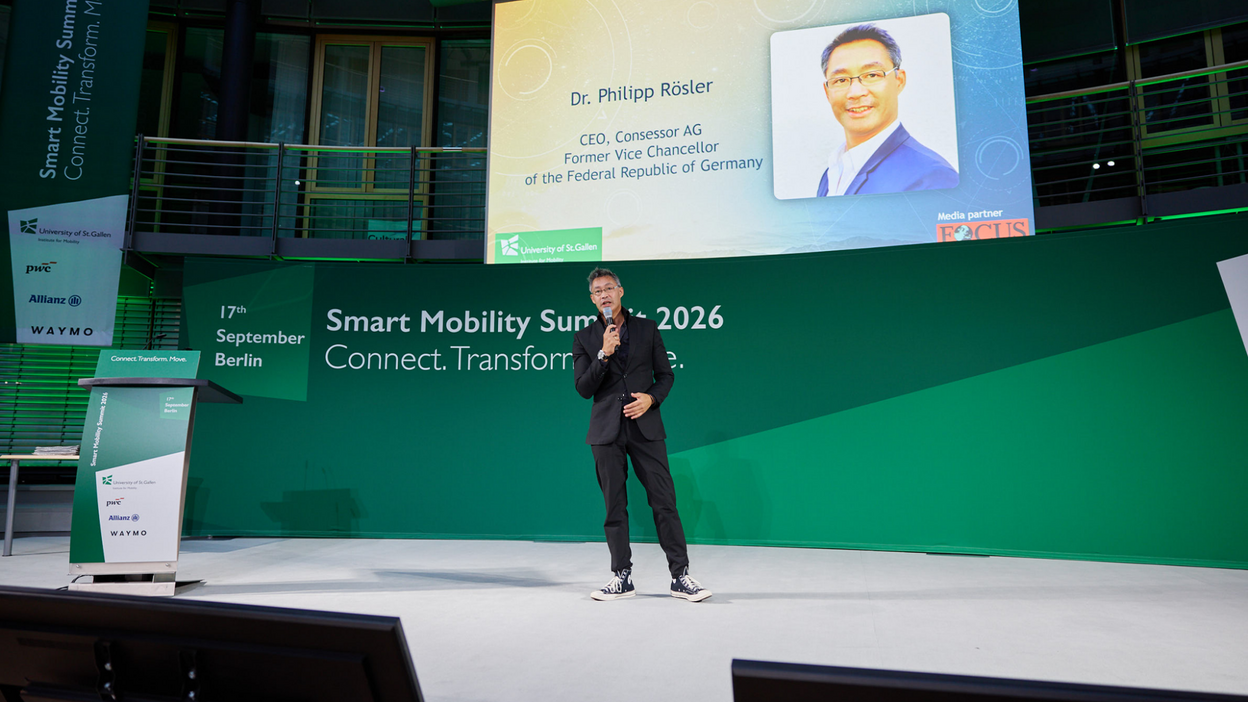
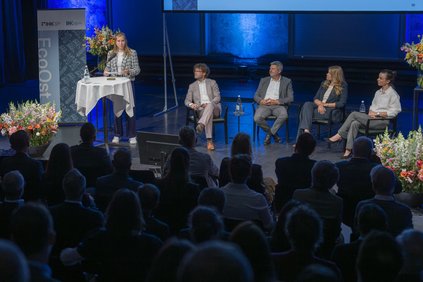
A specter is haunting Europe—the specter of the Chinese automotive industry. This became clear at the 5th Smart Mobility Summit, which took place in Berlin. Experts and executives are invited to this exclusive event, united by a common goal: to make today’s mobility better, more efficient, more sustainable, and more inclusive. In doing so, they focus not only on technical or industry-specific aspects but also keep the big picture in mind. For example, the current geopolitical upheavals were the focus of the panel discussion featuring former German Federal Minister of Defense Rudolf Scharping, HSG professors James Davis and Christoph Heusgen—former head of the Munich Security Conference—as well as Nikolaus Lang, Managing Director & Senior Partner at the BCG Institute. Under the astute moderation of Georg Meck, editor-in-chief of Focus, topics such as maintaining supply chains and the division of the world into new spheres of influence were discussed. “These upheavals will continue to intensify,” warned Rudolf Scharping. The unanimous opinion was that Europe must collaborate more effectively, including with other partners such as Canada and Australia.
How should we deal with increasing competition from the Far East? This was the focus of the panel discussion, which was moderated by Professor Zheng Han of Tongji University in Shanghai. The discussion highlighted just how fierce competition is in the Chinese auto industry and that many manufacturers will not survive it. However, it is expected that the best Chinese companies will play an important role in the global market in the future. Nevertheless, not everything from China can or should be copied. Culture, regulations, and customer expectations in Europe differ too greatly. When it comes to decision-making, pragmatism, courage, and the flexibility to adapt as the process unfolds, however, there is much to be learned from China.
Another panel discussion on urban mobility demonstrated that it is not only international competition that is challenging the European industry. Anna König Jerlmyr, former mayor of Stockholm, highlighted how Stockholm has transformed itself to enable a massive expansion of non-motorized transportation. New traffic routings have reduced the importance of car traffic. In many cities, this reflects political will: space for transportation infrastructure is becoming scarce and is competing more and more with other priorities. The buzzword “Tactical Urbanism” was bandied about. This development offers opportunities for new concepts and business models: customers don’t buy tickets; they buy journeys. The integration of different means of transportation is therefore likely to become more important in urban areas—including between cities and different mobility providers.
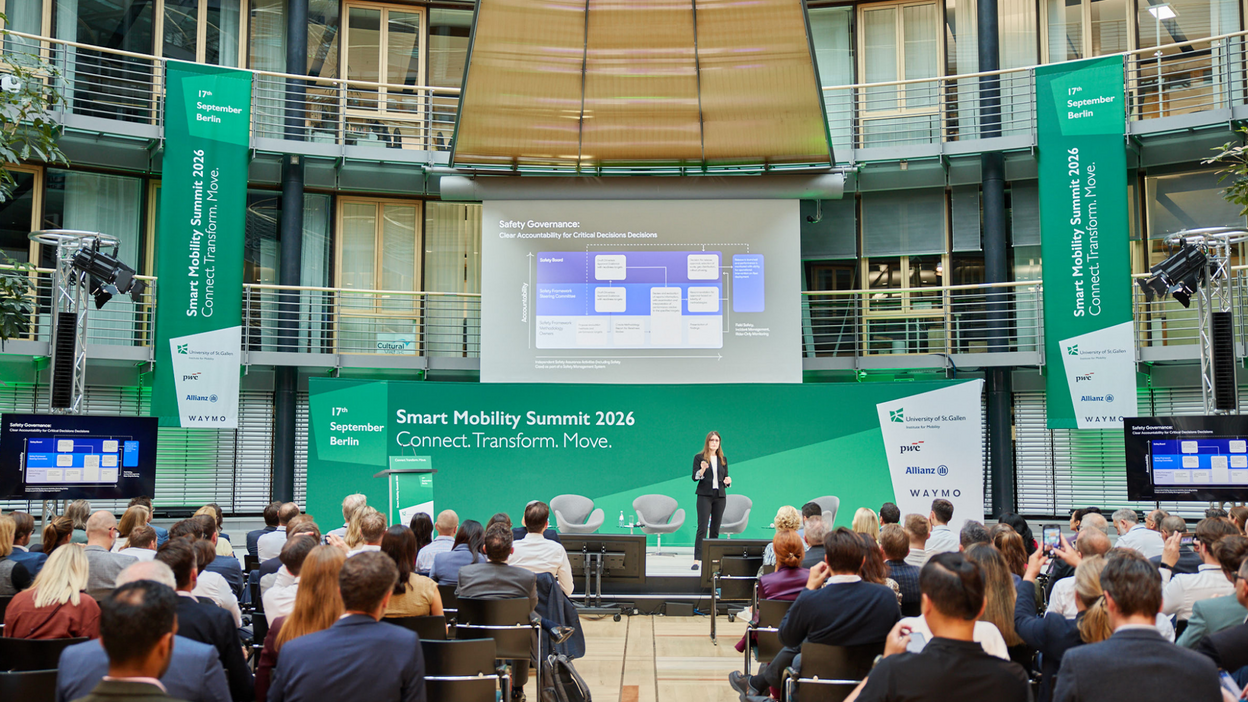
Autonomous driving has always been a dominant theme at the summit. In her keynote address, Tilia Gode, Head of Risk & Insurance at Waymo, outlined the expansion plans that the Alphabet subsidiary is pursuing in Europe: The company recognizes that Europe is a different market and that public transportation plays a more important role than in the U.S. “We want to integrate our services seamlessly into the existing transportation mix.” The rollout will begin in Munich, where a fully autonomous ride-hailing service is set to launch toward the end of 2027. To this end, the company has announced a partnership with Allianz. According to Waymo’s data, automated transportation reduces serious accidents and injuries by 94 percent.
The subsequent panel discussion, during which she spoke with, among others, John Moavenzadeh, Executive Director of the MIT Mobility Initiative, and Christian Sahr, Director of the Allianz Center for Technology, highlighted a few obstacles on the path to market penetration: Regulations regarding the approval of autonomous vehicles still vary widely across Europe. As a result, scaling across multiple countries has not happened as quickly as had been expected.
Now in its fifth year, the Smart Mobility Summit has evolved into a key platform for mobility concepts. To further strengthen this community, the Institute for Mobility (IMO-HSG) at the University of St.Gallen is launching the “Mobility Pioneers” association, featuring high-profile members committed to the mobility transformation. The association fits well into the institute’s existing portfolio, which includes, for example, the well-established “CAS Smart Mobility Management” program and will launch the continuing education program “Future Automotive Business Leader” for the first time in March 2027.
It remains to be seen what insights the industry will take away from the summit to make mobility even “smarter” in the future. However, it became clear who the key trailblazers are: A high-caliber jury presented the “Mobility Trailblazer Award” nine times for outstanding achievements in the context of the mobility transformation in the DACH region. In his laudatory speech, former Vice Chancellor Philipp Rösler praised the award winners for their important contributions to making mobility more efficient, sustainable, and inclusive. The 2026 award winners, listed in alphabetical order, are:
Photos: Finnegan Godenschweger
Weitere Beiträge aus der gleichen Kategorie
Das könnte Sie auch interessieren