Background - 13.11.2026 - 16:00
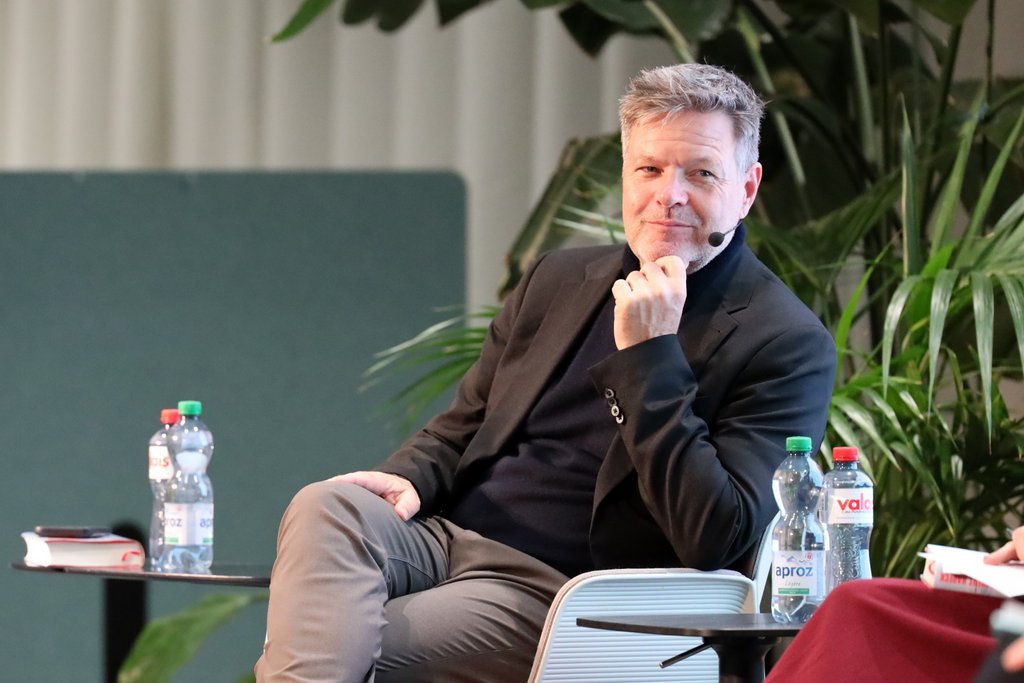
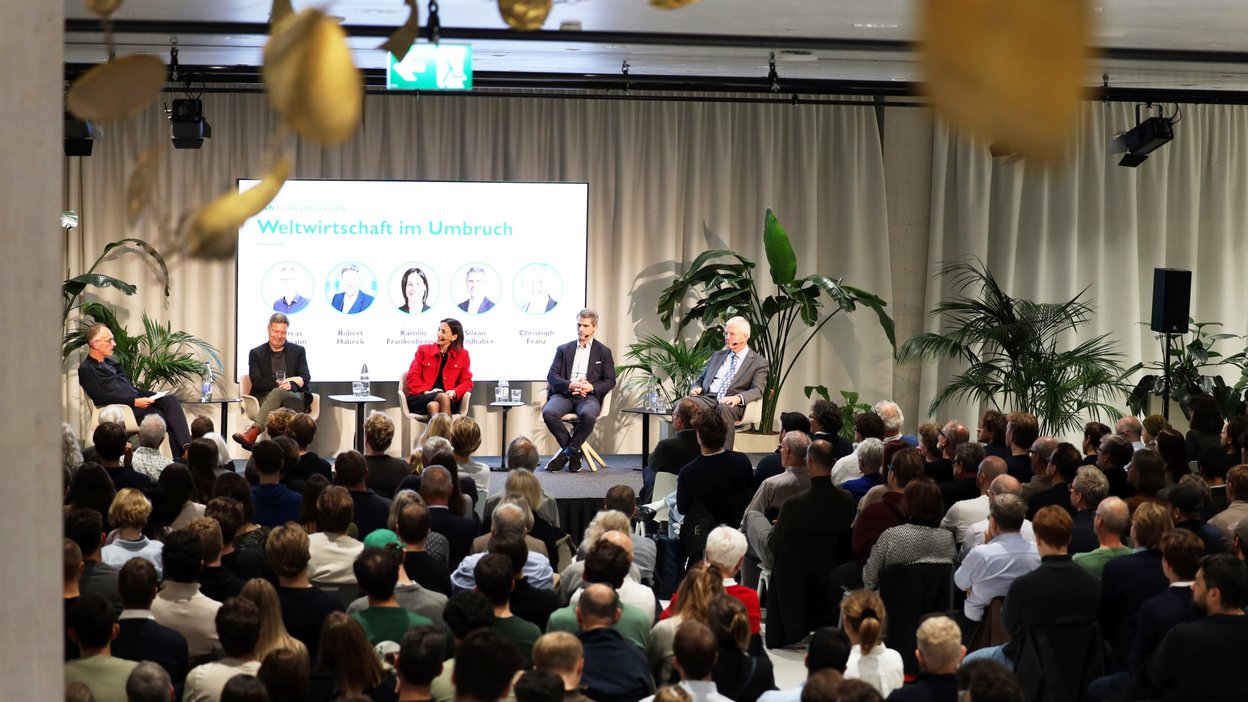
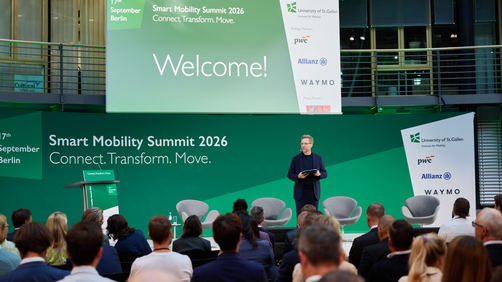
Robert Habeck's three-day residency at SQUARE began on 11 November 2026 with the panel discussion "A World Economy in Upheaval". During his visit to HSG, Habeck repeatedly called for the targeted promotion of strategically important innovations in Europe, for example through partnerships between the state and businesses.
Joining Habeck in the discussion were Karolin Frankenberger from the Executive School at the University of St.Gallen, economiesuisse President Silvan Wildhaber and manager Christoph Franz. HSG Professor of Mobility Andreas Herrmann moderated the evening. The panel discussed joint European investments and how Europe can balance values and strategic interests in its foreign policy. Last but not least, the discussion centred on the question of whether European states had "missed the boat" on certain developments in Asia or Africa.
A student asked how China had expanded its influence over the ports of Piraeus and Hamburg seemingly unnoticed by European policymakers. Habeck criticised the long-held belief in "change through trade", which had not proved effective when it came to control points at ports. China is securing influence by acquiring companies, raw materials and strategically important infrastructure. "We cannot form alliances only with countries that fully share our values," Habeck noted with a sense of realism.
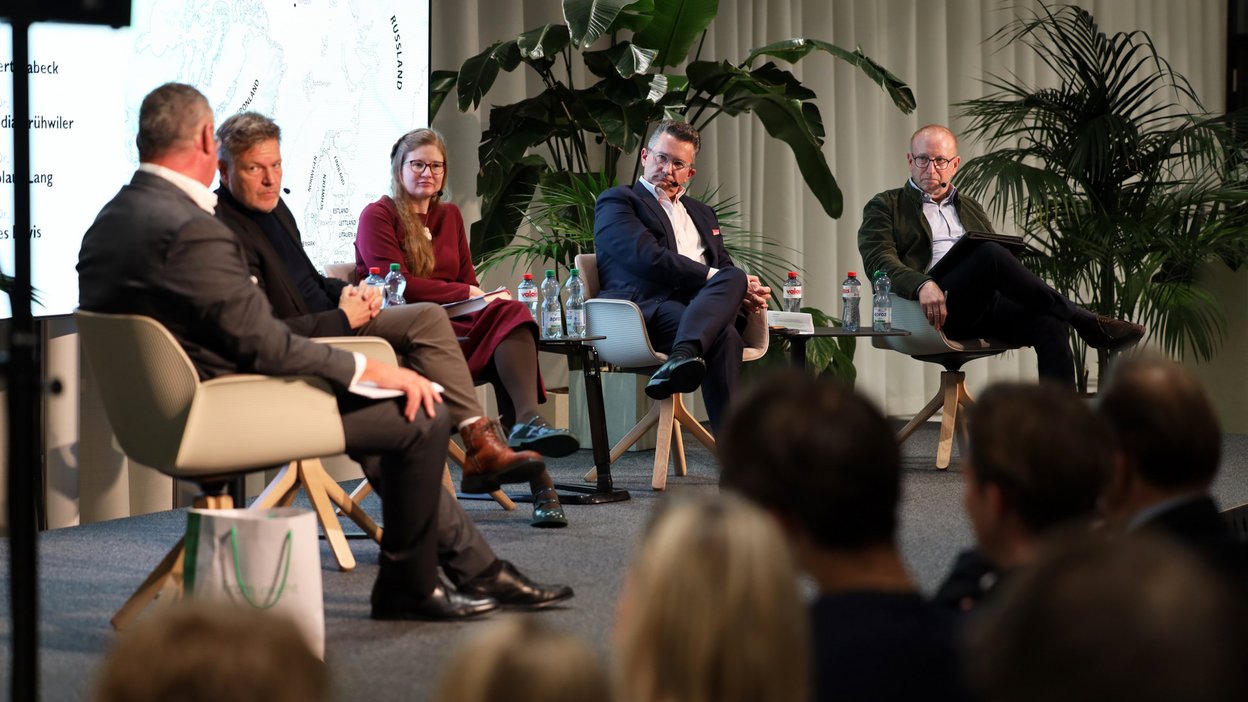
On the second evening, speaking in the packed atrium of SQUARE, Habeck called for Europe to become more actively involved in the Arctic, stating: "For the first time in human history, an ocean is opening up there." In his book Arctic Meltdown, which was also featured by ZDF, he draws attention to the interests of China, the US and Russia in the region. "Many forces that do not have Europe's good interests at heart – nor its diversity or the fundamental values of freedom, equality, solidarity and the rule of law – are lying in wait, like lynxes, to conquer this region. Europe must prevent the worst from happening here and play an active role. We must not repeat the mistake of failing to take an obvious threat seriously," argued Habeck. Following this, HSG Professor James W. Davis spoke about the changing nuclear order and the role of space in the competition for the Arctic. US expert Professor Claudia Brühwiler pointed out that the much-coveted Arctic region is also home to people and animals. The environmental aspect is also given due attention in Robert Habeck's book.
The panellists were in agreement: the challenge for Europe lies in forging viable new alliances so as not to leave the region in the hands of forces that have no regard for the environment or the people living there. HSG honorary professor Nikolaus Lang highlighted the collaboration with Canada, which is working with European countries on projects including the construction of new icebreakers. Further reliable partners are needed to gain influence. Moderator Christoph Lechner concluded the discussion with a quote from Gorbachev in 1987: "Let the North Pole be a pole of peace." Lechner invited the audience to delve deeper into further geostrategic topics being researched by the Centre for Geopolitics and Corporate Strategy at the HSG and presented for discussion in the Speaker Series.
Following the good-attended panel discussions earlier, places on Friday were limited to 50 each and were quickly snapped up. At the breakfast organised by DocNet, Robert Habeck answered questions from PhD students. In the lecture that followed, he spoke about why people are turning away from democracy. In his view, weak growth and dwindling opportunities for social mobility lead to political dissatisfaction. At the same time, AI is putting pressure on even supposedly secure jobs, for example in the civil service. On social media platforms, filter bubbles make it difficult to engage in academic exchange. Elon Musk's vision of a "Universal High Income" also met with economic, political and environmental objections during the discussion. Citizens' assemblies, which could involve people from different backgrounds more closely in political debates, were also discussed.
To round off his visit to SQUARE, Robert Habeck and HSG mobility expert Andreas Herrmann spoke to students in an open lecture about the future of the German automotive industry. Rethinking mobility and "changing our mindset" are the order of the day, Herrmann noted, drawing on a car advertising slogan: "Big Tech is occupying the key control points in the development of new forms of mobility. Asia is driving forward the software development of battery-powered vehicles. How can German companies retain high-value-added production domestically and avoid becoming mere hardware manufacturers specialising in sheet metal fabrication?" he posed for discussion. In future, AI-driven vehicles would set the tone; the transformation of the industry was already underway.
"The levelling off of innovative capacity is closely linked to the difficulty of organising society well," added Robert Habeck, drawing a parallel between economic and social development. For when the economy is in crisis, the political system usually begins to falter as well. Habeck is concerned with how we, as a democratic society, can boost economic innovation. His conclusion: "The state must have the confidence to think economically. And the economy must invest in innovations that benefit society as a whole – even if this represents an economic risk." In practical terms, this means that the state must launch challenges with funding pots for strategically important innovations. Startups and companies should use this state-provided money to develop new products.
From the Arctic to the automotive industry, the three-day SQUARE event with Robert Habeck focused primarily on Europe's scope for action. The former Minister for Economic Affairs advocated for new alliances and targeted investment in strategically important innovations. The debate on dwindling opportunities for social mobility, AI and citizens' assemblies brought the domestic political question to the fore: how can trust in democracy be strengthened?
More news from the same category