Campus - 13.05.2026 - 09:00
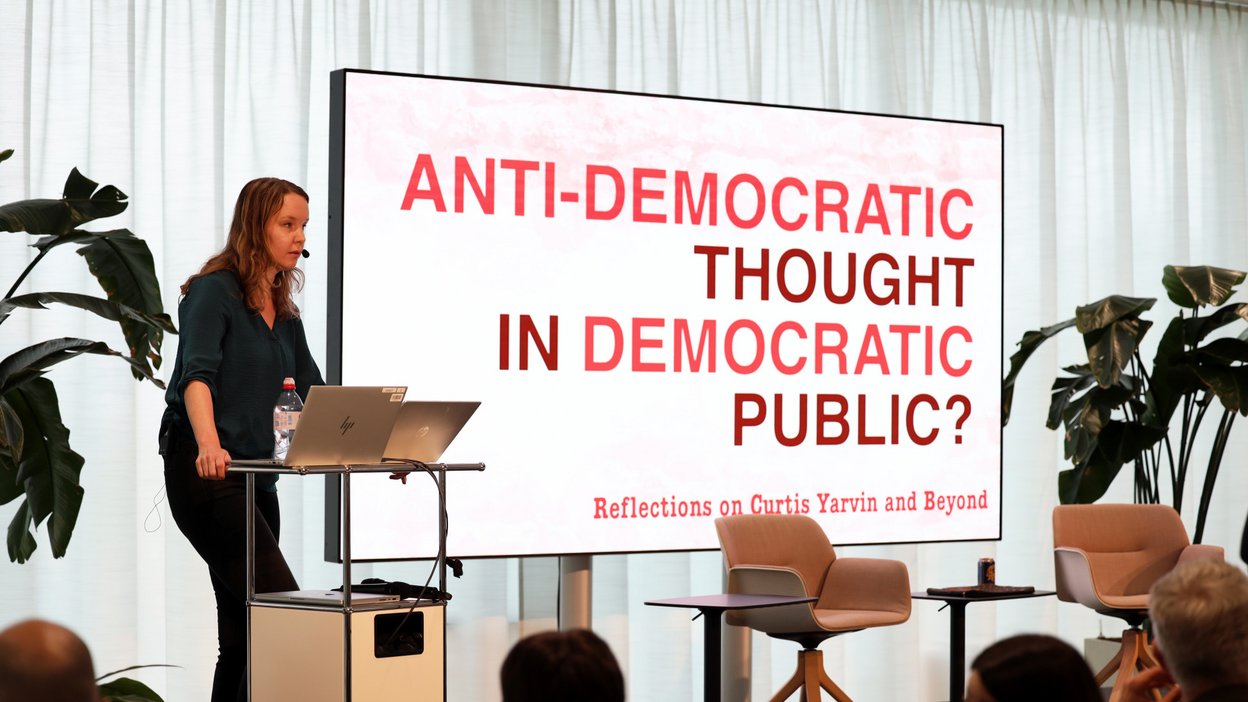
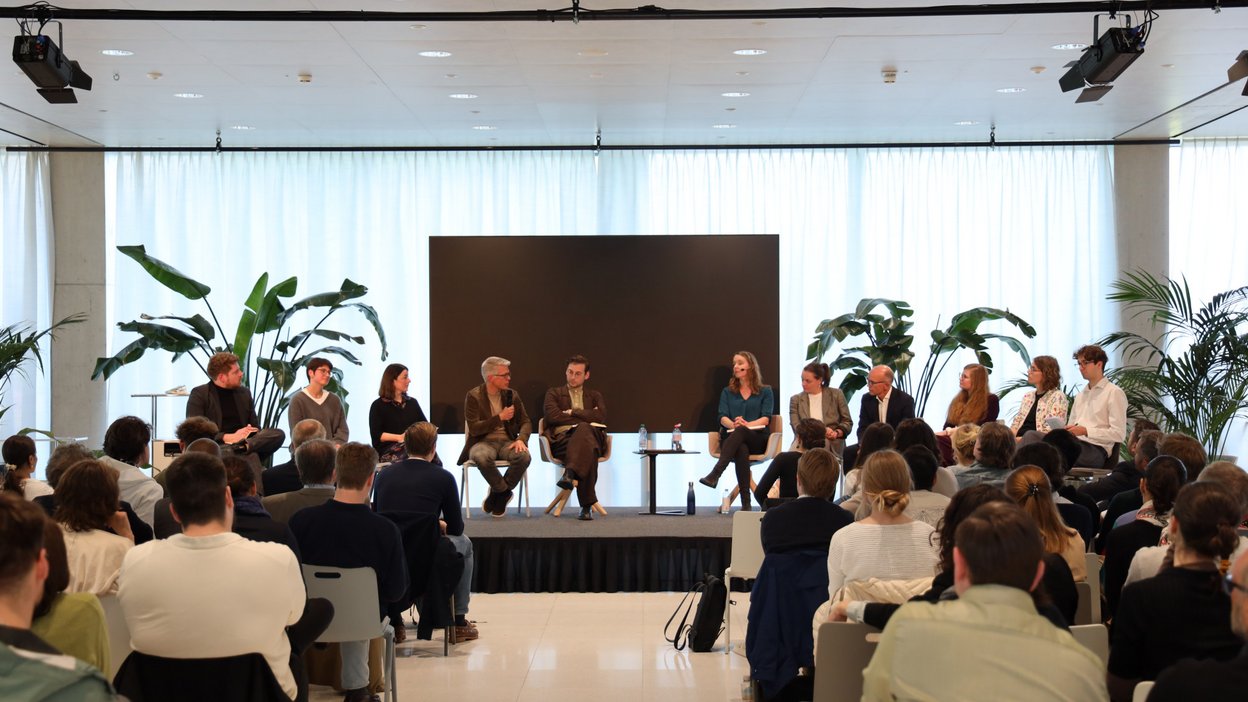
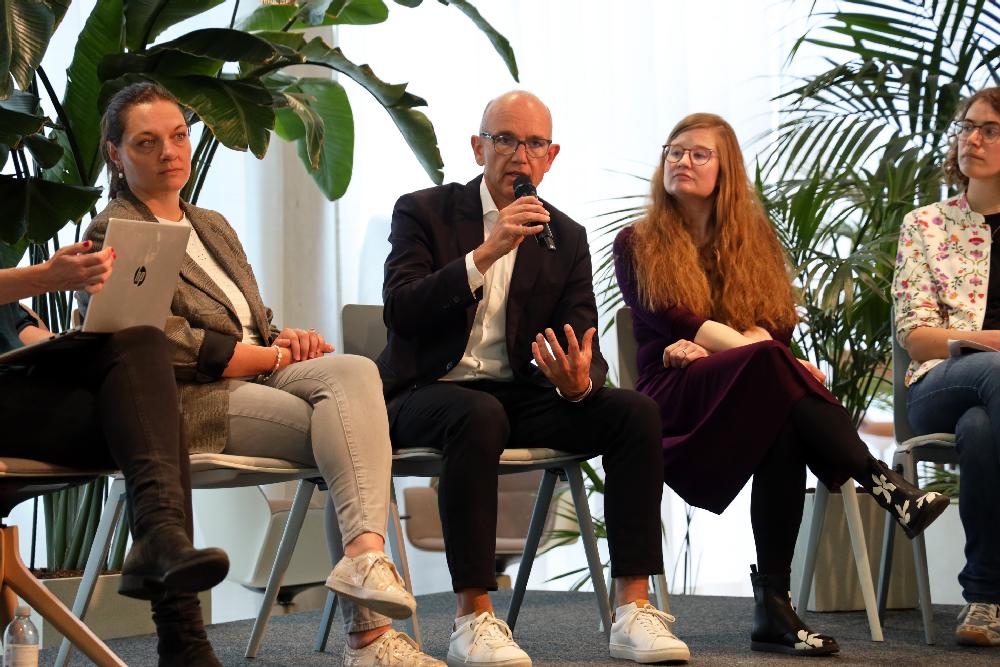
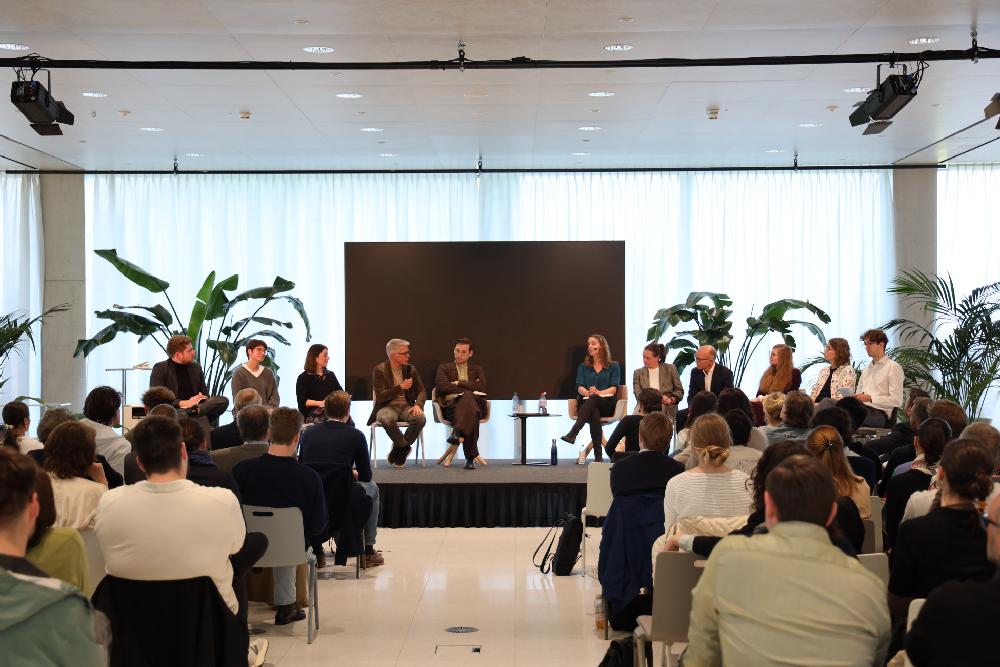
Around 150 people attended the event “Anti-democratic thought and democratic public – reflections on Curtis Yarvin and beyond” at SQUARE on Monday. It was organized by members of the HSG faculty who criticized Curtis Yarvin’s appearance at the 55th St.Gallen Symposium last week. The central question was whether one should offer a platform to a proponent of such ideas who doesn’t mind being labelled a “fascist”. Does this give him legitimacy?
The prevailing view on the panel was clear: Curtis Yarvin, who has spoken at Harvard and Oxford universities, among others, should not have been given a platform at the symposium held on the campus of the University of St.Gallen (HSG). The symposium stands for open and intellectual dialogue, even on uncomfortable topics. However, even though Beat Ulrich made it clear that the symposium did not share, let alone support, Yarvin’s views, and was able to plausibly explain the reasons for his invitation, the CEO of the St.Gallen Symposium spoke of a “negative outcome”. This was also because it overshadowed an otherwise successful and enriching symposium.
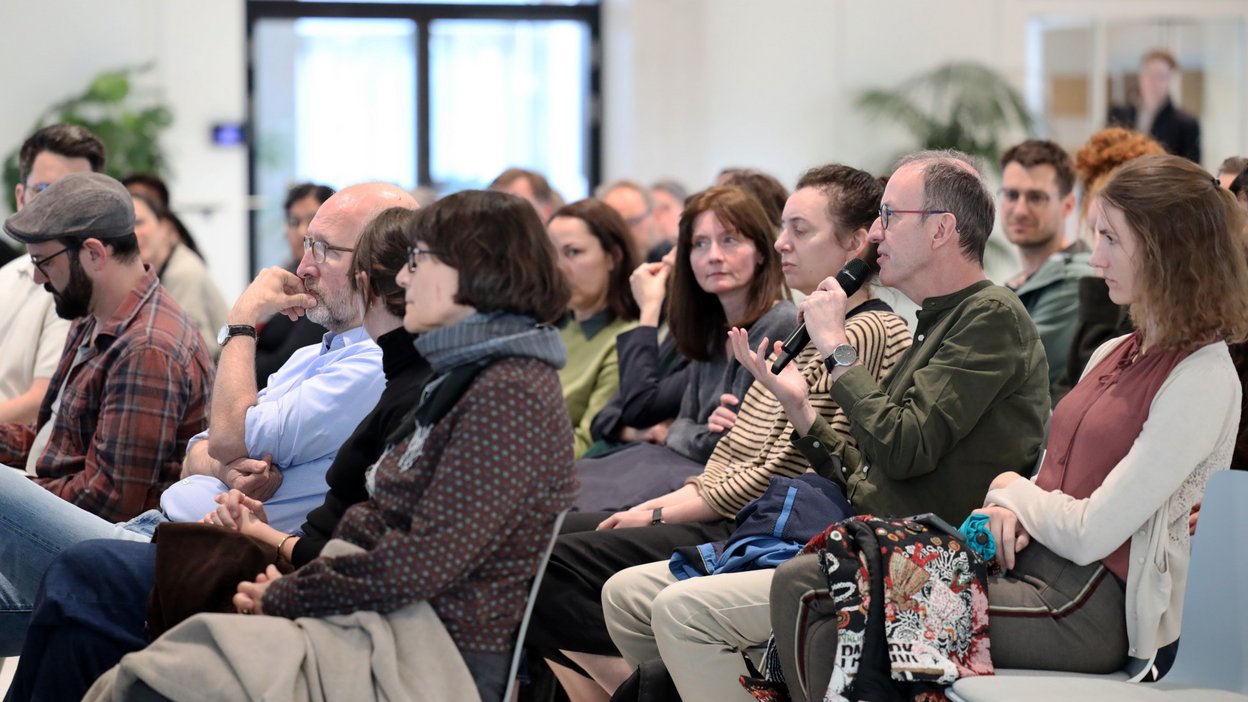
As two of the initiators of the «Open Letter», Maria Lassak and Filippo Pasquali presented their arguments. The Open Letter had previously been discussed by the HSG Student Parliament, which had given it its backing. President Prof. Manuel Ammann will meet with the initiators to discuss their views with him. The event at SQUARE addressed not only the specific case but also fundamental issues. In a teach-in format, members of the faculty gave brief presentations, which were then discussed in a plenary session.
Prof. Suzanne Enzerink introduced the format and made it clear that the aim was not to debate the substance of Curtis Yarvin’s views. “There is little to debate here.” It is well known that he is one of the founders of the “Dark Enlightenment” movement, which advocates dictatorship as a form of government and propagates sexist, racist, and generally anti-egalitarian ideas. While Yarvin did not explicitly address the latter during his two podium appearances at the symposium, Enzerink noted that it was the question of his participation rather than its content that should be the focus of the event; whether someone with ideas like Yarvin’s should be, in principle, hosted by universities and, if so, under what conditions. “Yarvin for us is a symptom, and the reason his visit has generated such passionate discourse is that it touches upon much deeper questions that increasingly polarized societies are having to confront.”
Prof. Blagoy Blagoev questioned some of Curtis Yarvin’s key ideas, such as the notion that states should be organized like businesses. Are we currently witnessing the rise of fascism as a management philosophy? After all, he is one of the “court philosophers” in the circle of the influential tech entrepreneur Peter Thiel, who has connections with the US government. He is said to be one of the leading ideologues of the “techno-fascism” that is taking hold in parts of the tech industry, and as a business unviersity, we must clearly distance ourselves from such forces. After all, the economy is never apolitical, and there are many historical examples of companies that have supported authoritarian regimes out of opportunism.
Prof. Caspar Hirschi, who had described Curtis Yarvin as an “intellectual charlatan” to the St.Galler Tagblatt following his revealing – albeit confused and incoherent – appearances at the symposium, spoke of a “muddle-headed contrarian, who poses as a philosopher yet cannot string together a coherent argument.” Someone like that has no place at a university. Universities are places for controversial statements that may cause offence or provoke outrage – provided that these statements are substantiated by theoretical rigor or empirical evidence. Neither of these is the case here.
Prof. Christine Abbt asked whether the appearance could be justified on the grounds of the democratic right to freedom of expression. She notes that not inviting someone does not mean denying them freedom of expression. And freedom of expression does not justify saying anything. With his aims and defamatory rhetoric, Curtis Yarvin is abusing democratic pluralism and working in its name to abolish it. And what about the legal situation? Prof. Raphaela Cueni pointed out that there are no legal red lines in the sense that unconstitutional beliefs or ideas contrary to human rights are not protected speech. “This is uncomfortable, yes, but the result of centuries of sometimes painful learning about restrictions of speech.”
Prof. Claudia Brühwiler moderated a session with Yarvin at the Symposium, but would have opted for alternative representatives of America's New Right or Hard Right. However, she agrees with philosopher Ivan Krastev who debated Yarvin on the main stage: Confronting extremist ideas helps sharpen one's own counter-arguments. “Anti-democratic thought is circulating in the democratic public. We cannot hide from this reality and instead need to confront it.”
Was it a mistake to invite Curtis Yarvin to St.Gallen? Judging by what was said at the event, the impression was: yes. However, Caspar Hirschi pointed out: “Leadership is demonstrated above all in how one deals with mistakes. The St.Gallen Symposium is a great success story in the cross-generational culture of leadership, and I admire the participating students and the entire staff for their commitment.” Leadership requires the courage to take risks, and those who take risks are bound to make mistakes. “For me, therefore, it is no tragedy that, among the many speakers, there is occasionally one who should not have been invited.” It’s okay to make mistakes. What matters is engaging with the issue and the lessons we learn from it. The open and constructive debate on Monday evening was important for both.
We ask for your understanding, given the wealth of perspectives and contributions, we have not been able to include all the comments here. However, we would like to express our sincere thanks to everyone who contributed to this fascinating debate.