Opinions - 06.07.2026 - 07:00
Most of us are familiar with NATO (North Atlantic Treaty Organization) as a political and military alliance. And while the defence and military protection of alliance members is a top priority, a part of NATO’s mission is to safeguard and promote democratic values and support peace building in former conflict zones.
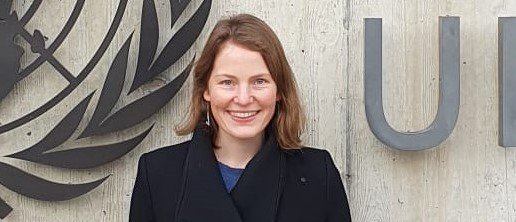
Hannah Smidt, is there anything specific on this year’s NATO agenda that strikes you as important?
Preparatory meetings for the upcoming NATO Summit suggest that the agenda is likely similar to that of the 2025 summit in The Hague, focusing on topics such as deterrence planning, defense spending targets, and burden-sharing among NATO countries, with a particular focus on Europe's responsibilities and assistance to Ukraine.
Crucially, the NATO summit will provide an opportunity to reaffirm political commitment to the alliance. At the summit, European leaders will discuss their costly commitment to NATO 3.0: A stronger Europe in a stronger NATO. Almost every NATO state has increased its defence spending.
Moreover, European states will justify prioritising support for Ukraine. To do so, they may emphasize that Russian expansionism also conflicts with the long-term strategic interests of the USA. Finally, it is likely that many European leaders will reemphasize that they politely reject the US view that NATO membership obliges them to provide military support to the US in the event of a war with Iran.
Clarifying NATO’s defensive purpose publicly is especially crucial. Research shows that defensive alliance can stabilize inter-state relations, while offensive alliances can be responsible for escalation of inter-state conflicts.
Is there something in your view that is missing from the agenda?
While it is unlikely in the current international climate, I personally miss discussions about crisis prevention and cooperative security. Both are among NATO's three core tasks.
Crisis prevention includes the deployment of NATO forces to prevent the resumption of military hostilities. An example of this is the consent-based deployment of NATO troops in Kosovo. Research shows that these consent-based missions are highly effective in reducing battle violence, especially when conducted in partnership with the United Nations, as it is the case of the NATO deployment in Kosovo.
Cooperative security involves NATO partnering with international organisations to address hybrid threats such as disinformation, and to extend non-proliferation treaties, among other things. Research shows that US security guarantees, both within NATO and elsewhere, have been crucial in preventing the proliferation of nuclear weapons.
Since his first presidency, Donald Trump has made threats against NATO funding, America’s role in the Alliance, and even made threats against member states Denmark and Canada. What does this mean for NATO and are there any positives to be taken from this?
US hostile rhetoric weakens NATO’s deterrence. The more unified NATO members are, especially regarding common defence of allies against armed attacks (Article 5), the stronger NATO’s ability to deter external threats to allied states.
Moreover, US rhetoric hinders efforts to control arms. It increases the need for greater national and European defense spending. Some Europeans are also reconsidering their stance on nuclear deterrence, including the idea of an “EU bomb”.
One can criticize Europe’s reliance on US security provision. Yet, considering the classic trade-off between guns (military spending) and butter (civilian public goods spending), a unified NATO with a committed US has positive welfare effects.
Current US foreign and security policy is one reason explaining why the European countries accelerated investment in a common defence and security policy. At the end of the Cold War, researchers adhering to the neo-realist school of thought predicted that if the US would withdraw from NATO, it could rekindle militarized competition among European states. The current trend points in the opposite direction.
Hannah Smidt is an assistant professor of Political Science with a focus on international organisations at the University of St.Gallen.
Weitere Beiträge aus der gleichen Kategorie