Research - 14.09.2026 - 09:00
The logic seems simple: if insurance becomes more expensive, switching providers should become more attractive. In practice, however, this happens surprisingly rarely in Switzerland. In February, the Neue Zürcher Zeitung (NZZ) reported on the rising burden of health insurance premiums and that for the majority of households, the cost nevertheless does not pose a major financial problem. In early September, SWI swissinfo.ch wrote about the next premium increase expected in 2027. The "Swiss Insurance Monitor 2026" is now examining customer behaviour regarding premiums for the third time. The result is that policyholders usually stay with their current provider, even when premiums rise.
The sixth edition of the Monitor is based on a survey of exactly 1,981 people living in Switzerland. It also shows how the relationship between customers and insurers is changing: less paper and face-to-face contact, more processes via digital channels, and the increasing use of artificial intelligence.
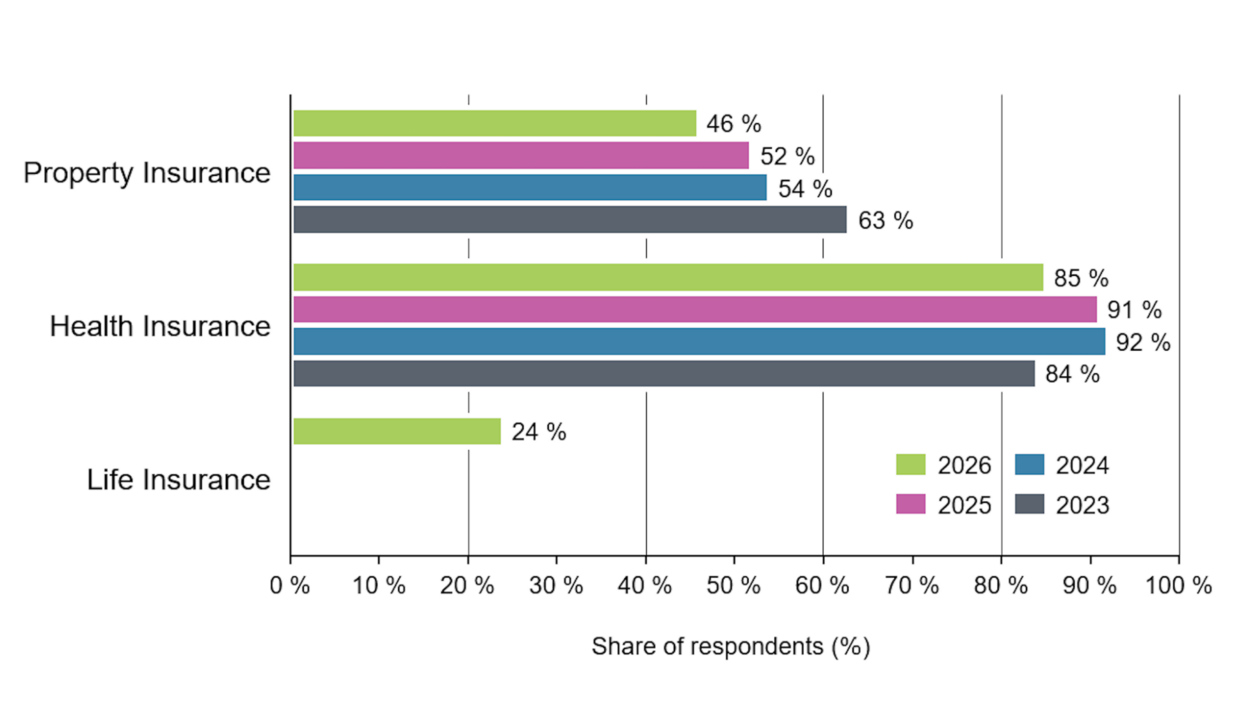
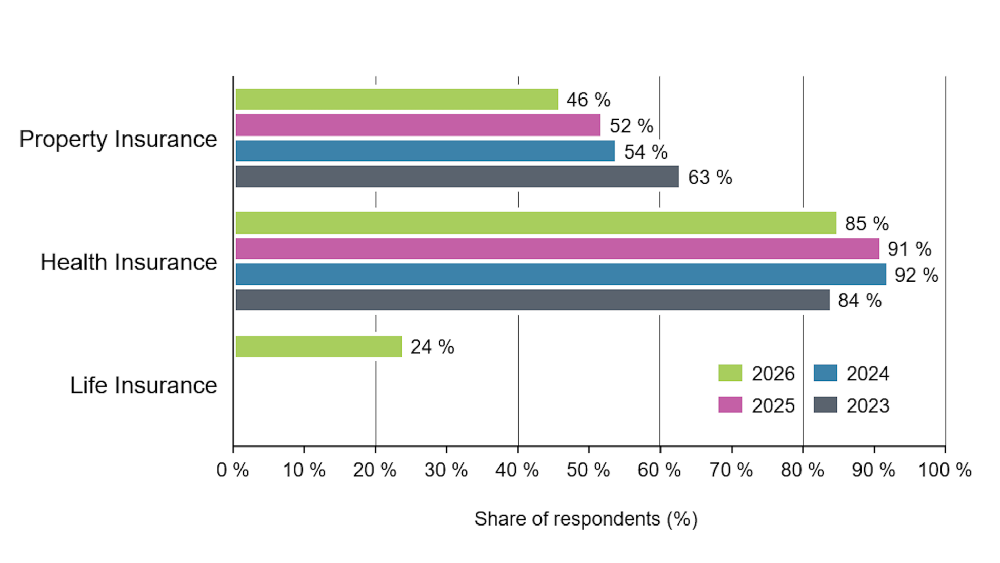
85 per cent of health insurance customers state that they experienced a premium increase last year. For non-life insurance, the figure is 46 per cent, and for life insurance around 24 per cent. Life insurance is reported separately for the first time in the Swiss Insurance Monitor 2026.
Higher premiums prompt little or no reaction. Of those who noticed a premium increase, the following took no action last year:
Those who do react usually consider switching providers first. However, actually switching providers or policies remains the exception. This continues a pattern that has already been observed in recent years (see Swiss Insurance Monitor 2025).
The different types of insurance also fare differently when it comes to whether premium increases are considered understandable. The increases are most easily understood by life insurance customers. In the case of health insurance, understanding is lower and has fallen further compared with the previous year.
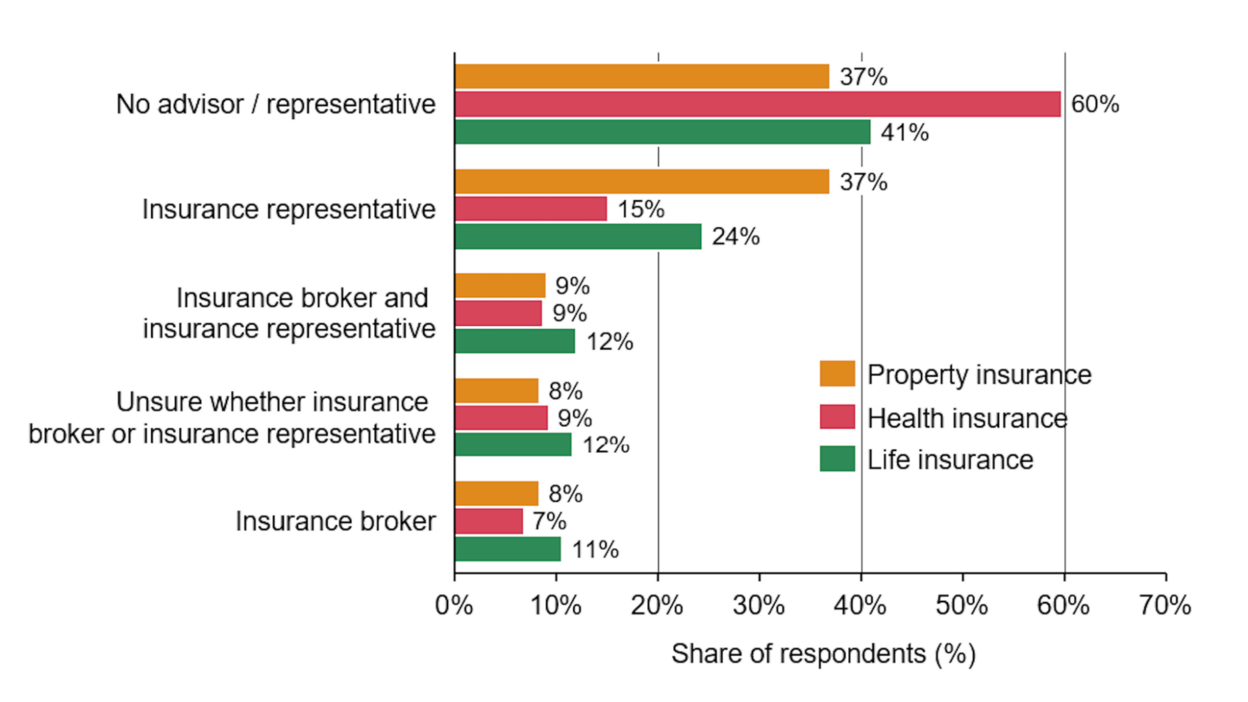
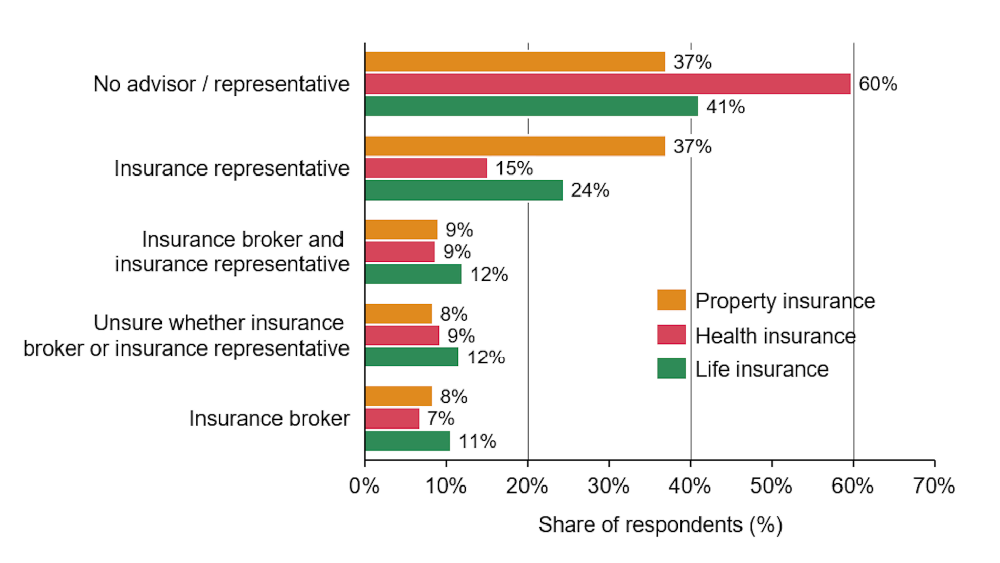
Digitisation does not mean the end of personal contact. Around 56 per cent of respondents have a personal insurance adviser. This proportion has therefore remained virtually unchanged. However, there are significant differences between the types of insurance: personal advice is significantly less common in health insurance than in property and life insurance.
Where an advisory relationship exists, it is predominantly perceived as personal. It is also striking that those who rate their insurer as offering good value for money are more likely to describe their relationship with their adviser as personal.
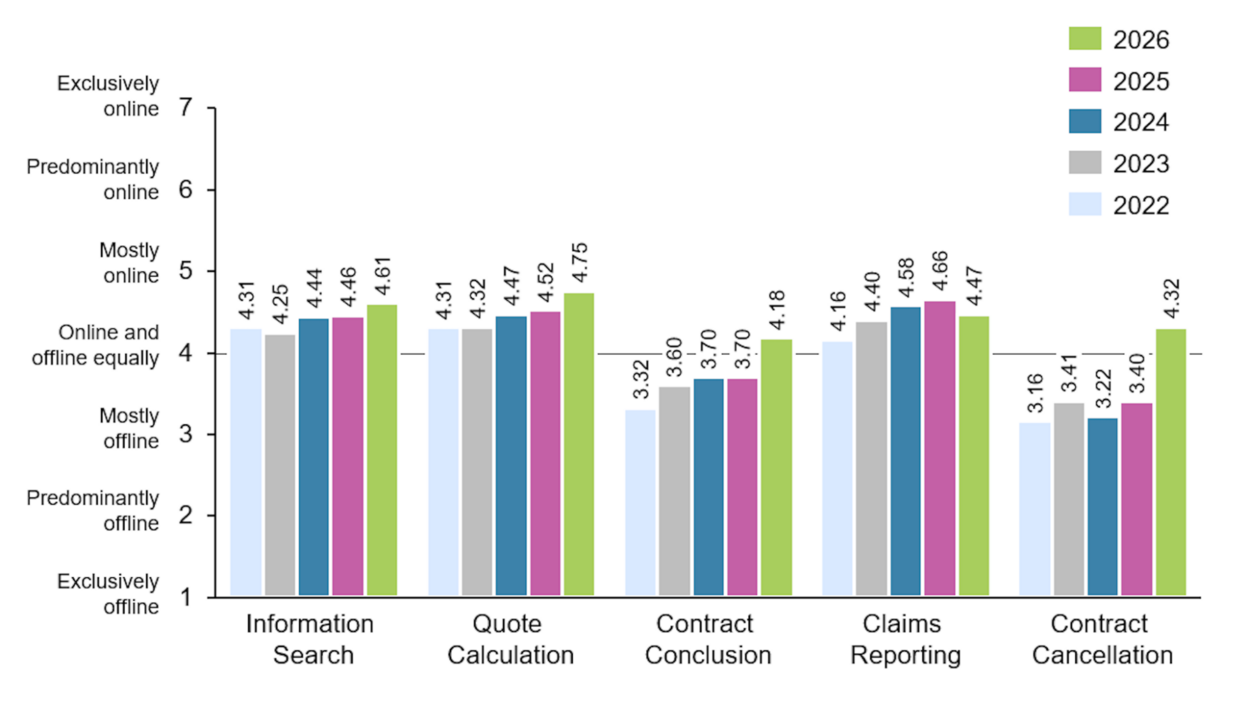
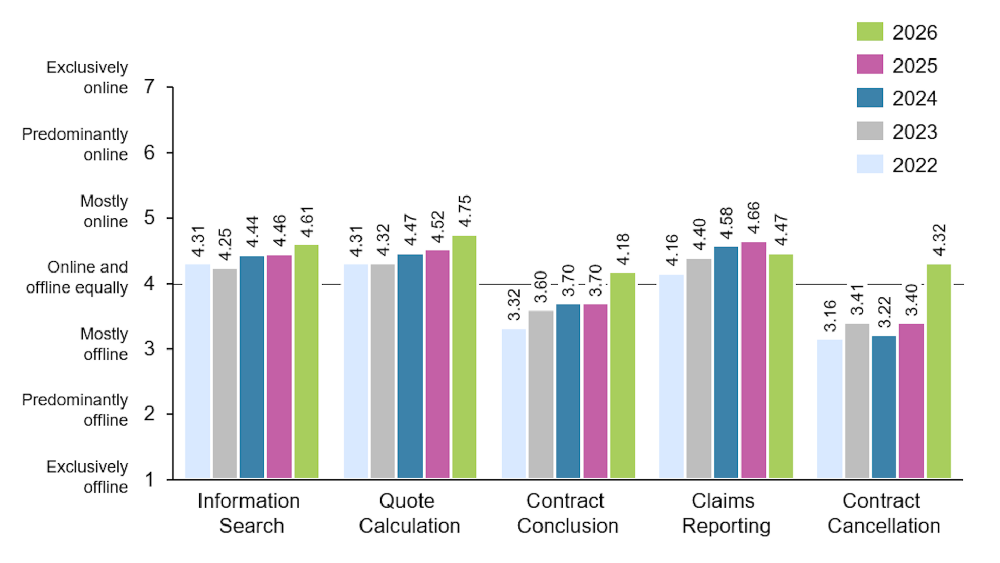
At the same time, the customer journey is shifting further towards the internet. Searching for information and calculating quotes have long been heavily digitalised. Now the shift is reaching a new stage: by 2026, for the first time, policies will be taken out and cancelled more frequently online than offline. Claims are also still predominantly submitted online, albeit slightly less frequently than in the previous year.
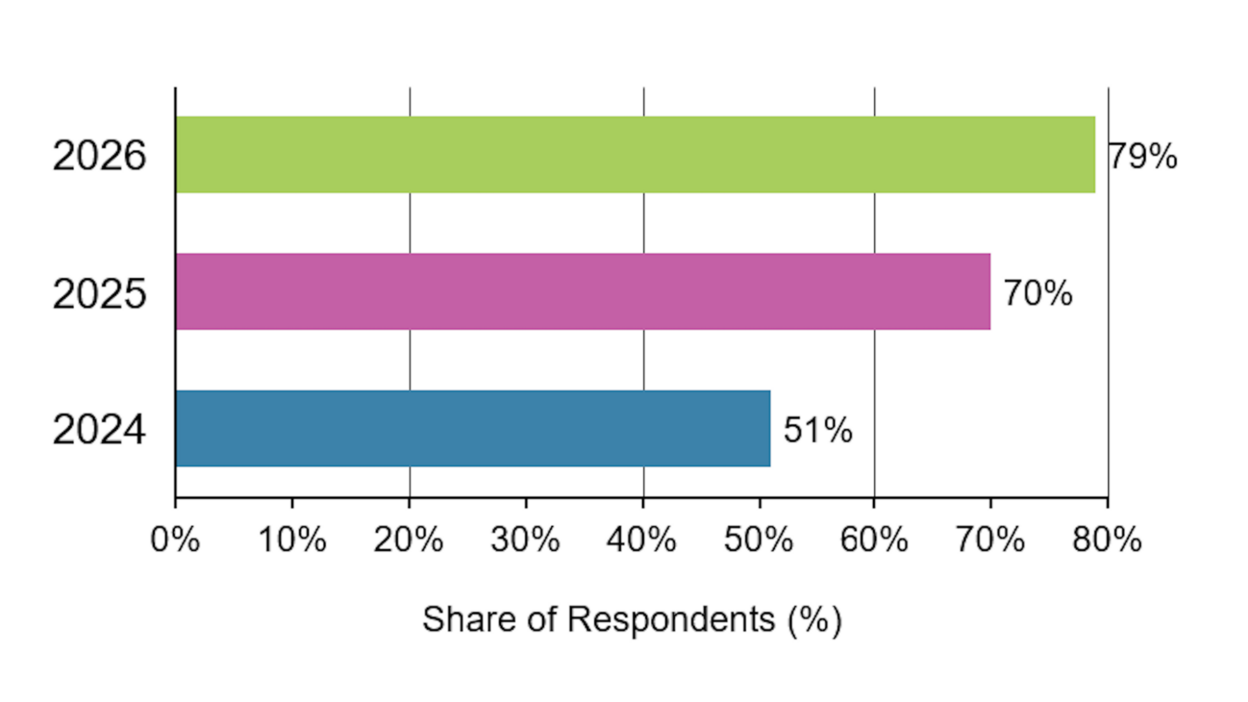
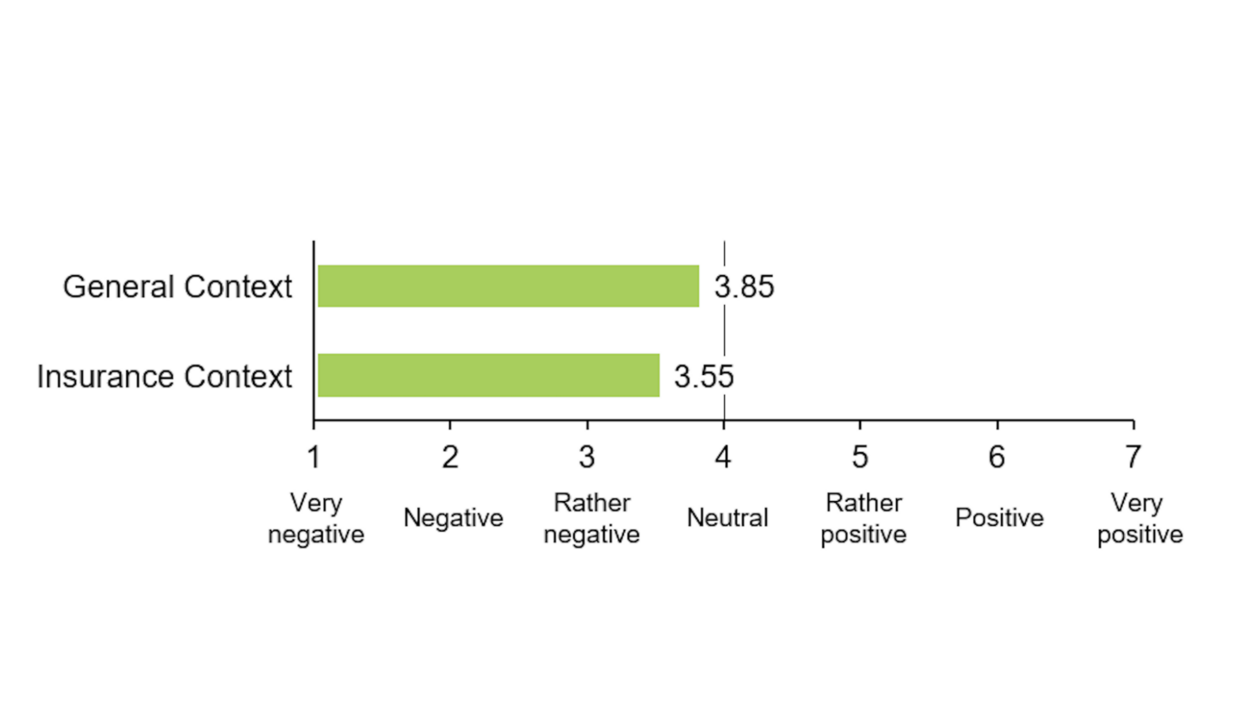
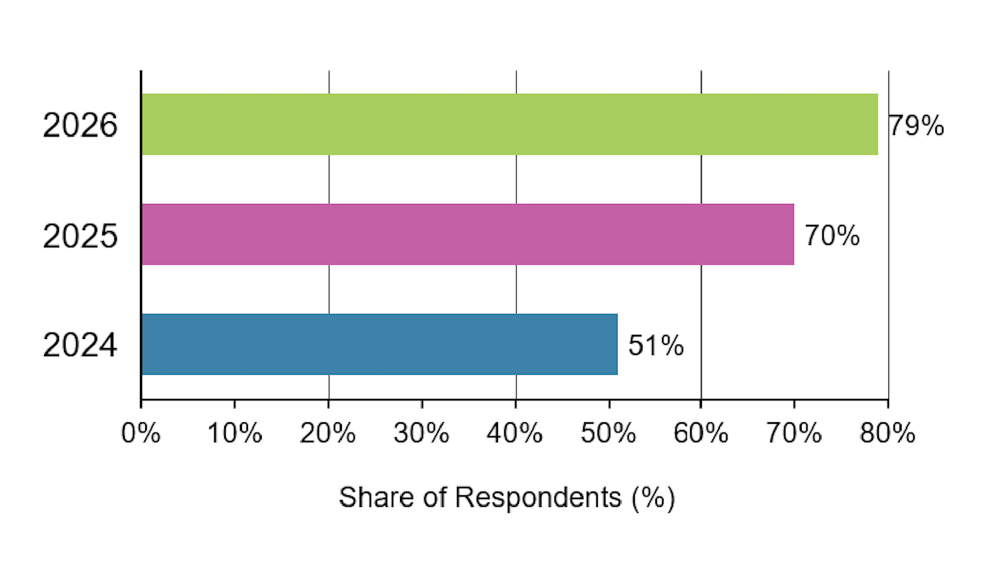
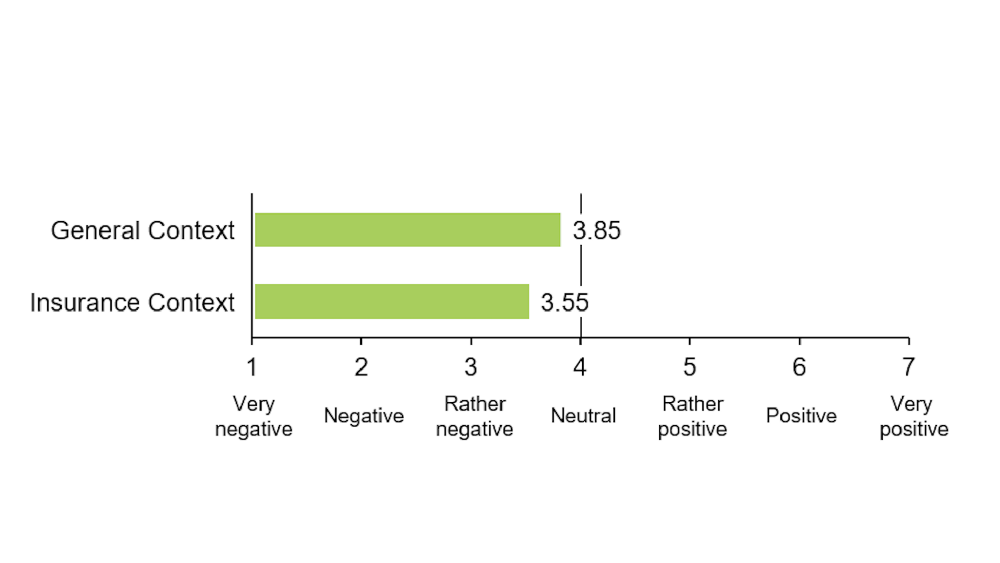
Artificial intelligence is spreading even faster in the Swiss insurance sector. 79 per cent of the Swiss population now have experience with AI applications. In 2025, the figure was 70 per cent; in 2024, it was just 51 per cent. Younger people and those living in cities are particularly positive about the technology. Overall, however, attitudes towards AI remain slightly negative. There is another reservation when it comes to AI: customers are significantly more sceptical about its use by insurers than about the use of AI by businesses in general. Respondents see the greatest potential in quote calculation and information searches. When it comes to AI assistants, the preference is clear: chat solutions are more popular than voice assistants.
However digital the world of insurance may become: whether online or offline – for customers, the most important thing is to be able to understand at any time what their insurance actually covers. Transparency regarding benefits and claims is by far the most important expectation of insurers.
There is also a demand for a central app where all insurance documents are available. Interest in this has risen compared with the previous year. When it comes to new offers, respondents are particularly interested in rewards for customer loyalty.
Conclusion: The "Swiss Insurance Monitor 2026" thus paints a remarkably down-to-earth picture of Swiss insurance customers: they rarely switch providers despite higher prices, are using digital services with increasing ease, and are generally becoming more open to AI. However, when insurers use AI, customers want one thing above all else: to be able to understand what happens to their data and their insurance matters.
The "Swiss Insurance Monitor" is being published for the sixth time in 2026 under the leadership of Prof em Dr Peter Maas, Dr David Finken and Justin Eymann. The study was conducted by ETH Zurich, the Technical University of Munich (TUM) and the University of St.Gallen (HSG) in collaboration with a consortium of partners from the insurance and digital sectors. These include FinanceScout24/moneyland (Swiss Marketplace Group), the Swiss Digital Insurance Association (VDVS) and Merkle Switzerland AG.
The full study can be ordered via the website swissinsurancemonitor.ch.
The results are available to download free of charge in PDF format (one-pager).