Opinions - 16.04.2026 - 09:00
Wolfram Eilenberger: Hungary voted Victor Orbán out of office by an overwhelming majority. How did you feel about this result? And how do you assess it?
Árpád Szakolczai: At first, there was joy—and relief. Not least because Orbán, and this did not seem so certain beforehand, immediately acknowledged Péter Magyar’s election victory. There were no attempts to challenge the result. That was very important for the country and its democratic culture. Clearly, there was a strong desire among the population for a change in power. The issue of corruption, and arrogance, certainly played a decisive role. What this change will mean politically is an entirely different question.
What makes you doubt? Isn’t this a clear victory for democracy, a vote for a new political direction, for a different role for Hungary in Europe?
Well, insofar as Magyar’s victory is linked to hopes for a fundamental political realignment—for instance, on issues of immigration, minority rights, or the LGBTQ agenda, to name a few relevant areas—those hopes will almost certainly be dashed. That is not what Magyar ran on. And that is not why he was elected. It is important to understand: Hungary is structurally a nation with conservative values. Many of the issues particularly close to the heart of a progressive, Western European left have virtually no support among the population. Just take a closer look at the current election results. There are no longer any left-wing or even so-called “progressive” forces or parties in the future parliament. They are simply not represented. In this respect, continuity is more likely in key areas.
What, if anything, will and should change then?
Orbán’s regime was increasingly corrupt, marked by an arrogance of power, one that positioned itself further and further as an extreme outsider in Europe and also became more radicalized. Hopefully, all of that will change. However, this will by no means mean that Hungary under Magyar will simply submit to the wishes of Brussels. It seems significant to me in this context that Magyar’s first foreign trip will be to Poland. Not to Brussels, not to Berlin or Paris. But to Warsaw. So historically very old ties are to be renewed. You see, Hungary is a kind of special case even within Eastern Central Europe: linguistically, culturally, and in terms of its self-image. A comparatively small nation that has always had to fight for its independence, for its very existence. That runs very deep.

And what does that mean politically?
In Hungary, freedom is understood above all as independence—specifically, independence from the looming dictates of surrounding great powers. These may have been imperial Germany, imperial Austria, imperial Turkey, or imperial Russia. And even today, the EU is perceived as such a power. These sentiments can then be exploited and instrumentalized by “populists“ – though I don’t like the term, it is highly misleading. People tend to overplay this sentiment and longing for independence, as has been the case with Orbán in recent years. Much to the country’s detriment. In this respect, I think and hope that Hungary will orient its foreign policy more toward nations that have a similar historical experience and a similar history of independence: such as Poland, but also the Baltic states or Finland. It would therefore not be a shift toward the old Central Powers, but rather toward the new border powers.
This may point to very fundamental changes taking place at a time when Europe, and the EU in particular, must seek and find a new sense of identity.
Yes, and here an opening is emerging that will not make sense to everyone in the same way, nor will everyone welcome it in the same way. It concerns the significance and resilience of national identity; its importance in political discourse. It concerns certain resistance to overly homogenizing globalization efforts, and even certain tendencies to equate the term “democracy” with “liberal democracy.” To be clear: free elections, independent institutions, including constitutional courts—all of this, it seems to me, is taken very seriously, especially in these countries. The elections in Hungary demonstrate this. And yet, certain hopes for liberal conformity in these countries encounter limits that have much to do with their historical experiences. Hungary could become a kind of guidepost for a democratic culture that moves beyond populisms like Orbán’s—which are always prone to corruption and nepotism—while at the same time refusing to fully conform to what is presented from Western Europe as the current normative model of “liberal democracy” – which is quite different from the way it was meant in “Christian-democratic“ times.
Against this backdrop, isn’t it downright ironic that Orbán and Fidesz initially presented themselves as staunch advocates of such a liberal, Western model—only to drift further and further away from it toward autocracy over the decades?
I’ve known Orbán since his early days—back when I was still living in Hungary myself—as an extremely shrewd but also arrogant power-hungry figure. He initially was a protégé of George Soros. That was in the late 1980s. At the time, Orbán was part of a group that presented itself as the new elite of freedom—devoid of any historical roots or experience; the spearhead of globalization, if you will. Then he gradually began to realize that Hungary is, at its core, a conservative country—and eventually shifted in that direction. The only thing that remained constant throughout this process was his arrogance and his thirst for power.
And now he has been defeated by a former protégé and Fidesz member.
That’s how it is. It remains very difficult to assess Péter Magyar—especially from a distance. He is certainly no intellectual, nor does he possess that fox-like intelligence that defined Orbán. Above all, I hope that he surrounds himself with good, socially and culturally trustworthy, responsible people and advisors—that is precisely what Orbán increasingly failed to do, relying instead on a small clique whom he could trust that they second whatever he does. Such genuinely trustworthy and responsible people exist; they still exist in Hungary even now. My hope rests with them.
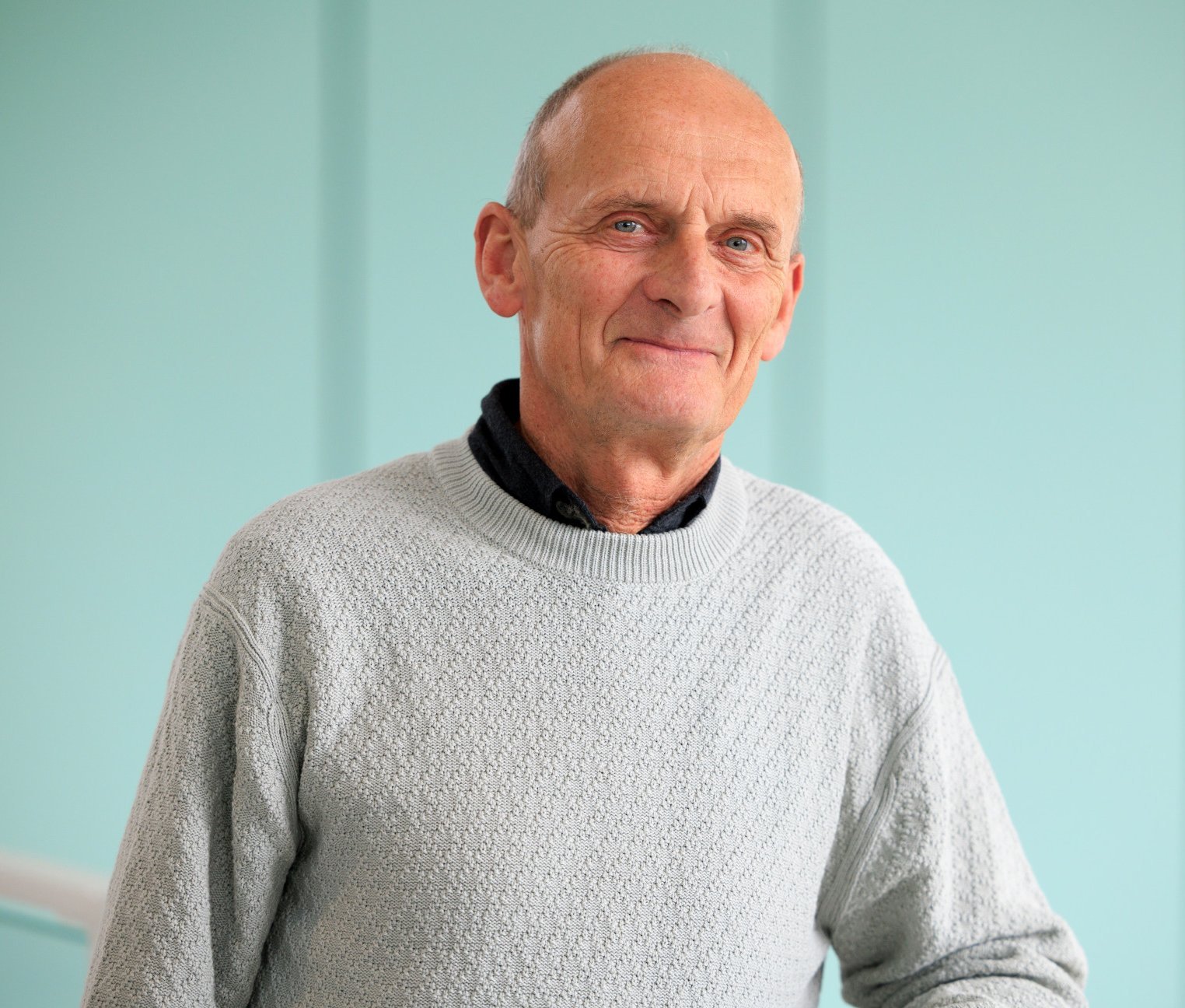
Prof. Dr. Árpád Szakolczai is Michael Hilti Fellow at the St.Gallen Collegium. From 1998 to 2021 he was Professor of Sociology at University College Cork, focus on political anthropology.
Dr. Wolfram Eilenberger is Senior Outreach Fellow at the St.Gallen Collegium. He is a philosopher, author of several bestsellers and presents a variety of programmes, including “Sternstunde Philosophie” on SRF.
More articles from the same category