Campus - 21.09.2026 - 08:00
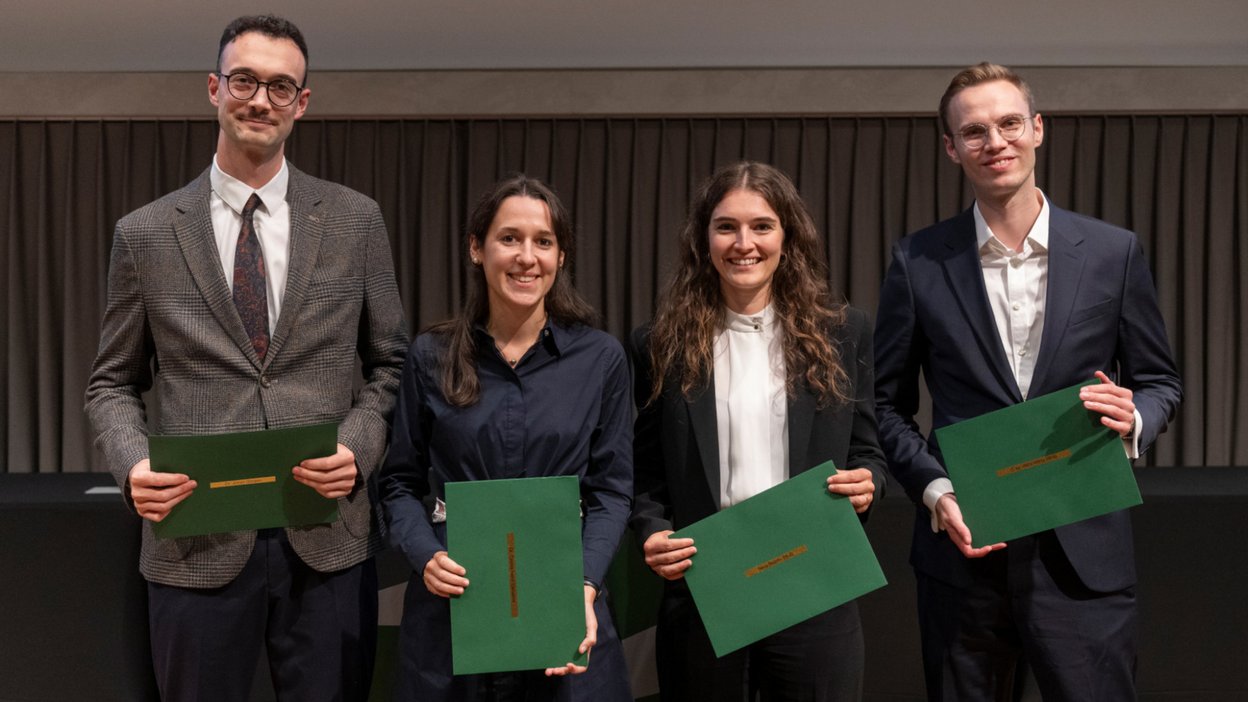
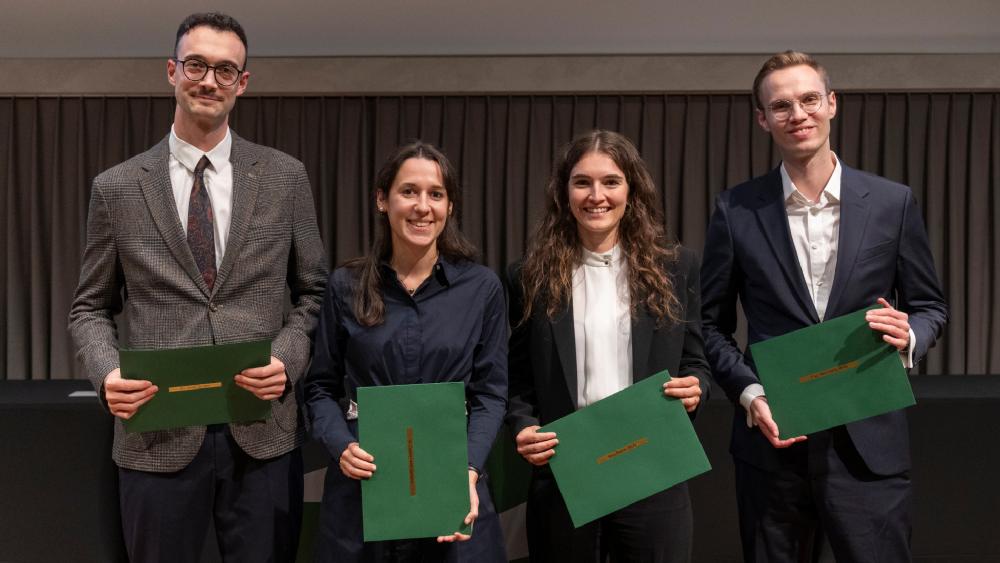
Doctoral degrees were awarded to 64 doctoral graduates in the following subjects:
During the autumn semester, several prizes are also awarded at the doctoral graduation ceremony:
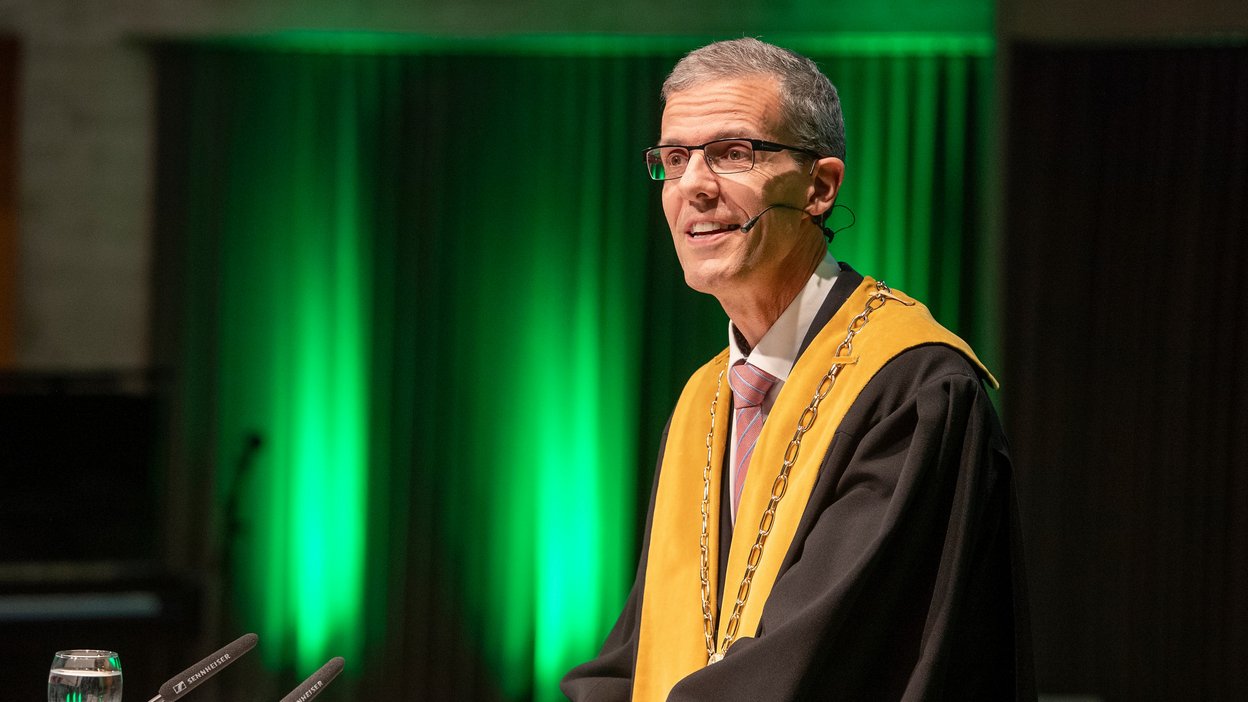
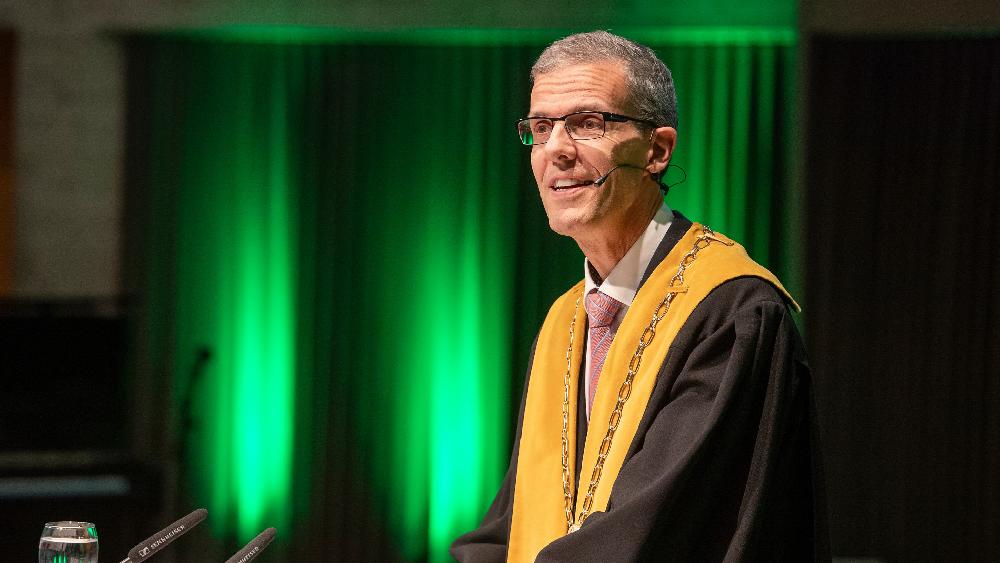
“Anyone who sows a seed in the earth needs patience,” said President Manuel Ammann at the start of his address. At first, nothing seems to happen. Beneath the ground, the seed germinates, forms roots and thereby lays the foundation for future growth. Only when the trunk, branches and leaves become visible does what had previously been hidden come to light.
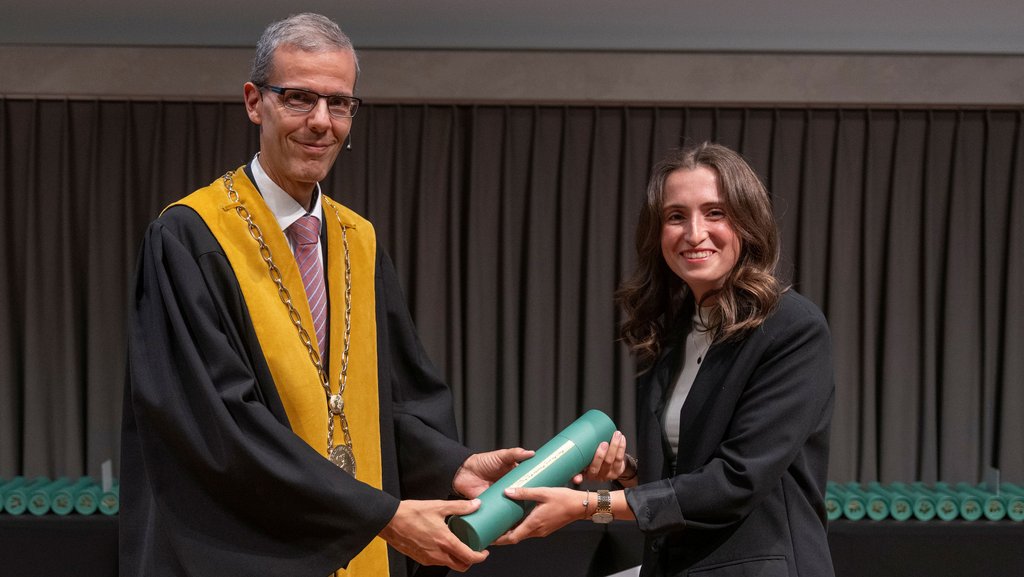
A doctorate, too, develops in many small steps. Thoughts become research questions; questions become research projects; and these, in turn, yield new insights. ‘Today you are receiving your doctoral degree certificate as a tangible result of your efforts over the past few years,’ said Ammann. During this time, the doctoral graduates have grown themselves – ‘intellectually, professionally and personally’.
The task now is to pass on this knowledge. ‘You have learnt to combine scientific insights from your field of specialism with economic thinking. This is precisely what gives rise to innovation,’ said Ammann. Innovation, in turn, should ensure qualitative growth and enable good living conditions. Ammann cited healthcare as an example: medical treatments that were not available even to the wealthiest a hundred years ago are now accessible to everyone. “Qualitative growth therefore does not simply mean ‘more’, but ‘better’.”
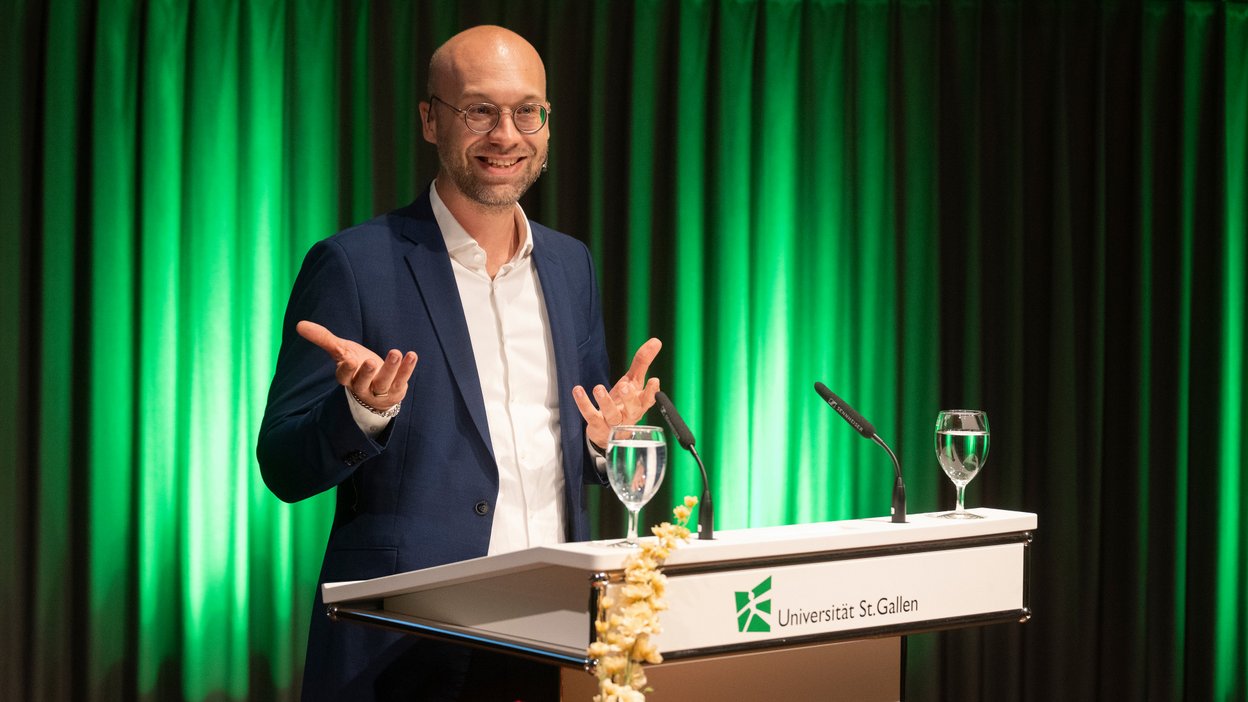
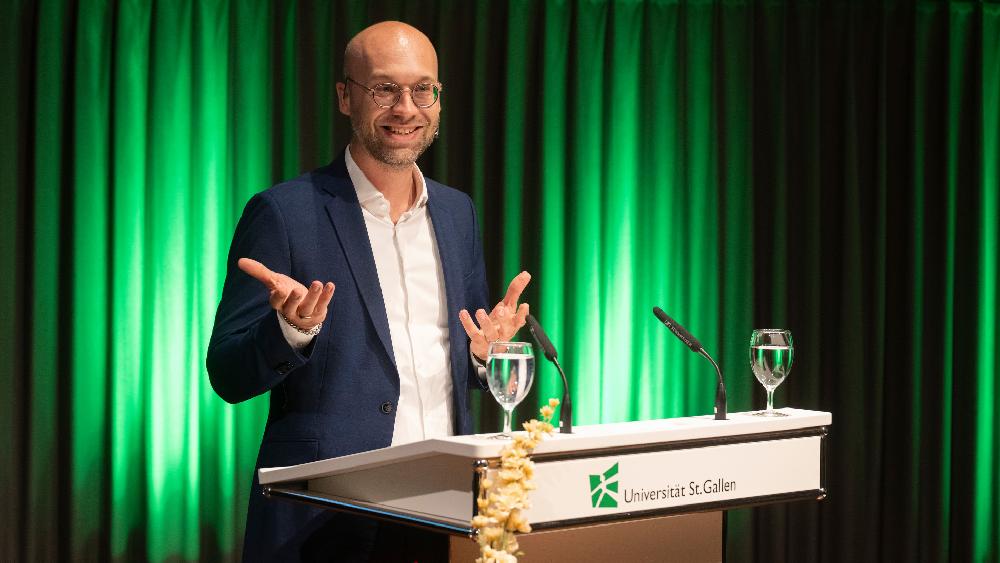
HSG labour researcher Dr Hans Rusinek spoke in his keynote address about how we deal with a future that is becoming increasingly difficult to plan for. Those who study at a university are trained to question their own assumptions, to put statements into perspective and to reveal the limits of their own knowledge. And then the university awards one a degree, which seemingly tells society: ‘Yes, this person knows something.’ Rusinek called this ‘one of the more elegant misunderstandings of the academic world’. For perhaps the most important insight gained from a doctorate lies not in how much one knows, but in ‘how one proceeds when one does not know something’.
Hope, too, begins where certainty is lacking. It should not be equated with optimism. “Optimism says: ‘It will turn out good.’ Hope says something else: ‘I don’t know how it will turn out. But there is something worth working towards.’”
Rusinek set the new PhD graduates three questions to ponder:
Hope, therefore, is not a feeling one must carry with them, said Rusinek, but a craft: one that can be learnt and made possible for others.
Images: Foto Lautenschlager GmbH