Research - 20.05.2026 - 12:30
Imagine watching a CEO announce a difficult restructuring. The words are reassuring, the smile is in place, but for a fraction of a second, a flicker of contempt crosses the face. Most of us would miss it. Artificial intelligence wouldn't. And new research suggests that this fleeting moment may be doing more to erode employee trust than the difficult news itself.
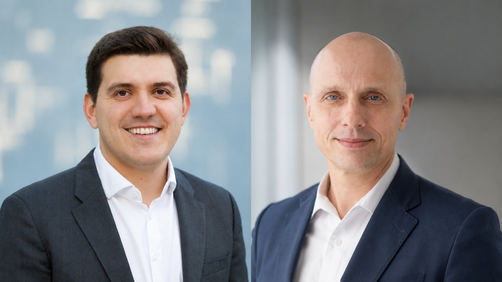
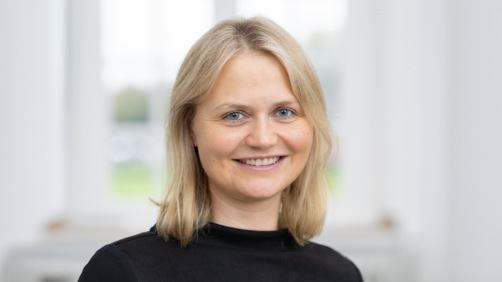
This is one of the questions that Silvia Stroe and Charlotta Sirén, professors at the School of Management, have been working to answer. In a paper recently published in the Academy of Management Journal, one of the field's leading outlets, they introduce a framework for using algorithmic facial expression analysis (AFEA) to study emotions in organizations, together with co-authors Vivianna Fang He (University College London), Vangelis Souitaris (City St George's, University of London) and Organizational Scientist Barbara Burkhard (Independent Researcher).

"We first came across this method eight years ago through the pioneering work of Paul Ekman, whose research laid the foundation for facial expression analysis. With the emergence of algorithmic tools, it became possible to apply this method efficiently. At the time, however, no one in management research was using it,” Sirén recalls.
We ran one of the first studies in entrepreneurship using AFEA, analysing the facial expressions of founders during their pitches. We wanted to understand the role of the emotions that entrepreneurs displayed," Stroe adds. “Self-reports tell you what people remember feeling — not what their face revealed in the moment.”
Six years later, their new methodological paper consolidates what the management field has learned and lays out a roadmap for how researchers, and eventually practitioners, can use AFEA responsibly.
At its core, AFEA uses computer vision and machine learning to detect the tiny muscle movements that make up a facial expression, frame by frame, from a simple video. Trained on decades of psychological research, the algorithms can unobtrusively identify displayed emotions and measure their intensity, frame by frame.
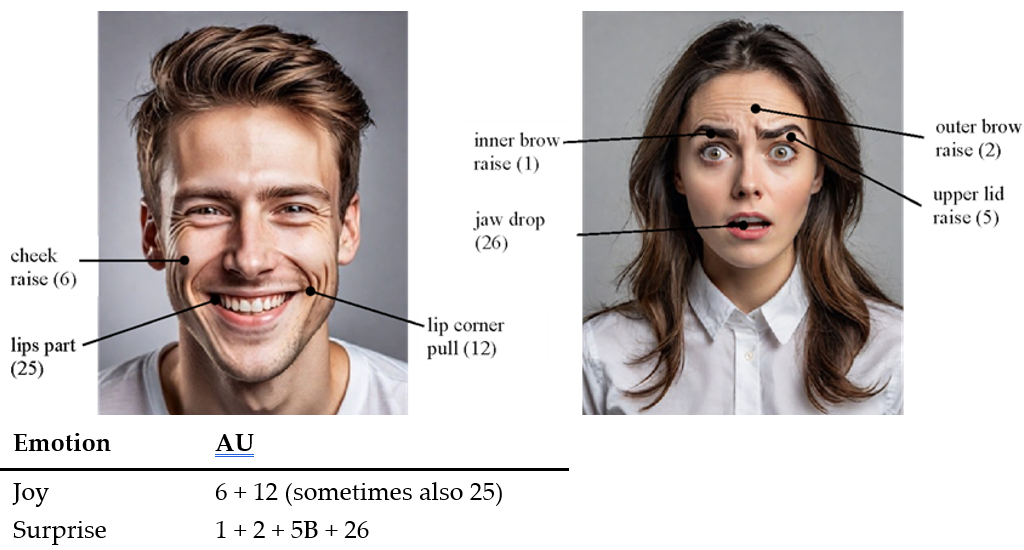
Two capabilities of this new method stand out. The first one is capturing the temporal structure of emotions. “Emotion theories have always described emotions as dynamic and fleeting. But existing measurement tools were stuck in snapshots: a survey at the end of a meeting or a self-report after the fact. AFEA lets us see how an emotion builds, peaks, and fades, sometimes within single seconds,” Sirén explains.
AFEA can show what is called “emotional contagion”. Emotional contagion describes the unconscious tendency to automatically mimic and synchronize your emotions with someone else and is a sign of real connection. In a demonstration (by the team filmed for the paper) joy travelled from the entrepreneur's face to an investor’s face in 1.13 seconds — clearly signaling a textbook case of positive emotional contagion. “The sync speed between a founder and an investor”, Stroe argues, “may be a far better signal of a real connection than any verbal feedback.”
The second capability is authenticity. A genuine smile, the so-called Duchenne smile, engages the muscles around the eyes; a polite social smile does not. “AFEA can spot the difference reliably, opening the door to research on what is known as “emotional labour”, or the effort of people to mask their emotions,” adds Sirén. “For example, this can help to identify if service employees are genuinely engaged with their customers.”

For Stroe and Sirén, the most exciting step is what comes next: turning AFEA from a research instrument into a self-reflection tool for managers, leaders, and entrepreneurs.
“We want people to be able to see themselves the way the algorithm sees them,” Stroe says. “Not to judge, but to learn. Imagine an entrepreneur reviewing their pitch and noticing that their enthusiasm dropped exactly when they spoke about their team. Or a manager realizing that their reassuring announcement carried micro-signals of frustration. That's information you can act on.”
The aim, they stress, is better self-awareness. “Emotional communication is a skill,” Sirén says. “And like any skill, it improves when you can finally see what you're doing.”
Weitere Beiträge aus der gleichen Kategorie
Das könnte Sie auch interessieren