Campus - 29.06.2026 - 14:00
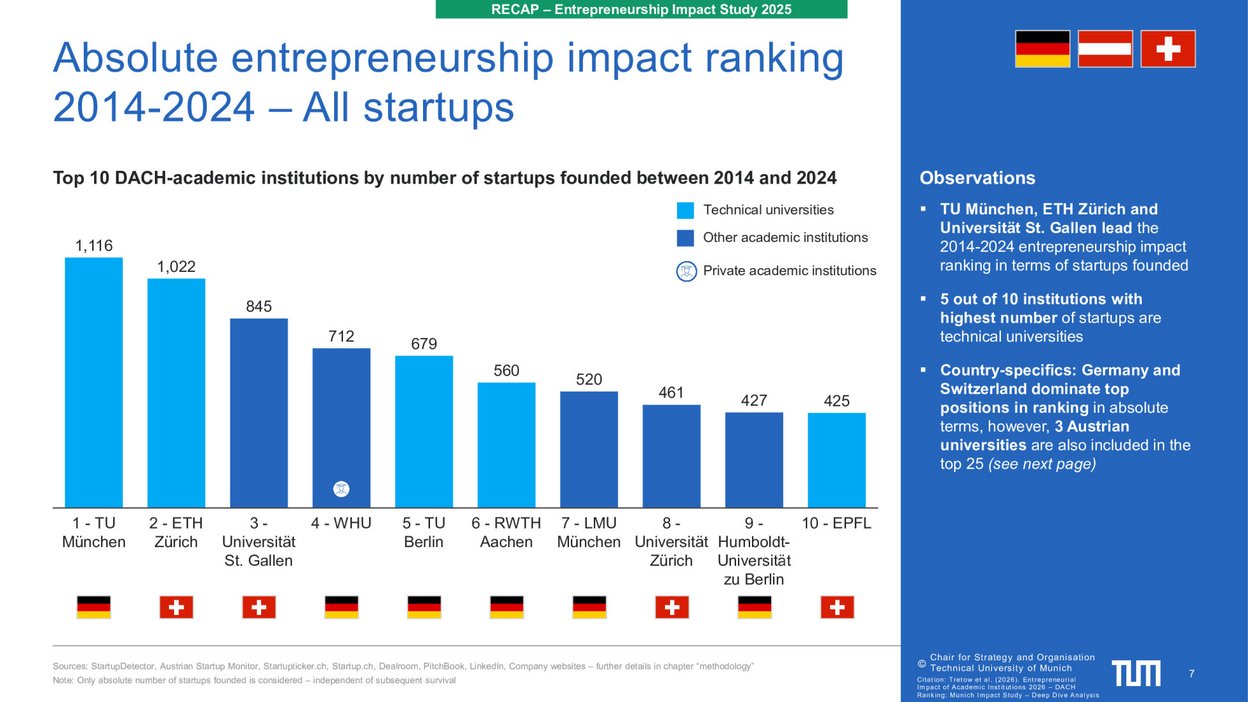
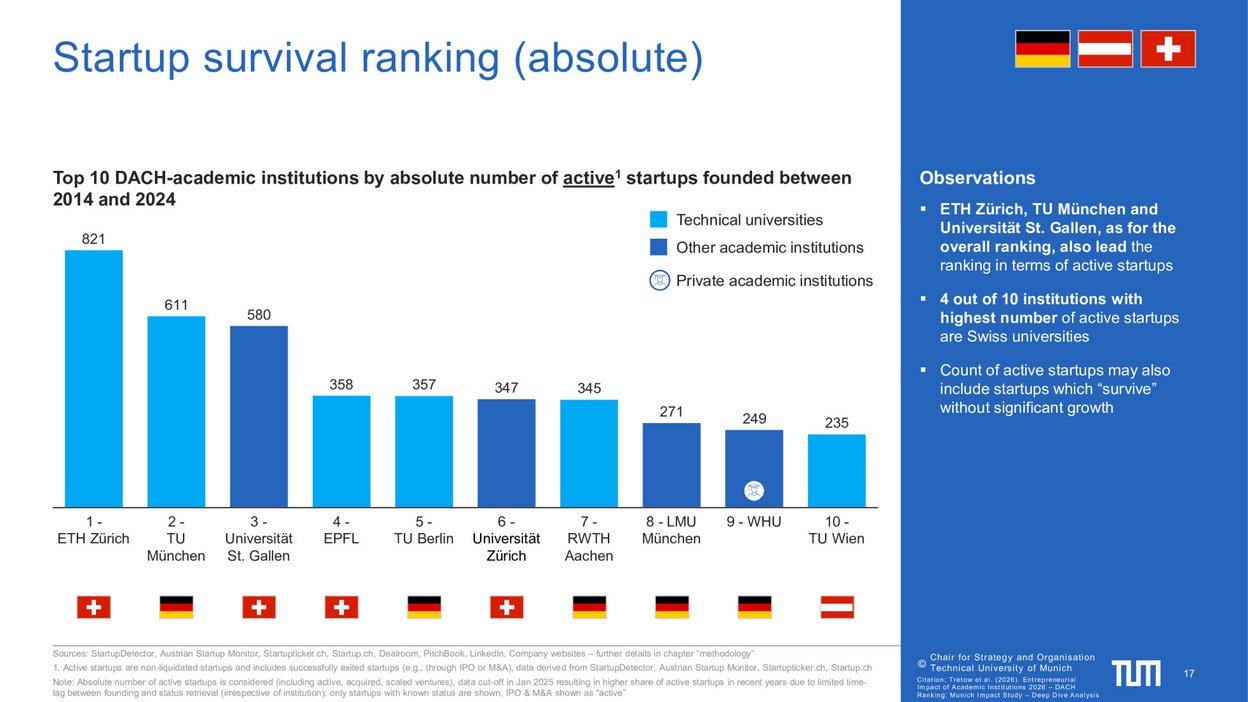
In the study “Entrepreneurial Impact of Academic Institutions 2026,” conducted by the Chair of Strategy and Organization at the Technical University of Munich (TUM), the University of St.Gallen (HSG) ranks third behind TUM and ETH Zurich among a total of 437 universities analysed in Germany, Austria, and Switzerland (DACH region). In most dimensions of the study, HSG ranks third behind the two aforementioned and significantly larger technical universities. In absolute terms, HSG impresses with 845 startups founded between 2014 and 2024 (see also HSG Entrepreneurship Monitor) as well as 580 active start-ups. This demonstrates that not only are many startups emerging at HSG, but that they are also sustaining their presence in the market over the long term.
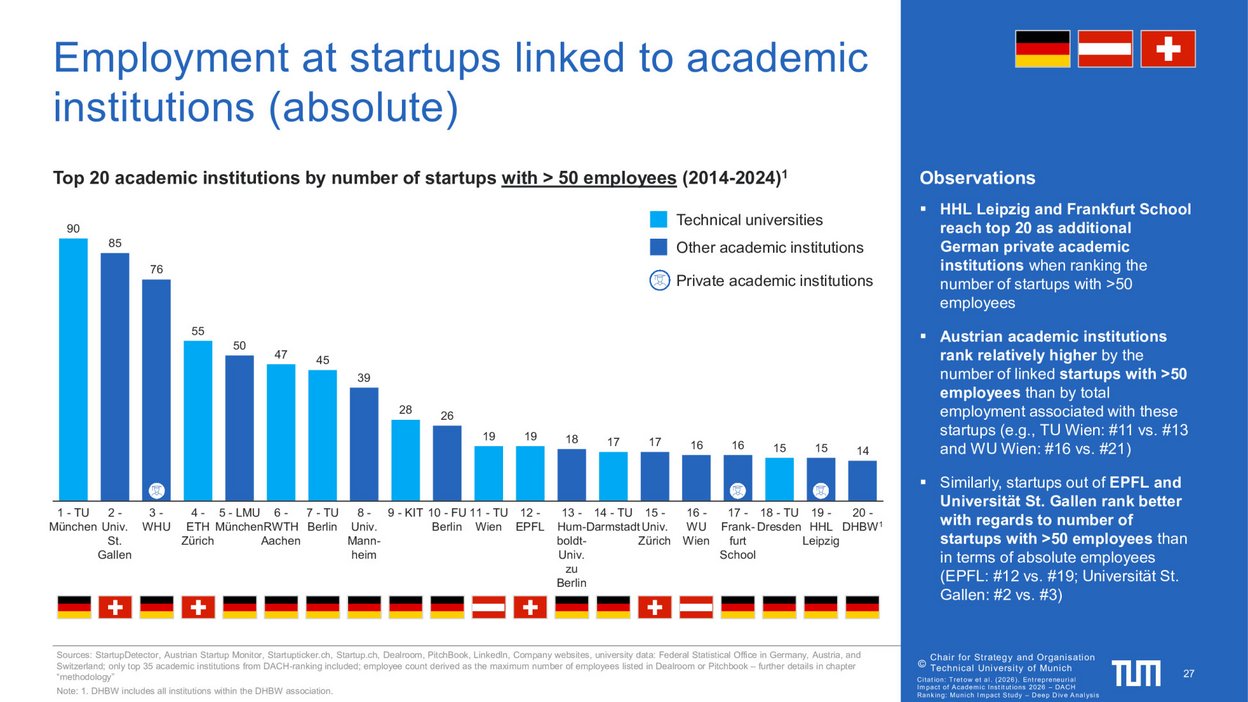
The entrepreneurial impact of HSG extends far beyond the mere number of startups founded. Startups affiliated with HSG employ a total of more than 21,000 people—placing HSG third in the overall employment ranking across the entire DACH region, just behind TUM and WHU – Otto Beisheim School of Management. In the ranking of universities by number of startups with more than 50 employees, HSG even ranks second in the entire DACH region, demonstrating that HSG startups are more likely than average to mature into scalable, high-growth companies.
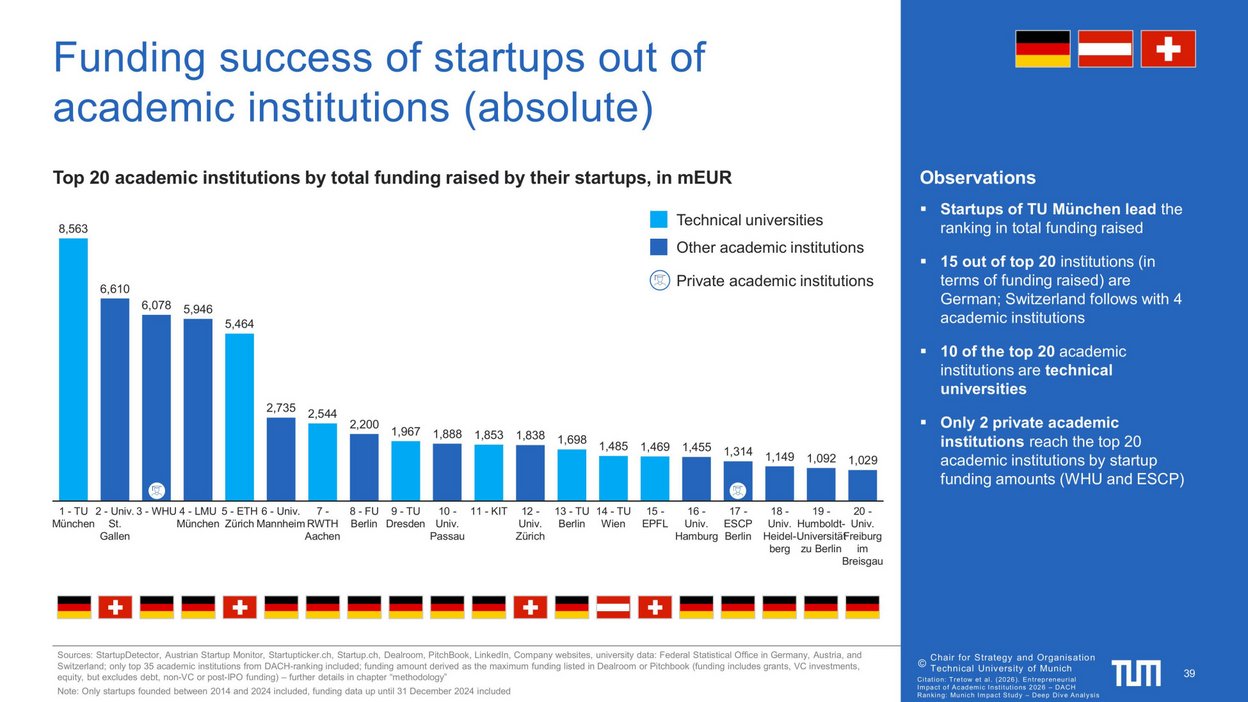
HSG is also exceptionally well-positioned in the field of startup funding: spin-offs from HSG raised over 6.6 billion euros between 2014 and 2024.
This puts HSG in second place here too (behind TUM). With 392 funded startups, it ranks third behind ETH Zurich and TUM, with around two-thirds of HSG startups having received more than one million in external funding. On average, HSG startups received around 27 million euros in funding between 2014 and 2024, which is by far the highest figure in Switzerland (third place in the DACH region).
It is noteworthy that HSG’s outstanding results have been achieved even without the most recent initiatives to promote entrepreneurship – and thus primarily reflect what has been built up over many years: a vibrant startup culture that is deeply rooted in the university.
Many of the activities now brought together under the umbrella of HSG Entrepreneurship (formerly Startup@HSG) have only been launched in recent years – including, for example, the HSG START Accelerator support programme, which began in 2025, a joint project between the START Foundation, the Switzerland Innovation Park Ost and HSG, funded by the Canton of St. Gallen as well as other foundations and private donors.
The promise these new initiatives hold for the future can therefore hardly be overestimated, as Professor Dietmar Grichnik, Vice-President for Innovation & Quality, emphasises: “HSG’s startups and spin-offs are a central element of our knowledge transfer strategy. They demonstrate how excellent research and teaching can be translated into social and economic added value. This is precisely what we aim to further strengthen through HSG Entrepreneurship.”
The TUM study is based on an analysis of over 51,000 startups founded between 2014 and 2024 and recorded in leading startup databases such as StartupDetector, Dealroom and PitchBook. The results show that the importance of academic institutions for the startup ecosystem is growing. Full details of the study: www.entrepreneurshipranking.com