Opinions - 26.10.2026 - 15:00
Following Kaczyński’s PiS and Orbán’s Fidesz, Aleksandar Vučić’s SNS has now also suffered a stinging electoral defeat. In all cases, the ruling parties had established a system of corruption, mismanagement and the discrediting of political opponents. In Poland, Hungary and now also in Serbia, public discontent had been building up.
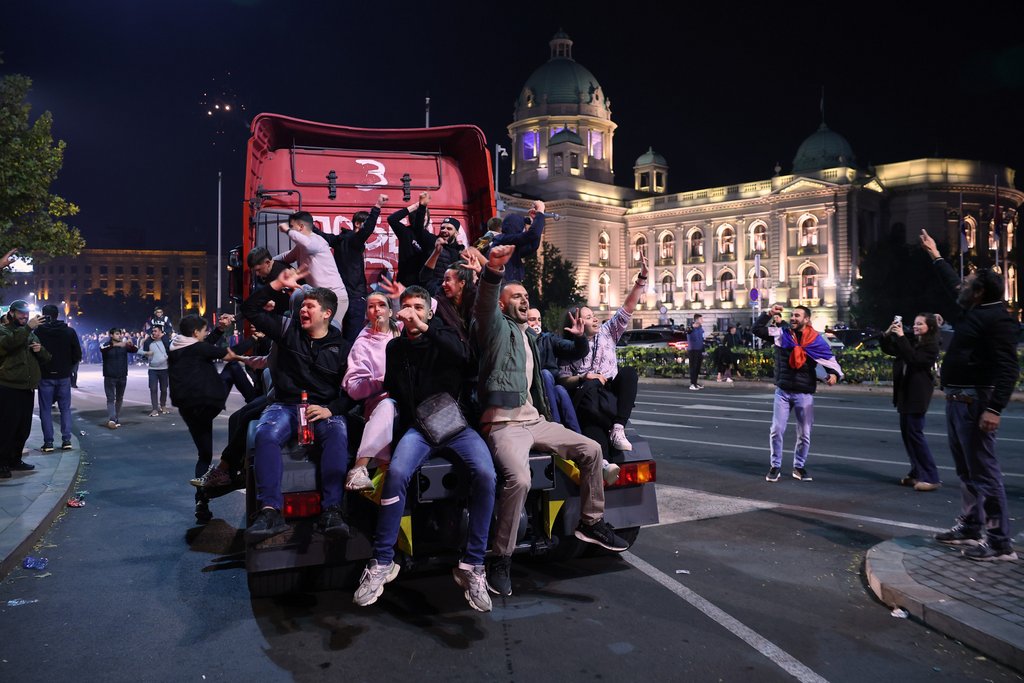
Political scientists are now even speaking of “democratic backsliding”. In Serbia, public anger was sparked by the collapse of the new railway station canopy in Novi Sad in November 2024. Sixteen people died as a result of shoddy construction work, a lack of inspections and non-transparent tendering procedures. The protests quickly spread to the universities. The cross-party movement “Students Win”, which sprang up out of nowhere, channelled the mood of protest and turned it into electoral success. The students’ professional strategy was key. They spoke with the main opposition parties and agreed on a joint approach. In terms of substance, they pursued a catch-all strategy and avoided sensitive topics. They did not discuss the status of Kosovo, remained silent on the Srebrenica massacre and did not seek to impose sanctions on Russia. They focused on the fight against the corruption of the Vučić regime and also engaged with the rural population, who were heavily influenced by the television propaganda of the ruling SNS party. The Students’ List succeeded in maintaining pressure from the streets and organising demonstrations in the centre of Belgrade attended by a hundred thousand people. On Sunday, many voters who had previously stayed away from politics went to the polls. Voter turnout, at almost 70 per cent, is the highest it has been for a long time.
The breathtaking rise of the student movement has raised enormous expectations, which the organisers are unlikely to be able to fulfil. After more than a decade, the entire administration and civil service are riddled with SNS party loyalists. It will be difficult to deliver on the promise of a functioning democratic constitutional state. Forming a government will be no walk in the park either. The Students’ List unites left-wing, liberal and national-conservative forces. Many of the candidates standing for election do not have any political experience. What proved to be an advantage during the election campaign could become an obstacle in the legislature and the executive.
The Hungarian Prime Minister Péter Magyar has already congratulated the Student List. The situation is more complex when it comes to the Polish Prime Minister Donald Tusk. During the last Serbian parliamentary elections in 2020, he had still supported Vučić and attempted to steer his vacillating policy between the EU and Russia decisively towards the West. EU Enlargement Commissioner Marta Kos expressed the hope that Serbia’s stalled EU accession process might gain momentum again. The paramount significance of the parliamentary election lies in the fact that Serbia has an active civil society.
Prof. Dr. Ulrich Schmid is Professor of Eastern European Studies at the University of St.Gallen.
Image: KEYSTONE / ARMIN DURGUT