Research - 04.05.2026 - 14:00
The need for digital skills is growing steadily and a shortage of skilled workers is expected in the long term. Nevertheless, comparatively few women choose a career in computer science. How can this be changed?
HSG researchers Dr Scherwin Bajka and Prof. Dr Patrick Emmenegger investigated this question as part of a large-scale survey of around 2,500 Year 8 pupils from the cantons of St.Gallen and Lucerne. The results show that to attract more girls to careers in IT, it is not enough simply to boost their self-assessment of technical skills. It is equally important to critically examine existing career profiles and present them in a more realistic light.
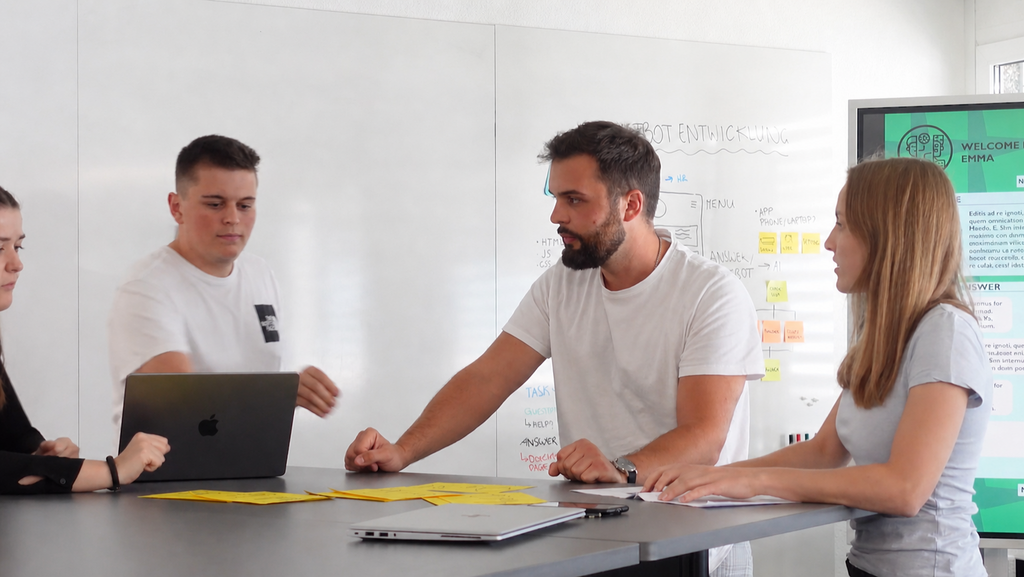
The study shows that girls are less likely than boys to associate IT careers with social and interactive aspects. Whilst boys perceive IT as both technically challenging and socially interactive, girls often view these careers as purely technically challenging. Yet everyday working life in IT certainly involves social and interactive aspects, ranging from teamwork to customer contact. However, these aspects are rarely clearly highlighted in career descriptions.
To test the impact of alternative portrayals, the researchers used career information videos. One group watched a traditional, technically focused video, whilst a second group was shown a version with a stronger emphasis on social aspects.
The results are clear:
These findings show that a more realistic and socially balanced portrayal of IT careers can specifically help attract more girls to these paths without deterring boys or distorting the professional image.
The study thus makes it clear that gender differences in career choice are not based solely on individual preferences. They also arise from perceptions and portrayals of professional requirements and can be changed.
Career guidance in the field of computer science should place greater emphasis on the social aspects of technical professions and dispel stereotypical notions at an early stage. Even simple measures, such as short videos or adapted job descriptions, can have measurable effects on career choices.
The study “How to reduce the IT gender gap in occupational preferences?” by Prof. Dr. Patrick Emmenegger and Dr. Scherwin Bajka is available to download online.