Research - 27.11.2026 - 09:00
The fact that the UN Climate Change Conference COP31 in Antalya ended without a joint declaration raises the question of how people can maintain confidence and the capacity to act in the face of setbacks in climate policy.
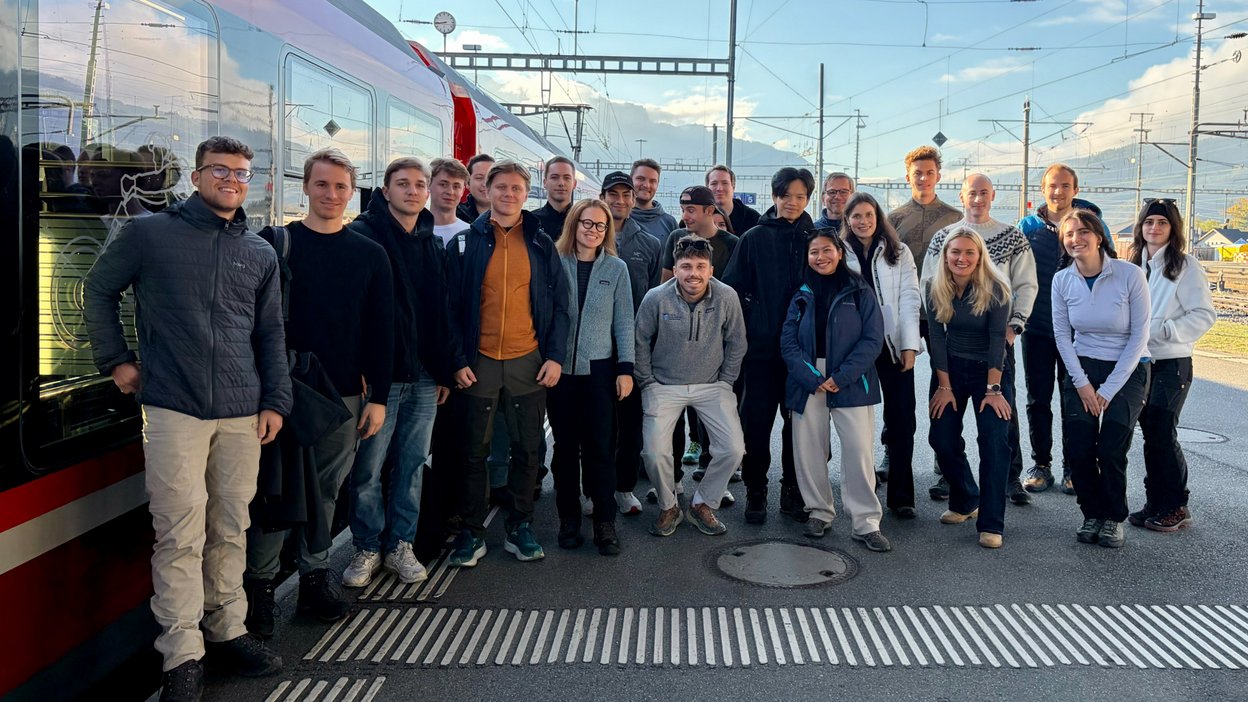
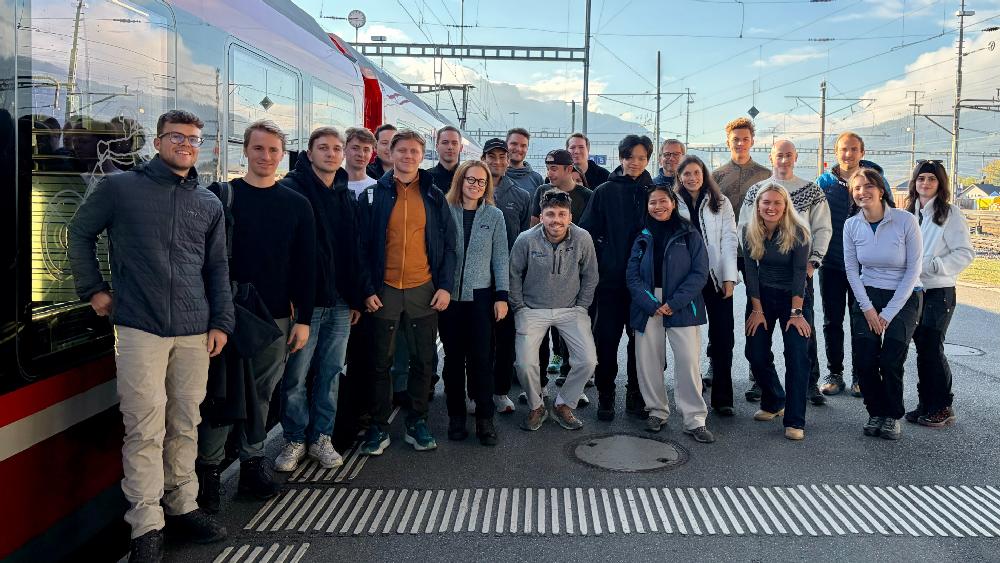
The Master’s course "Climate Death: Cultural Imaginaries and Organisational Futures" aims to foster this ability and brings together different disciplines: The field of expertise of literary scholar Prof. Dr. Anna Elsner and that of Prof. Dr. Rolf Wüstenhagen, head of the Master's degree programme "Managing Climate Solutions" at HSG. In their view, the complex topic of climate change can best be understood not only through scientific communication, but also by engaging the heart, hands and all the senses. Against this backdrop, the faculty took 22 students to Zurich Airport and to the melting Morteratsch Glacier in the Swiss Alps.
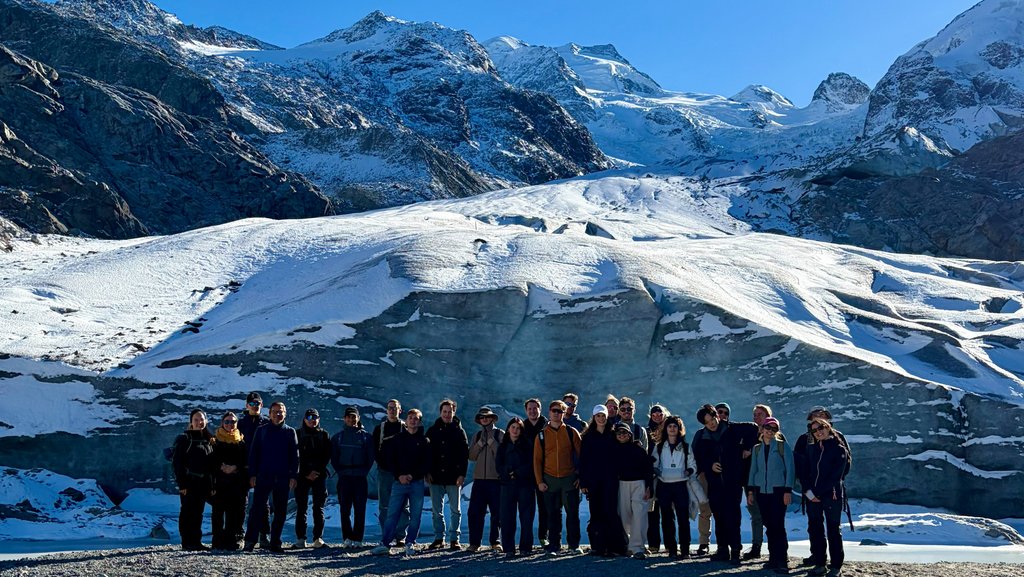
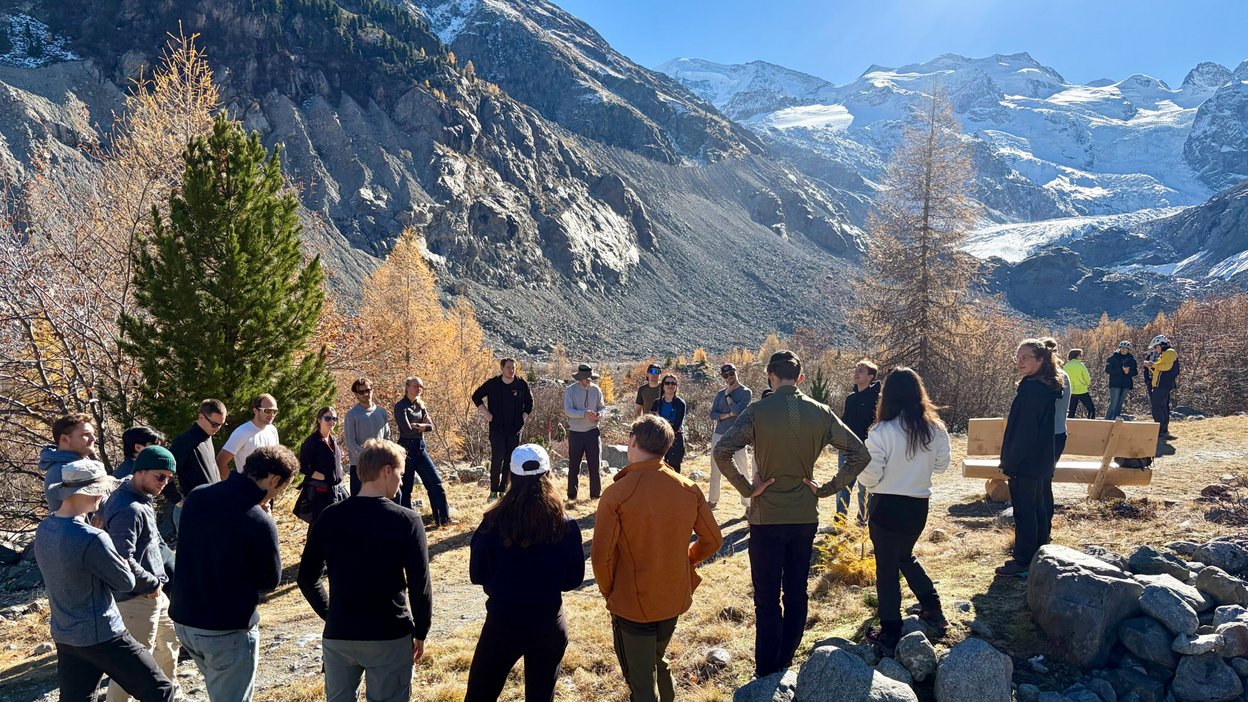
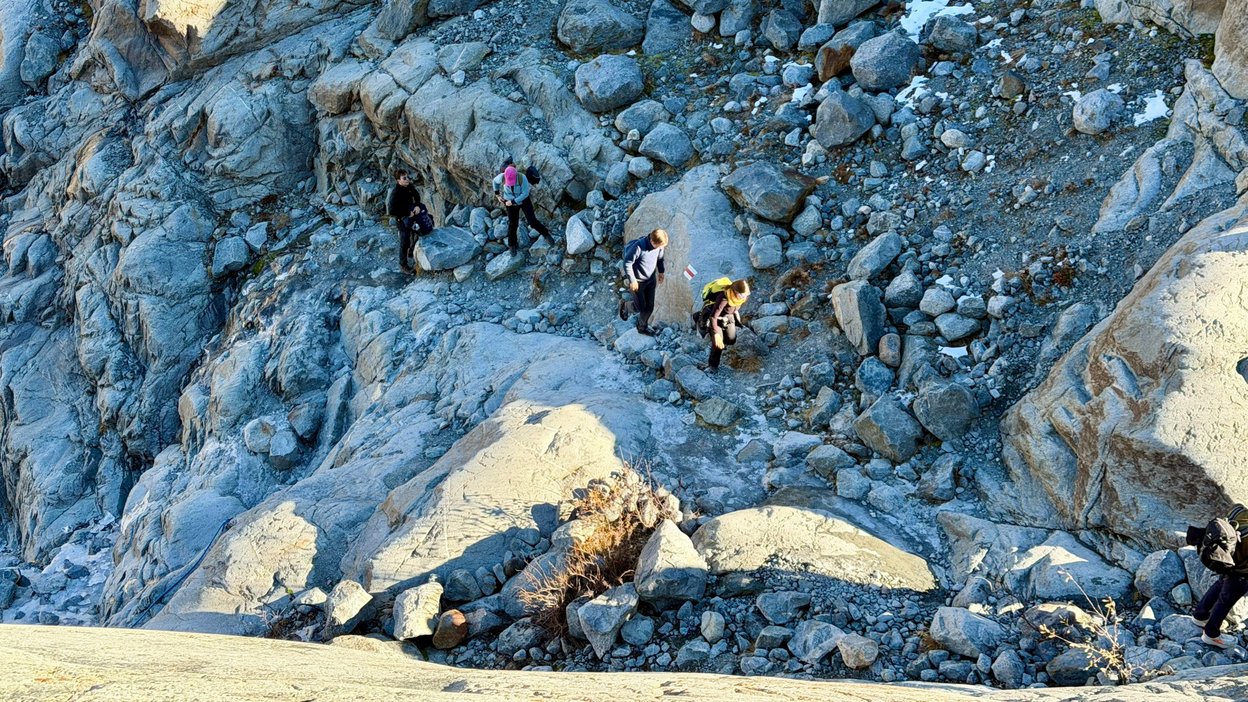
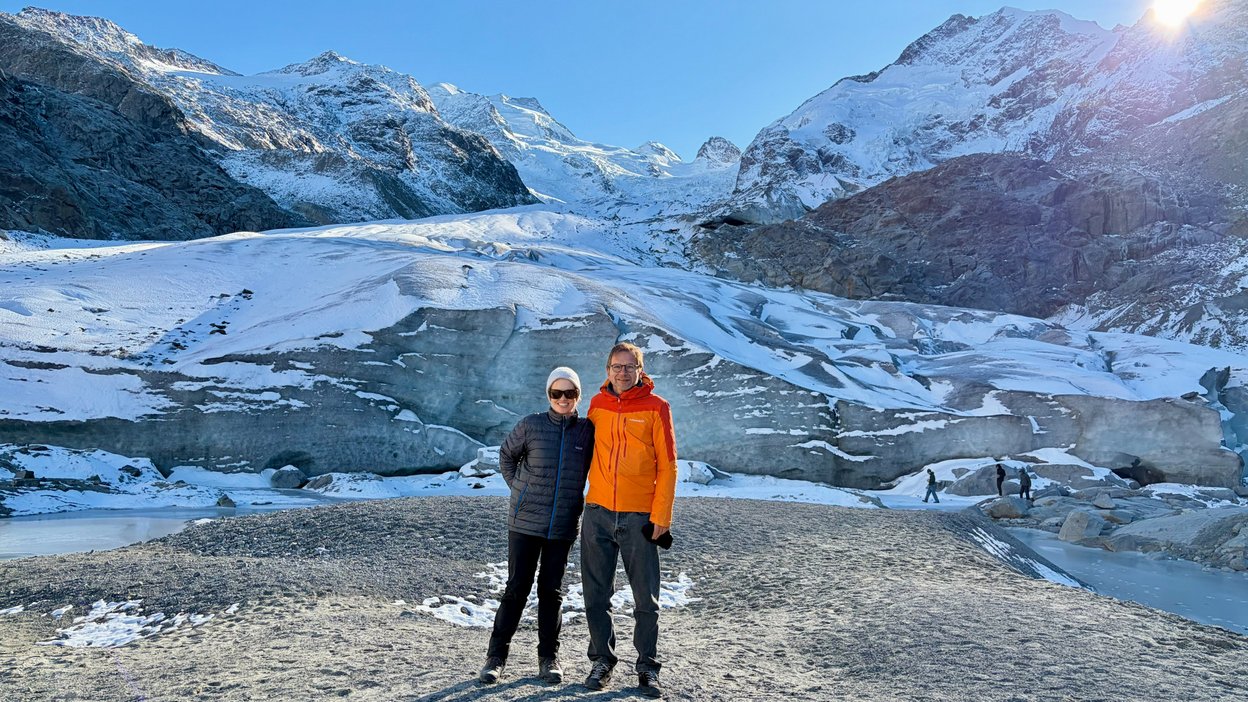
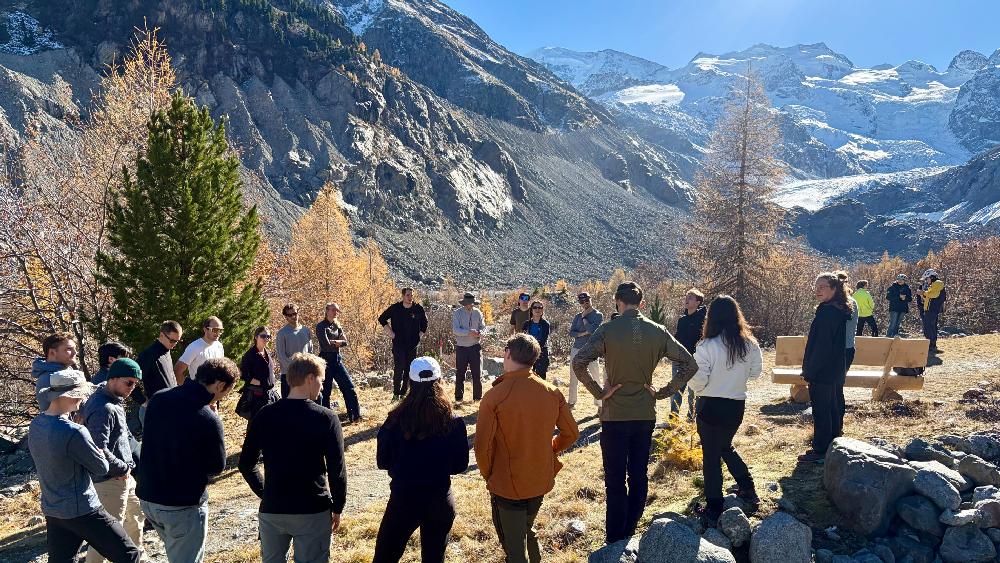
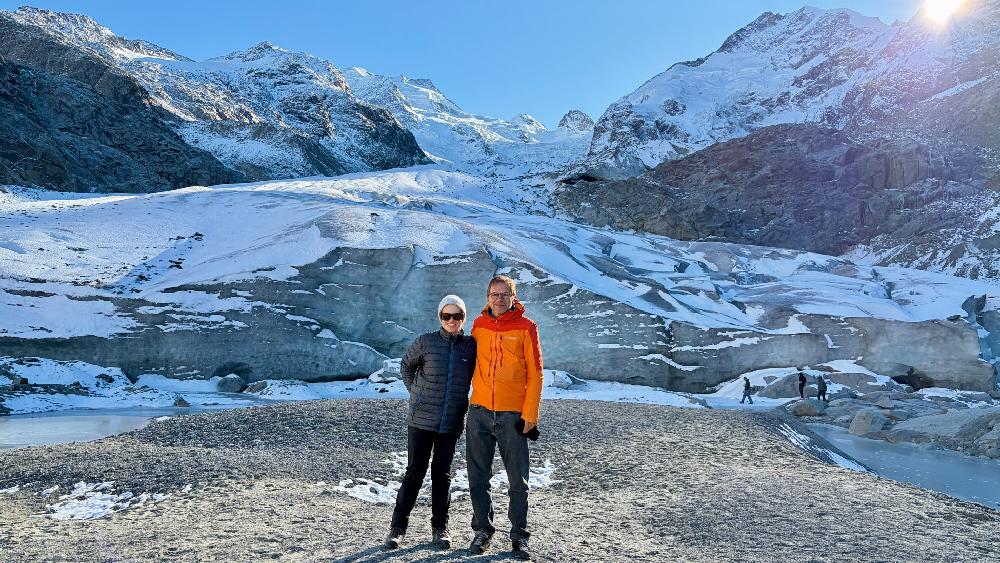
"I want to touch the ice!" A student runs enthusiastically towards jagged chunks of ice on the Morteratsch Glacier in Engadin. For many of his fellow students, this is their first encounter with a glacier: one student, who has travelled halfway around the world to complete a degree course in Switzerland, explains that back home, people usually spend their free time in well-air-conditioned shopping centres and rarely have direct contact with nature. Here, amidst the mountains of Graubünden, students on the HSG's "Climate Death" course are experiencing nature in a whole new way. Along the hiking trail, annual markers show just how far the glacier has retreated since 1850.
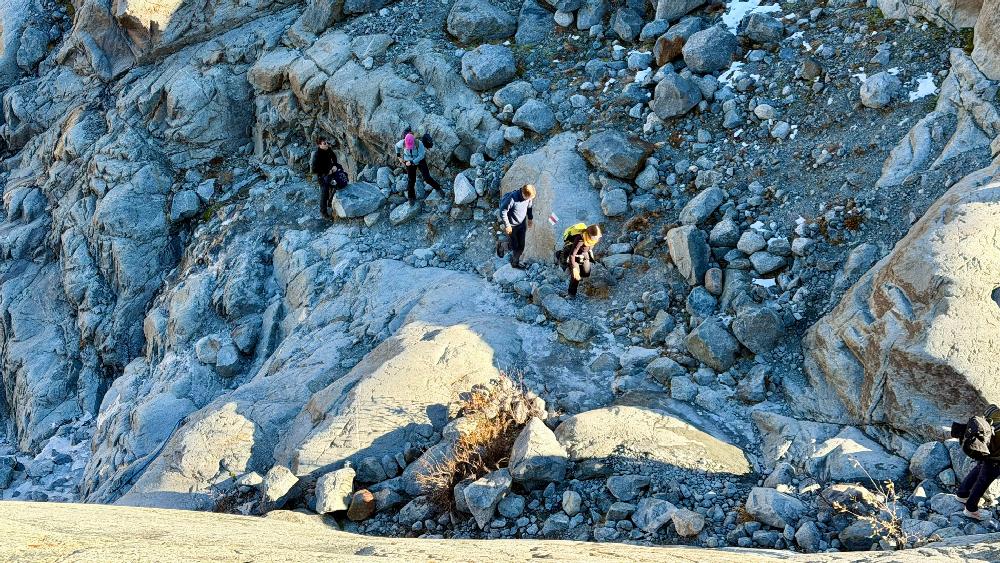
While it originally extended as far as Morteratsch railway station, the HSG students now have to walk 3.5 km up the valley before finally reaching the glacier’s edge over rough and rocky terrain. Once there, the students capture their impressions on their smartphones and create small works of art from ice, sticks and scree.
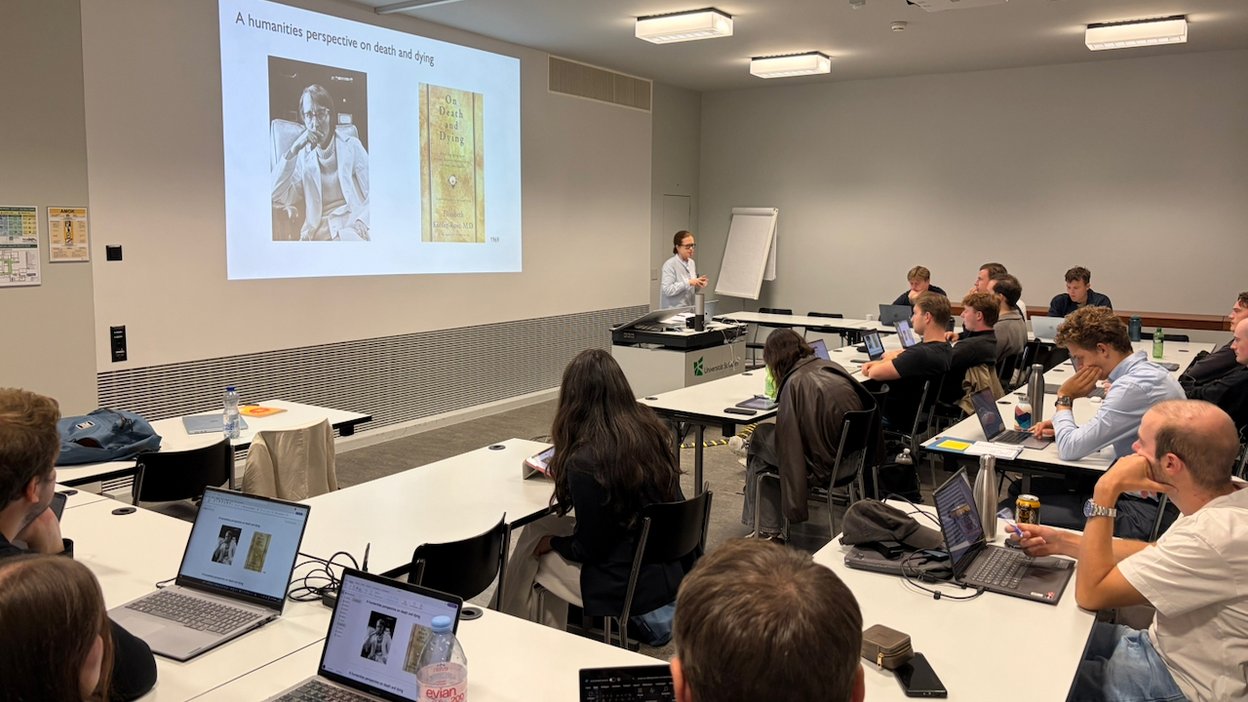
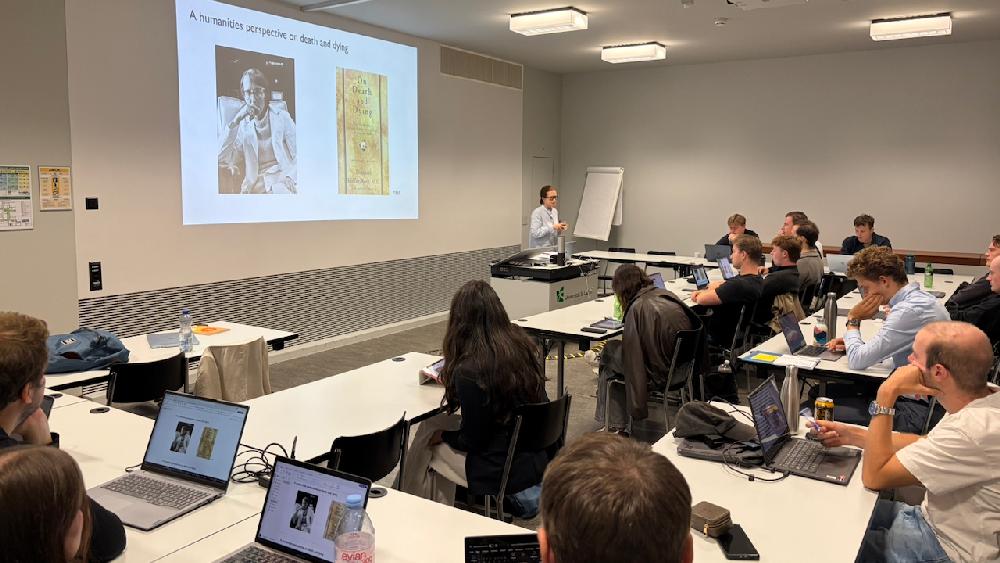
It was on the fringes of a Senate retreat in Rapperswil in 2023 that the literature professor and the energy expert discovered a common thread in their fields of research: dealing with loss and change. Wüstenhagen and his team are, amongst other things, investigating how people and organisations cope with the transition from old to new technologies, and what role emotions play in this process. In her work, Elsner deals intensively with death, grief and their expressions in film and literature. Both perspectives can be linked to the "five-stage model of grief" developed by the palliative care researcher Elisabeth Kübler-Ross. This model suggests that, when faced with change, people initially react emotionally with denial, followed by anger, depression and bargaining, before finally reaching acceptance.
For Elsner and Wüstenhagen, this raised the question: how do people cope with the knowledge that our planet is changing irrevocably? Conversely, what happens in organisations that are among the contributors to climate change? And how can the grief over these losses be channelled into a willingness to help shape a sustainable future? "With our course, we are embarking on a balancing act. On the one hand, it is about acknowledging the climate crisis in its full extent. On the other hand, however, this seriousness also forms the starting point for discovering meaningful courses of action at a societal, organisational and personal level," says Wüstenhagen.
In the course, scientific findings on climate change meet literary visions of the future. Among other things, Elsner introduces the dystopian novel "Sturz in die Sonne" by Charles Ferdinand Ramuz. In it, the Earth veers off its usual orbit and heads towards the Sun. The narrative confronts students with existential fears and the idea of a world whose demise seems inevitable.
To balance this, the students also read the more hopeful novel "The Ministry for the Future" by Kim Stanley Robinson. It envisions a future in which people seek political, economic and technological solutions despite dramatic climate impacts. The concept of "Cathedral Thinking" – thinking in terms of long timeframes – also underpinned the teaching format.
"We are thus appealing to our students' willingness to work today towards a future whose benefits will only be reaped by future generations," says Elsner. Wüstenhagen complements these perspectives with his experience in research and teaching on energy and climate issues at the School of Management. For example, students apply the concept of the "Stages of Grief" to organisational change in the German automotive industry.
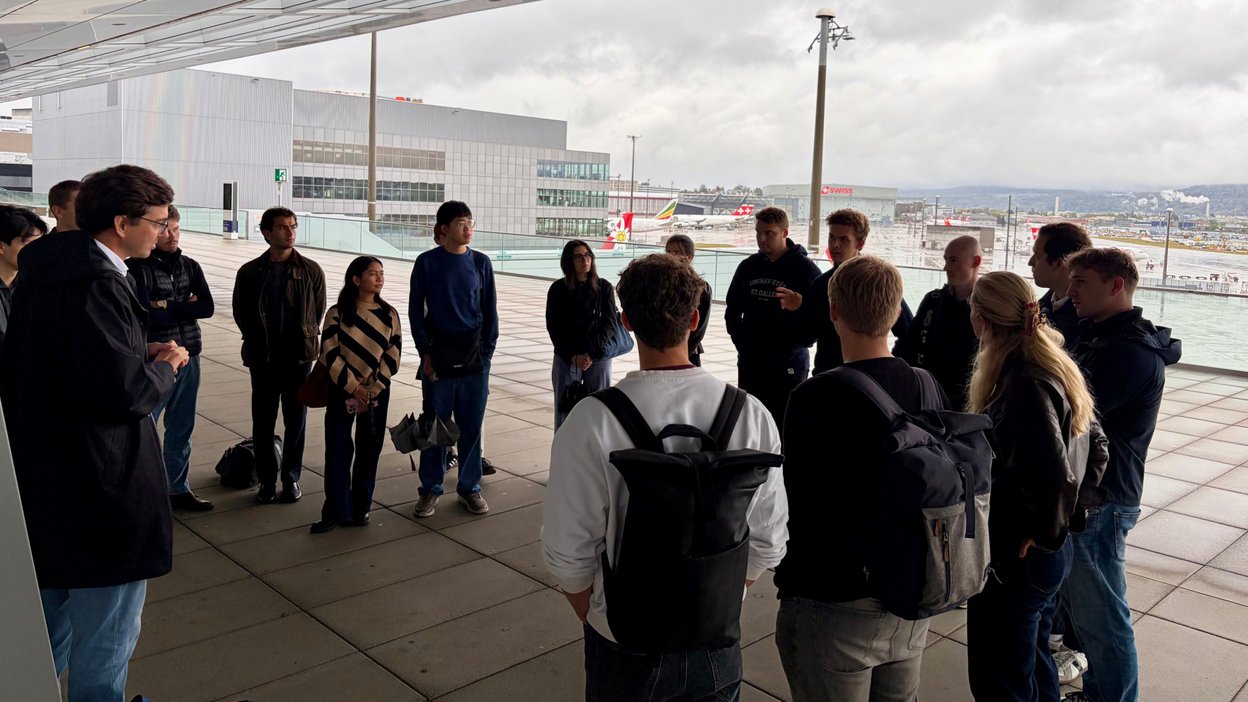
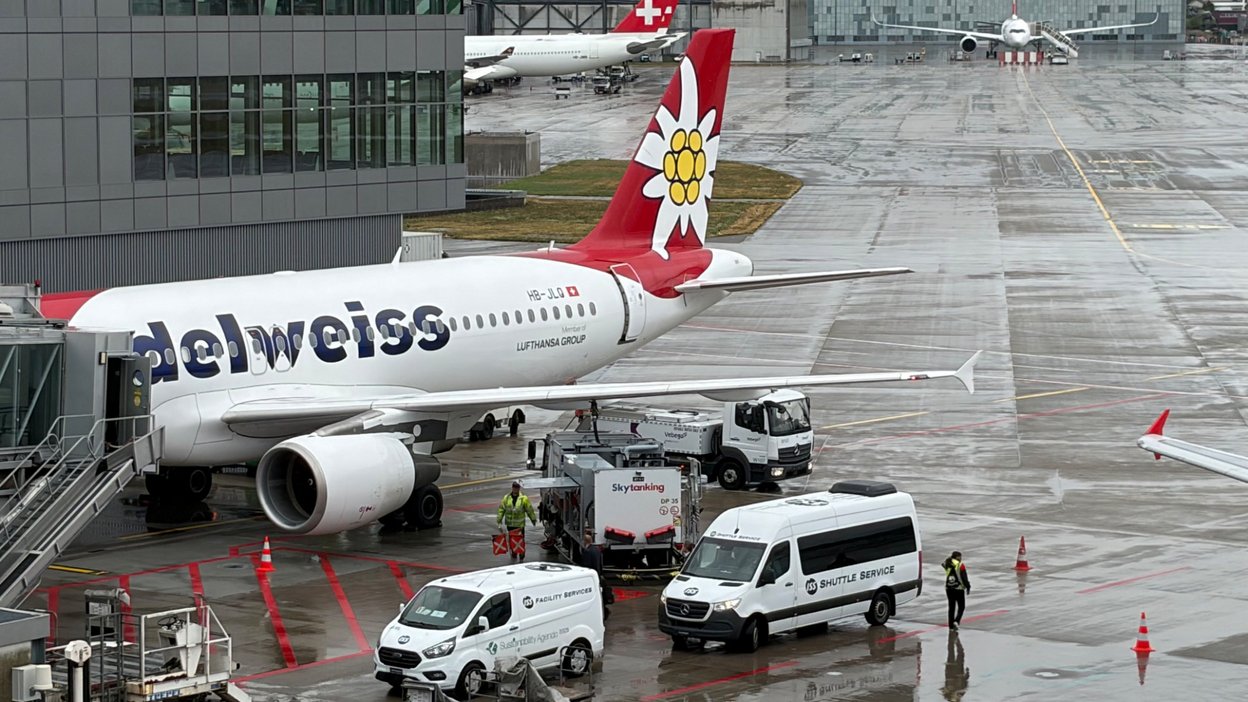
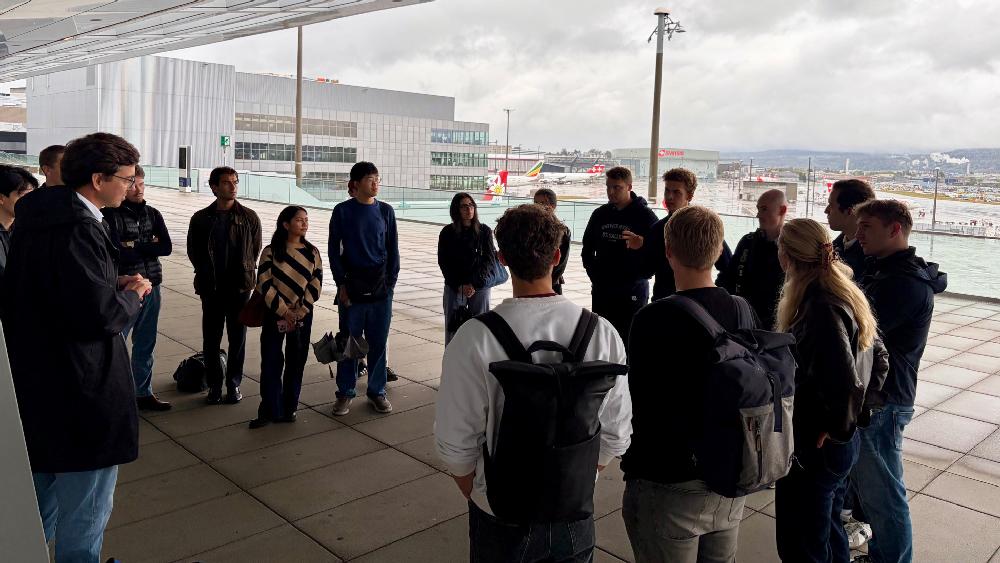
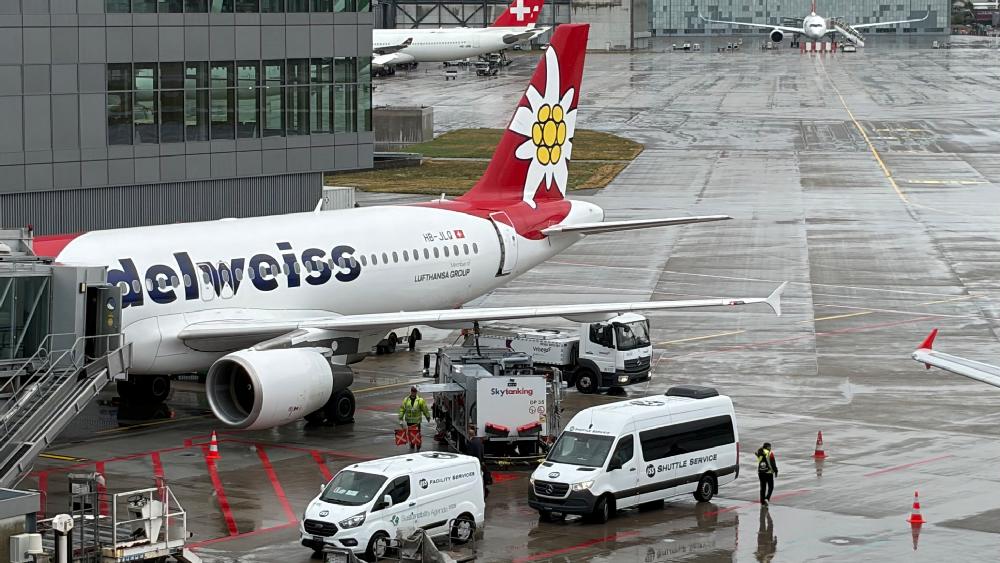
After delving into the theoretical foundations, the students took a look behind the scenes at Zurich Airport. There, they observed how aeroplanes are refuelled with kerosene. They also learnt about the infrastructure required to maintain air traffic, which is one of the largest emitters of CO2 in Switzerland.
Something that gave many pause for thought: around four freight trains carrying fossil fuels arrive every day to meet the airport's needs. "What seems abstract in climate statistics becomes tangible here," says Wüstenhagen. The airport exemplifies modern mobility's dependence on fossil fuels and the challenges of a climate-friendly transition.
The consequences of the global use of fossil fuels can be seen directly in the retreat of Switzerland's glaciers. After a guest lecture by glaciologist Matthias Huss from ETH Zurich had illustrated just how much climate change is already making itself felt in the Alps, one of the glaciers particularly affected was within their grasp. On the way there, they explored the Alpine landscape with nature educators Maryna Potriina and Clémentine Robert.
"Glacier retreat has become a topic in literature and film, both in Switzerland and worldwide," says Elsner. "Numerous works deal with the disappearance of the eternal ice and the question of what this loss means for our relationship with nature." " Cultural studies scholar Simon Probst also examines, in his Burying Glaciers, how people can mourn lost glaciers or extinct animals.
Somewhere between Zurich Airport and the Morteratsch Glacier, the realisation of the consequences of human activity on the environment sinks in.
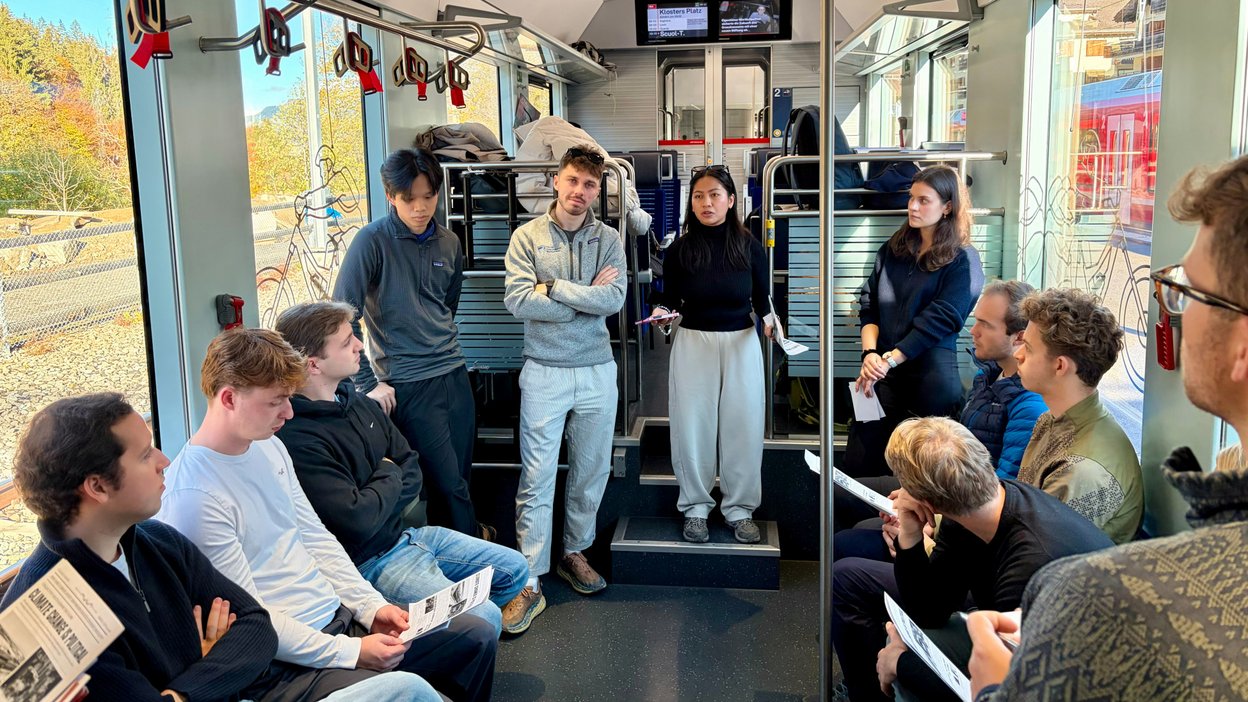
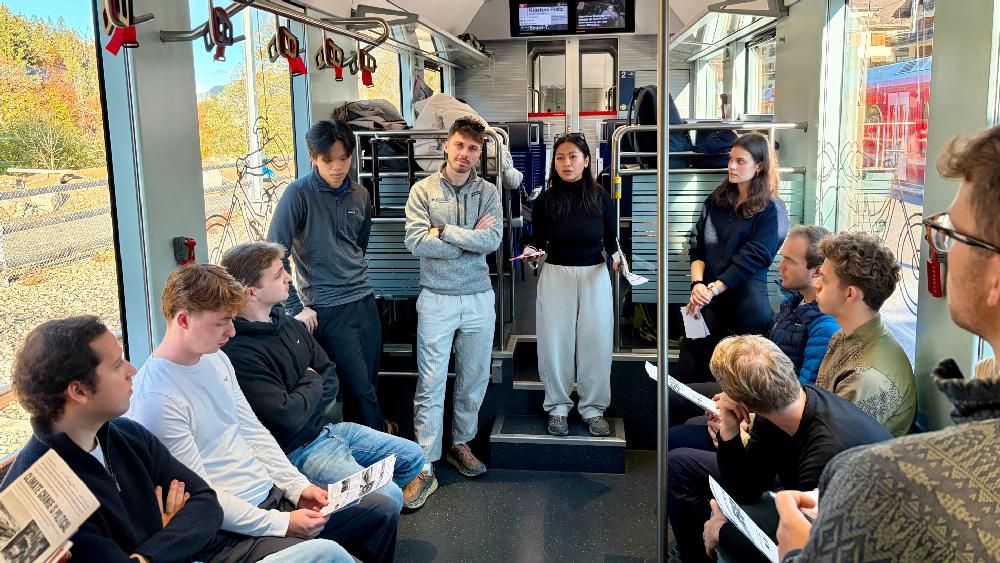
The way the lessons are structured is also unusual. Instead of relying on traditional presentations, Elsner and Wüstenhagen focus on creative engagement, open discussions and the sharing of experiences. Through co-teaching between two schools, different ways of thinking and academic traditions come together. The idea behind this is that complex challenges such as the climate crisis cannot be solved within a single discipline. Particularly at a time when artificial intelligence is delivering familiar answers ever more quickly, the course aims to foster those skills that cannot be automated: critical thinking, creativity and the ability to combine different perspectives. Thus, even the bicycle compartment on the train journey to the glacier and back is spontaneously transformed into a seminar room, where students present and discuss their insights orally, without digital aids.
More than half of the 22 participants came from the fields of accounting and finance, while others were studying business administration, economics or law. "Our students embraced unfamiliar perspectives and engaged intensively with the emotional and social dimensions of climate change," says Elsner, summing up: "In the end, what remains is not just the memory of a melting glacier or the smell of kerosene alongside the roar of aeroplane engines. It is also the realisation that a conscious approach to climate change means acknowledging losses without giving up hope for change."
The "Climate Death" course is offered as part of the HSG's Contextual Studies programme and as an elective module in the Master's Certificate programme "Managing Climate Solutions". Anna Elsner teaches and conducts research at the School of Humanities and Social Sciences (SHSS-HSG). Rolf Wüstenhagen teaches at the School of Management (SoM-HSG).