Research - 09.11.2026 - 14:16
In a recent HSG study, “Crowd Evaluations of Entrepreneurs with Physical Disabilities: Stereotype Subtyping through the Lens of Benevolent Ableism”, researchers examine a seemingly straightforward question: Do potential investors evaluate the same entrepreneurial pitch differently depending on whether it is presented by an entrepreneur with or without a physical disability?
How did you set up the experiment?
Stroe and Sirén
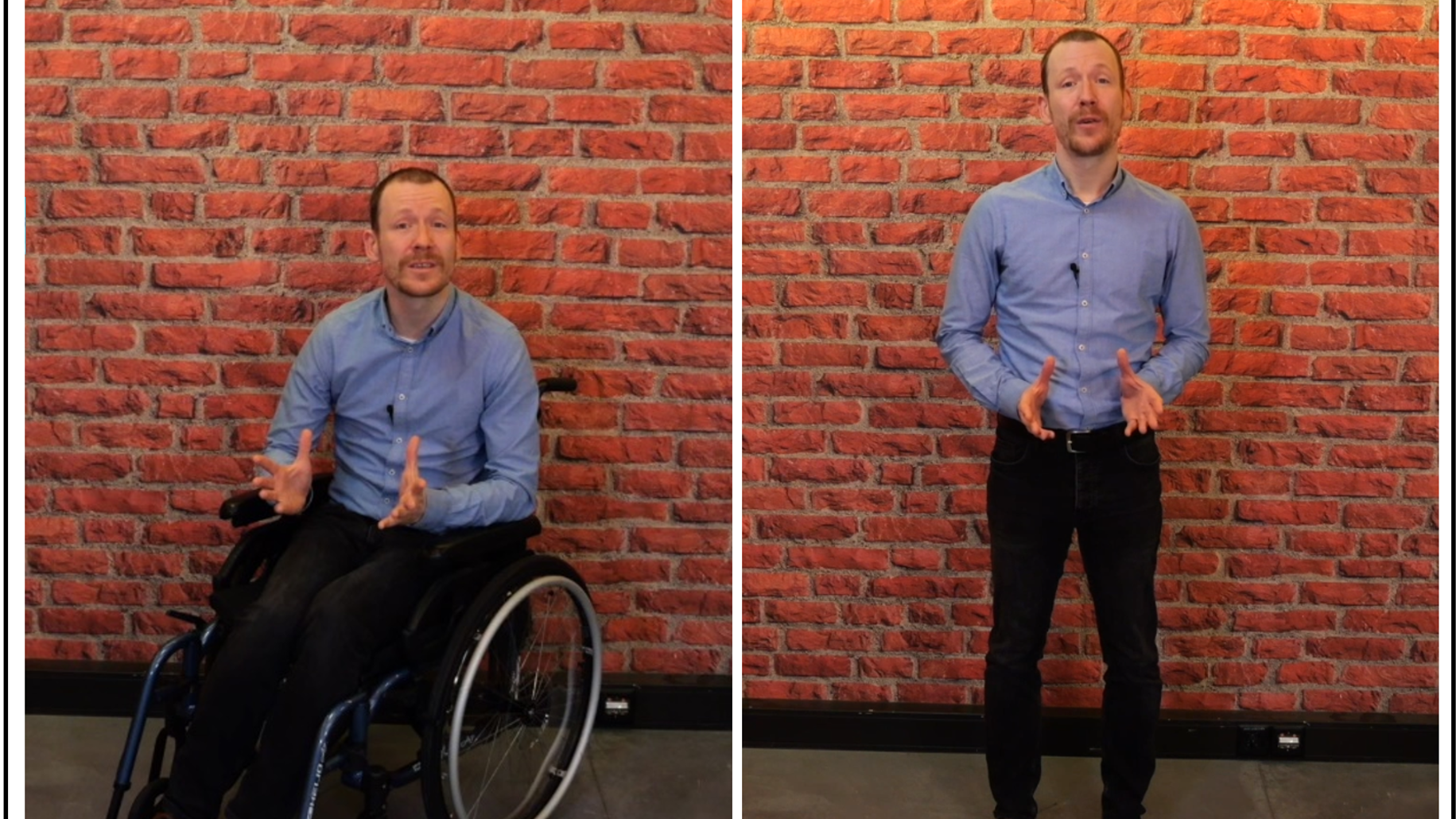
We ran three experiments with almost 700 people who have investment experience. Each of them watched a short video pitch based on a real start-up that had successfully raised money. We hired a professional actor to deliver the same pitch, word for word, and changed only one thing: whether he appeared with a visible physical disability (a wheelchair or a prosthetic leg) or without one. Afterwards, the participants reported how interested they were in taking the investment further and how they saw the entrepreneur as a person. We also spoke with 19 professional investors and six entrepreneurs with disabilities.
Did the entrepreneur with the disability receive different treatment than the one without?
Yes, but surprisingly not in the way you would expect. Entrepreneurs with physical disabilities actually receive more favourable initial evaluations: participants were more interested in taking the investment further. They were perceived as both warmer (more trustworthy, likable, etc.) and more competent.
This is a good thing, right?
Not exactly. These results point towards what disability researchers call benevolent ableism: attitudes toward people with disabilities that appear positive or supportive but are based on assumptions that people with disabilities are vulnerable, need protection, or have overcome unusually large obstacles. In our study, it shows up as what we call “patronizing positivity”. It feels like kindness, but it is still a bias.
So it demonstrates the existence of bias?
Yes. The pitch was identical, so any difference in how it was judged is bias, even when it points in a flattering direction. The central idea behind it is what psychologists call stereotype subtyping. People generally associate disability with warmth but lower competence, while entrepreneurs are stereotypically associated with competence but potentially lower warmth. An entrepreneur with disabilities therefore conflicts with both stereotypes. We argue that evaluators create a distinct mental subcategory—a “disabled entrepreneur”—and judge that subtype through the particular lens of benevolent ableism.
Why would the entrepreneur seem both warmer and more competent?
Warmth goes up because a visible disability triggers protective, caring reflexes. One investor admitted: “Subconsciously, emotionally, I would trust them more.”
Competence goes up through what disability scholars call the “supercrip” or hero narrative. Many people implicitly expect less from someone with a disability, so the very same achievement – building a company and pitching it to investors – suddenly looks extraordinary. As one founder who uses a wheelchair put it: “The first initial reaction is always the same. They are fascinated.” In other words, the entrepreneur isn’t demonstrating more competence; they are simply being judged against a lower bar.
If the same pitch receives a more positive initial reaction from investors, but entrepreneurs with disabilities nevertheless experience funding gaps, what do you think is happening between the initial pitch and the eventual allocation of capital?
That is exactly the puzzle our study opens, and the topic of our next study. The door seems to close somewhere further down the line. One founder told us: “It’s never no in the beginning. […] the first meeting is actually positive, but then they think about it more and then it’s a no.”
The goodwill may fade during due diligence, when patronizing positivity gives way to more familiar doubts. We suspect a gap between wanting to be supportive and actually writing the cheque. Applause is free; capital isn’t!
Could this biased view of entrepreneurs with disabilities create problems for entrepreneurs later on?
Yes. If you are applauded for clearing a bar that was set lower for you, you are not being taken seriously – you are being underestimated, just politely. The “inspiring hero” role can become a box. A blind founder told us that, when invited to speak at conferences, “it is hard not to get the feeling that, here we have this blind guy”. Being put on a pedestal is still being set apart.
And even founders who get past the first meeting may face a “prove-it-again” dynamic, where they have to re-establish their credibility at every stage.
You argue that evaluators create a distinct “entrepreneur with a disability” subtype. What would have to happen for that subtype to disappear and for investors to evaluate entrepreneurs with disabilities simply as entrepreneurs?
Mostly, familiarity. Right now, an entrepreneur with a disability is still a rare sight in most pitch rooms, so evaluators file them as an exception rather than as just another founder. And research on stereotypes shows that exceptions don’t change minds. So we need many more entrepreneurs with disabilities to be visible – not as one-off inspirational stories, but as founders who are simply good at what they do.
What should investors and entrepreneurs with disabilities take away from your study?
For investors: remember that the founder in front of you is more than their disability – even when what you feel is admiration. Admiration can be as reductive as doubt: either way, you are responding to the disability rather than to the person, their business and their numbers. A simple test: would I be this impressed – or this trusting – if the same pitch came from someone without a disability? If not, you haven’t really met the entrepreneur yet.
And for entrepreneurs with disabilities – although it is unfair that the burden falls on them – it may help to steer conversations away from the personal resilience story and towards hard evidence such as traction. One founder put it perfectly: there will always be people saying “they can’t do that” and others saying, “oh my God, they’re incredible. What we have to do is shut that out and be like, we’re just going to do our thing.”
Assistant Professor Silvia Stroe and Associate Professor Charlotta Sirén teach at the School of Management. Their study “Crowd Evaluations of Entrepreneurs with Physical Disabilities: Stereotype Subtyping through the Lens of Benevolent Ableism” was published by Entrepreneurship Theory and Practice.