Research - 16.10.2026 - 10:16
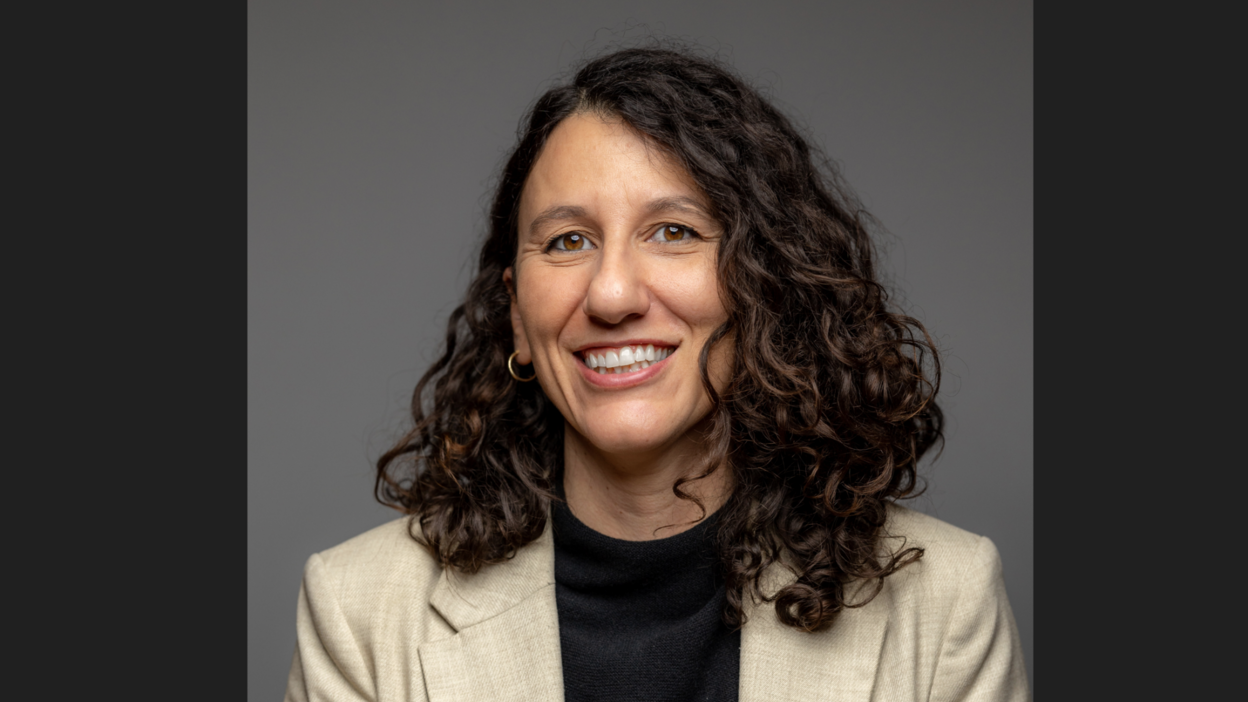
Over the course of four years, Prof. Barassi’s project investigates how youth and families deal with the persuasive power of generative AI technologies. The project received funding of about 800.000 CHF from the Swiss National Science Foundation.
What is the main goal of your project?
Veronica Barassi: Currently, there are many debates about the influence of AI, especially its ability to build relationships with users, and to steer toward harm. These debates are concentrating especially around young people – much like historical debates on earlier media technologies. Therefore, my goal in this project is two-fold: First, to take a step back from the "moral panic" about AI influence and understand what is really going on with the persuasive power of AI. Second, to gather ethnographic data about how families negotiate with these persuasive abilities of AI. What tactics, best practices, and understandings are families developing? For informed debates, we need to examine users' adoption of these technologies and bring their perspectives into the decision-making processes at society level.
What research questions does the project set out to answer?
VB: The project understands AI influence as happening at three different levels: the affective or interpersonal level, the political and cultural level, and the technical level. Regarding the first, I want to explore how the power of AI to make young people bond and build relationships with it plays out in everyday family life, including the role of parents in this dynamic. For the second dimension, I want to find out how young people are developing critical understandings of the content that they're being confronted with through Large Language Models (LLMs). How do they deal with biases and errors in the information they encounter? Regarding the technical dimension, I want to understand how families understand the way LLMs work and what makes them so persuasive. In sum, I want to document how people are making sense of these different layers of AI influence to create maybe something different and reclaim human agency.
How do you plan to answer these questions?
VB: The project takes an urban ethnography approach. The researchers in my project will do ethnographic work with families in Zurich, Geneva, and Lugano in the first instance, and then Berlin, Milan, and Paris. Ethnography is based on participant observation and full cultural immersion. The researchers will work closely with local families. In addition, they will follow the discourses around generative AI across the city, going to events on AI and youth, and following local news.
Who will be working with you in your project?
VB: A postdoctoral researcher, Dr. Saba Rebecca Brause, and two PhD students, Fabiana Veronese and Maria Scetta, joined the project in September 2026. In addition, Dr. Philip Di Salvo, the project partner within the MCM3, will support project coordination and public outreach. The team combines expertise in anthropological and media and communication research with training in other disciplines, like political and computer science. This will be helpful in untangling the different layers of AI influence.
How does your project contribute to current debates and developments around the role of AI in society?
VB: I would like several things to emerge from this project. First, through the collection of primary data, I want to develop a better understanding of how AI influence works in practice. These insights can inform ethical design and educational methods to allow youth to understand and use AI more critically. Second, I plan to establish the "Persuasive AI Futures Network" that will work on questions of future AI development: Where do we push back? What kinds of regulations are needed? What role should AI play in future generations’ lives? I hope to build an international and multidisciplinary network of scholars as a space for advancing best practices and policy recommendations to shape AI development in a beneficial way that benefits youth.
Photos: Jenny Kidd & Synthetic Pasts / Better Images of AI / CC BY 4.0 (title); portrait: University of St.Gallen