
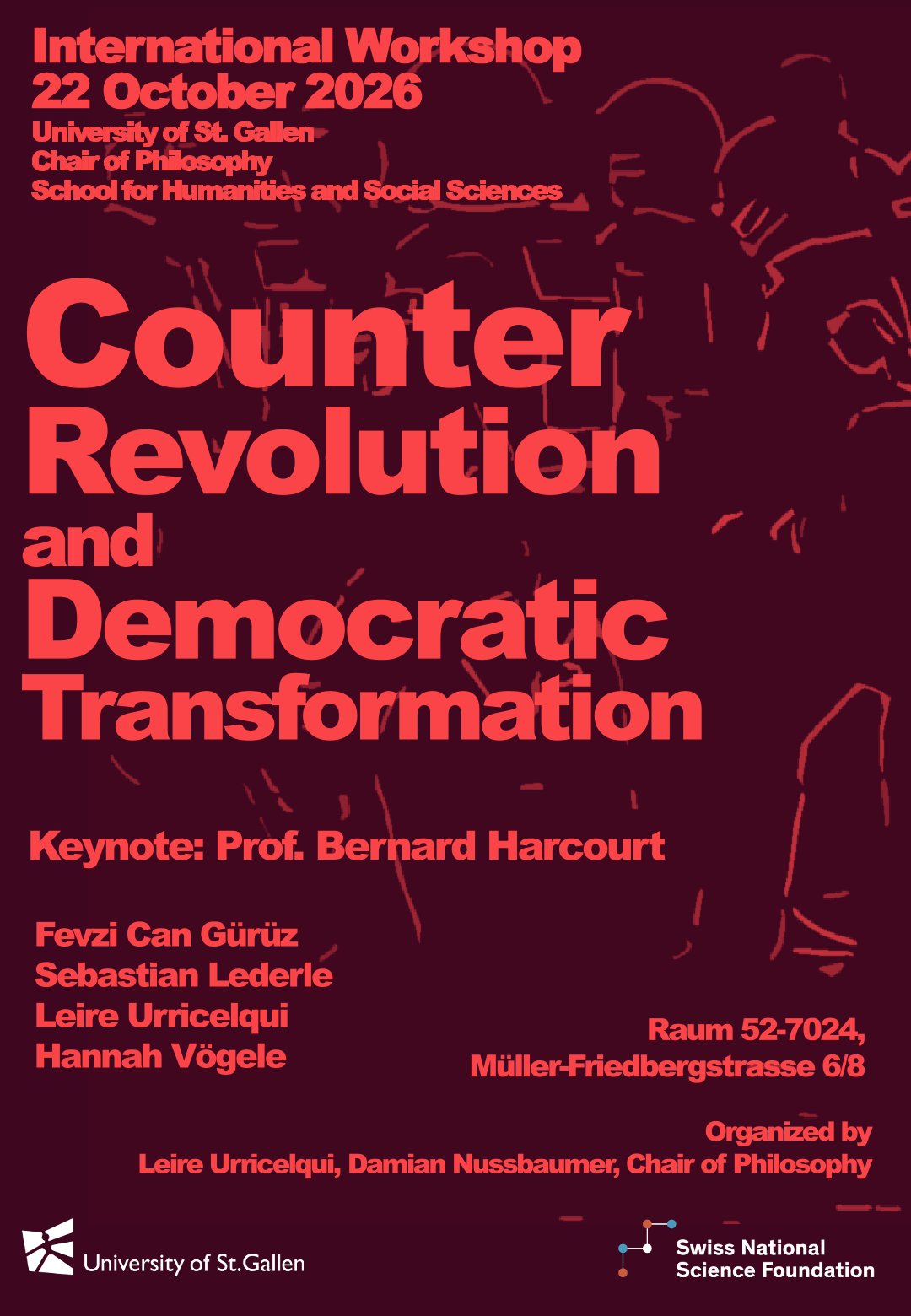
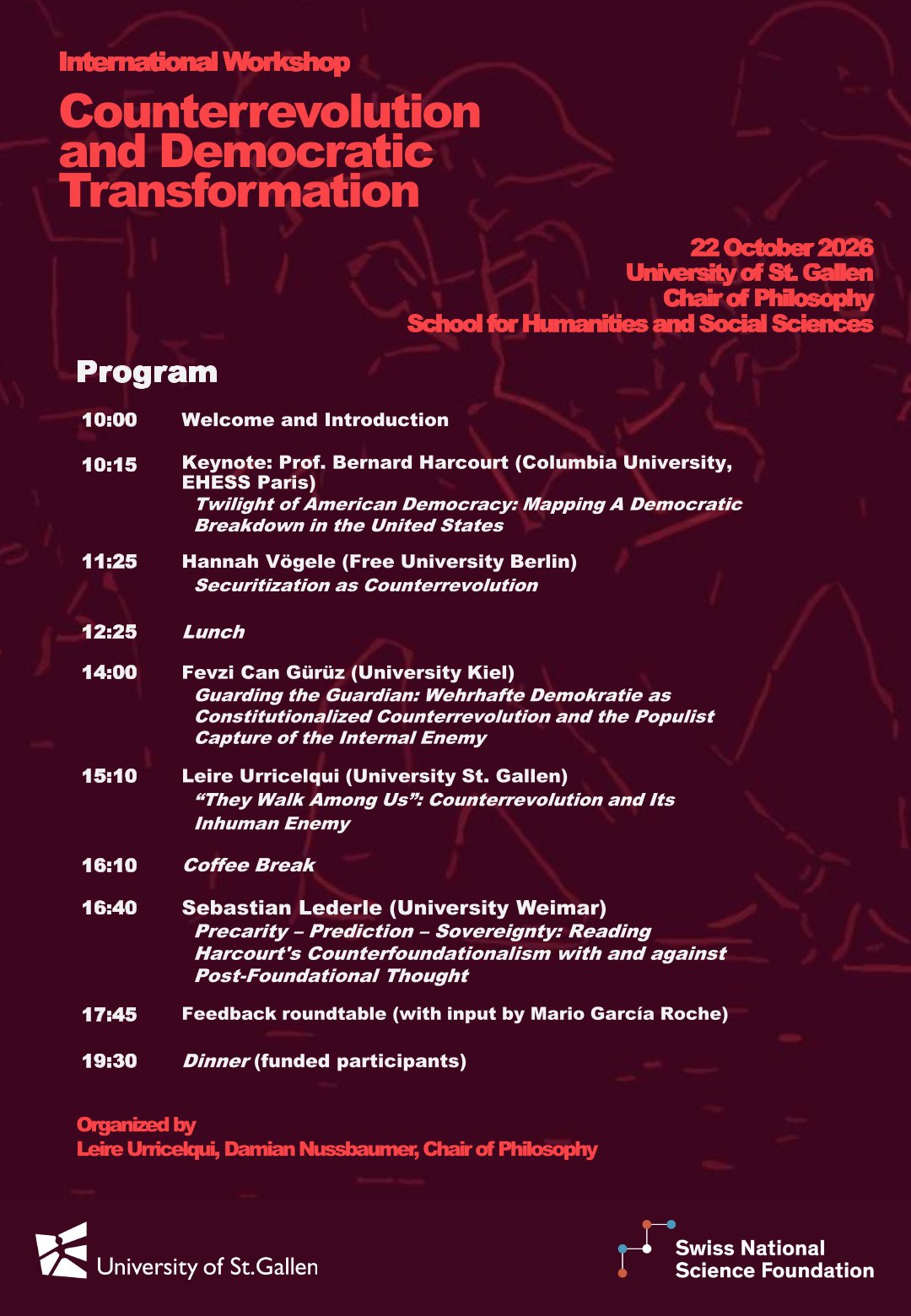
Where and when:
Over the past two decades, the world has witnessed increasing normalization of emergency measures, restrictive border measures, and the creation of legal and administrative apparatuses to identify, coerce, and eliminate internal threats. As these processes have often been driven by democratic states, there has been intensified debates across political philosophy, legal theory, and critical social theory concerning how and when democratic institutions themselves can act as vehicles of authoritarian transformation. However, disagreement remains over the mechanisms driving these processes and the conceptual vocabularies for understanding them.
The workshop addresses these debates through Bernard Harcourt’s concept of counterrevolution. His recent analyses of counterrevolution, counterinsurgency, and emergency governance provide one of the most influential contemporary frameworks for understanding how coercive state rationalities migrate from exceptional contexts into ordinary democratic governance.
At the centre of the workshop is an inquiry into how contemporary democratic states transform governance through legal, political, and security mechanisms in ways that consolidate coercive power while preserving the appearance of constitutional normality. It further asks how counterrevolutionary rationalities reshape democratic institutions through law, administration, and security practices, and to what extent these transformations illuminate contemporary processes of authoritarian consolidation or fascitization.