Opinions - 14.08.2026 - 11:00
Currently, there is much debate as to whether Russia is planning an attack on European countries. An overt military strike is unlikely, as Russia cannot even defeat Ukraine on the battlefield. Simply put, the Kremlin lacks the resources to open up another front. Another matter to discuss however, is whether Russia will attack states and societies in Europe below the threshold of war. The answer is: such an attack is already in full swing and will intensify in the future. Putin’s strategists know exactly where the weaknesses of open democracies lie. They are doing everything in their power to divide European societies. A priority of the Russian agenda seeks to discredit quality media and erode the political public sphere in Habermas’s sense of the term. Russian propaganda sows doubt about the so-called “mainstream” and promotes narratives about the so-called “fake news”. In doing so, it often invokes core values of Western societies, such as freedom of expression.
The content of the propaganda channel RT, for example, was blocked in the EU immediately following Russia’s open invasion of Ukraine. Since then, every article has been accompanied by a note stating, “By blocking RT, the EU aims to silence a critical, non-pro-Western source of information.” RT’s slogan is: “Question more”. This insinuates that consuming Russian propaganda content is an expression of particularly critical thinking. Of course, the opposite is true – RT floods the news market with AI-generated, off-the-shelf content and does not shy away from fabrications. This can currently be clearly observed in Russia’s attempts to influence public opinion in the run-up to the neutrality initiative. RT defames the Swiss Foreign Minister, Ignazio Cassis, as an *ex-Italian” and points out that he stole two video cassettes from Migros in 1989. RT also quite openly issues a voting recommendation on the neutrality initiative. For several months now, a fictional journalist with the quintessentially Swiss name “Hans-Ueli Läppli” has been causing trouble on RT. On 4 August, this avatar published a commentary ending with the sentences: ‘On 27 September, the people will decide. Either they will side with the centre-left majority and allow neutrality to continue to erode. Or they will follow Blocher and the SVP and finally enshrine our time-honoured neutrality in the Constitution. The choice is clear.”
As early as 31 July, the Russian Foreign Ministry’s press spokesperson, Maria Zakharova, had intervened in the referendum campaign with a lengthy Telegram post. Zakharova has become known for her crude and provocative style. For instance, at the start of Russia’s full-scale invasion of Ukraine, she claimed that Zelensky’s government had banned cooking books so that only the Ukrainian version of borscht would be cooked (borscht is a soup popular in both Russia and Ukraine). In her Telegram post on the neutrality initiative, she practises the art of selective quoting. She refers to the Bergier Report, a 25-volume work published in the late 1990s that critically examined the role of the Swiss economy during the Second World War. It addressed problematic aspects of Swiss wartime policy, such as the Nazi looted gold held by the National Bank and the restrictive treatment of Jewish refugees. What Zakharova fails to mention: A critical examination of one’s own past, such as that carried out by the Bergier Report for Switzerland, is unthinkable in Putinist Russia. Tentative attempts at criticising the Soviet and post-Soviet regimes of violence have been stifled since 2012. Mass protests against Putin’s re-election as president were violently suppressed at the time. Since then, a political deathly silence has reigned in Russia.
A particularly bizarre journalistic stunt is the so-called "Reports on the Human Rights Situation in Certain Countries”, which have been published jointly by the Russian and Belarusian Foreign Ministries since 2024. The latest edition was published in July 2026 and runs to 1,653 pages. The very selection of the “certain countries” reveal just how biased the report is. The dictatorships of Iran and North Korea, which are allied with Russia, are not mentioned, nor is Serbia, which continues to pursue a policy of balancing between Russia and the West. Switzerland, on the other hand, is given its own chapter, in which the "selectivity of referendum topics”, the “discrimination against the Russian-speaking population” and “the blocking of Russian television channels” are prominently denounced. On closer inspection, it becomes clear how these allegations combine disinformation and propaganda into a toxic mix masquerading as an official report. The foreign ministries in Moscow and Minsk take issue with the fact that Switzerland’s adoption of the EU sanctions against Russia was not put to a public vote. In doing so, they fail to recognise that the Federal Council imposed the sanctions against Russia based on the Embargo Act. Under the heading “Discrimination against the Russian-speaking population”, the report laments the freezing of Russian customers’ bank balances and the termination of private-sector contracts with Russian firms. The attendance of various Swiss politicians at commemorative events marking the anniversary of Russia’s invasion of Ukraine has also drawn criticism. The accusation regarding the “blocking of Russian television channels” also misses the mark. Russian state television can be received in Switzerland without hindrance via the internet. Private cable television providers did, in fact, remove Russian state channels from their line-up following the Russian invasion. This is, of course, not state interference in media freedom, but an expression of the providers’ freedom to shape their programming.
Russia and Belarus are certainly not in a position to point the finger and comment on the human rights situation in Western countries. In all freedom indices, these two authoritarian states rank at the very bottom of the list. The persecution of political opponents is not limited to arrests but also includes murders. Independent media are banned. Both states are sham democracies in which independent candidates and parties are excluded from elections. Nevertheless, the report has the audacity, in its “Afterword”, to denounce the alleged “restrictions on freedom of speech” in Western countries, which threaten “pluralism and open debate”. With disarming candour, the closing sentence reveals the instructions that the officials drafting the report in the Russian and Belarusian foreign ministries have received from their governments: “Western countries should avoid the threat of self-isolation and return to a civilised dialogue with the outside world, which the West needs today more than ever if it does not wish to completely discredit itself in the eyes of its voters and ultimately lose its place and role in global politics and the economy.”
Prof. Dr. Ulrich Schmid is professor of Eastern European Studies at the University of St.Gallen (HSG). His research focuses on media and politics in Russia, culture and society in Ukraine, and historical politics in Poland.
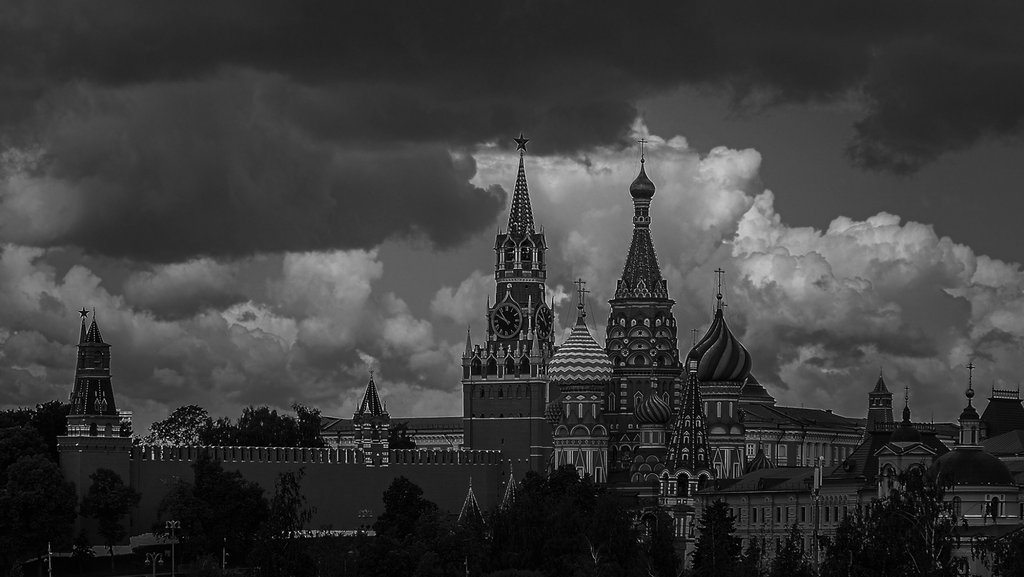
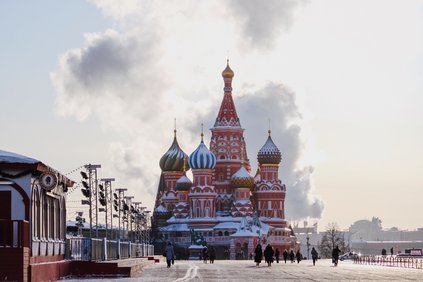
Image: The Kremlin is exerting influence on other countries through targeted disinformation.
More articles from the same category
This could also be of interest to you
Discover our special topics