close

HSG at a glance

The University of St.Gallen at a glance

Up-to-date, informative and inspiring - the new digital platform HSG at a glance replaces the printed Annual Report and the Facts and Figures brochure. Research topics, figures, visual data and insight into campus life.

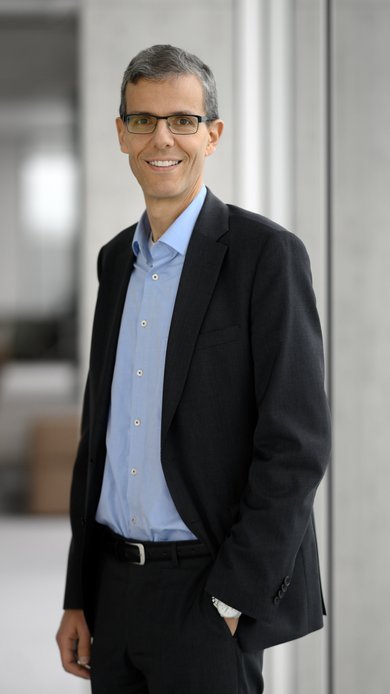
“Our vision is to be the leading European business university thanks to impactful research, holistic education and an active community.”
Manuel Ammann, President

HSG in figures

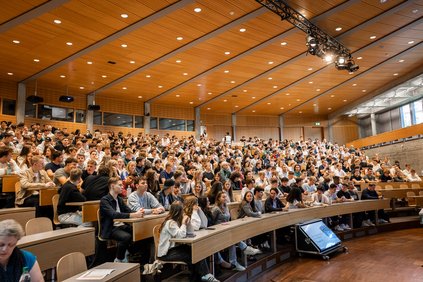
around 10,000 students

Over 80% of graduates have an employment offer upon graduation

over 490 lecturers with a strong international flavour

Over 200 spin-offs and start-ups are certified with an HSG label. They create added value and jobs.

47.6% of the University budget is self-financed

Research in focus

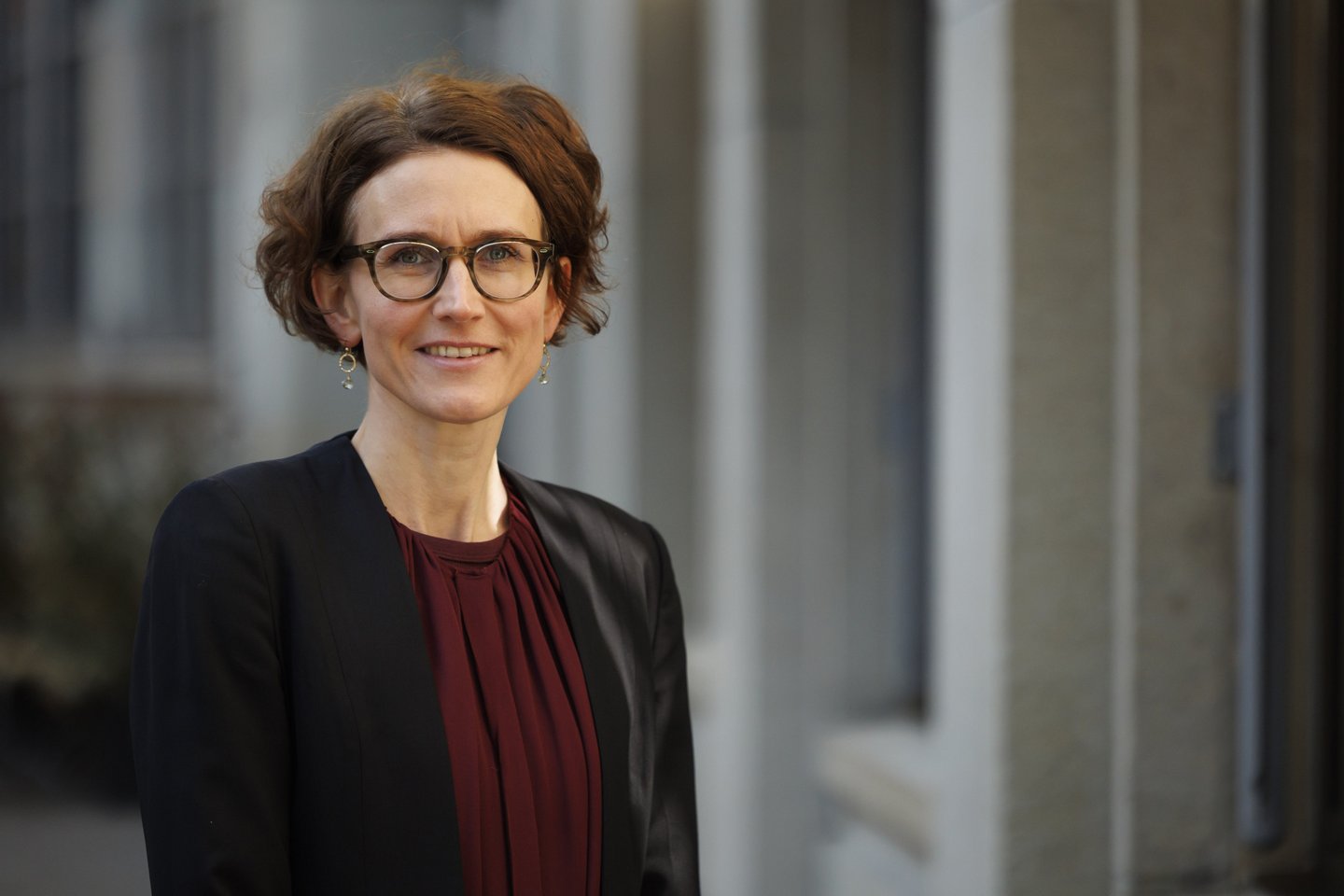
What role do political winners play in democratic stability?

Citizens who benefit from political decisions often do not question undemocratic processes. This is shown by a study of Prof. Dr. Eri Bertsou.
Read more

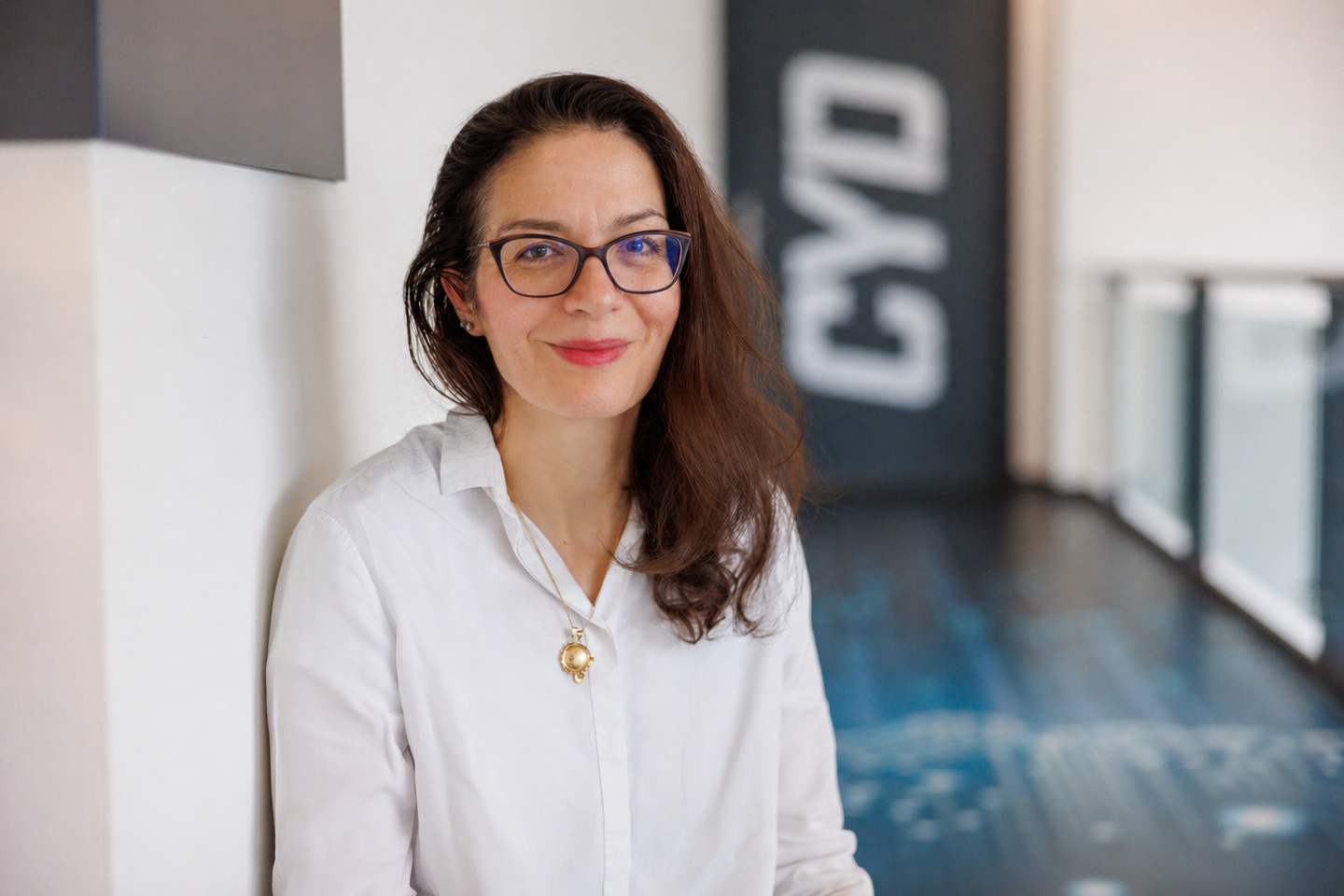
"If the bank runs out of liquidity, every strategy fails"

Prof. Dr. Seraina Grünewald has been researching government liquidity support and the too-big-to-fail regulatory framework for many years. Her expertise is in demand at both national and international level.
Read more

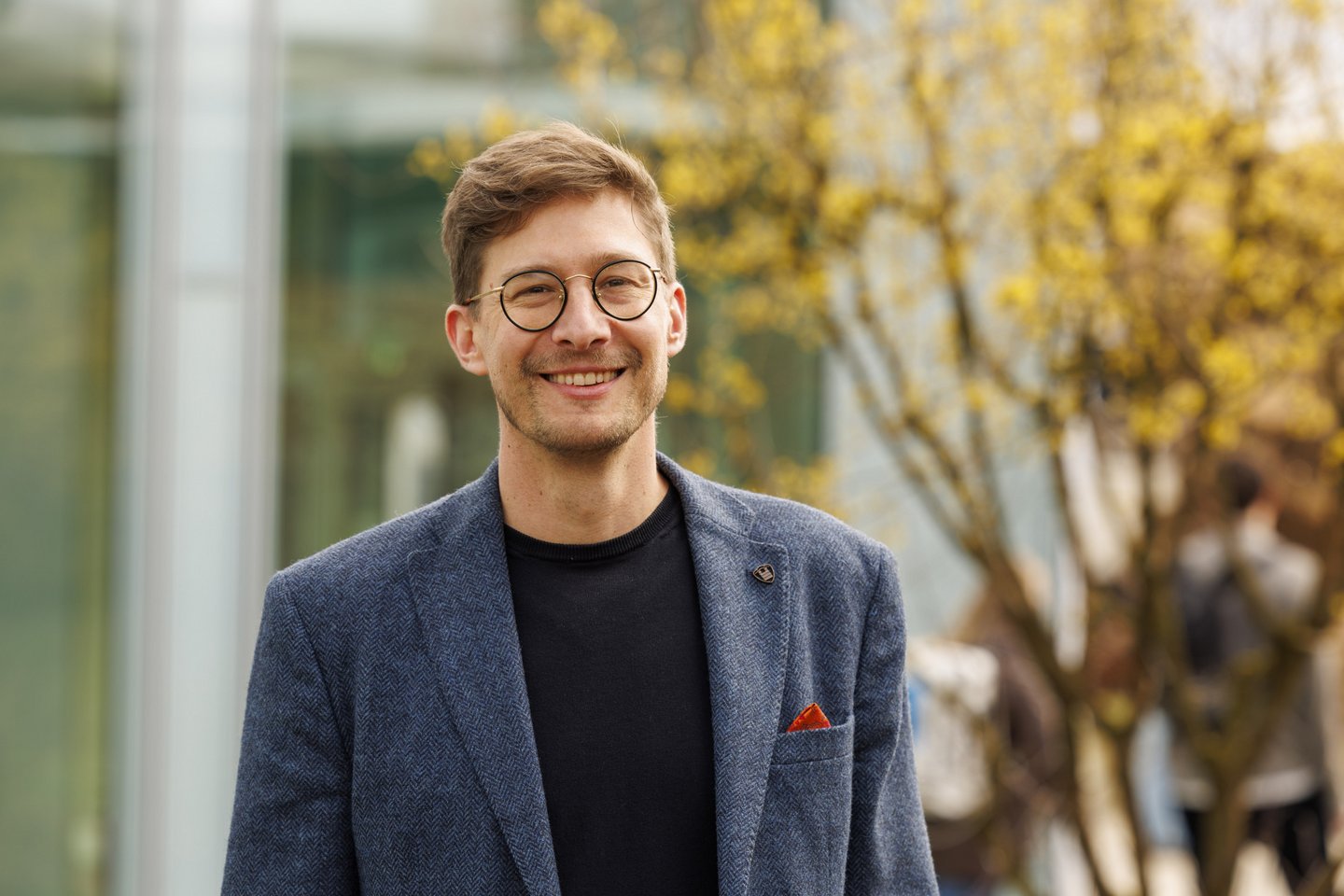
Research on ESG ratings triggers media response

A research article by Prof. Dr. Julian Kölbel on the divergence of ESG ratings has quickly become one of the most cited papers at the University of St.Gallen.
Read more

HSG helps shape the future of agriculture and land use in Europe and Africa

Four Horizon Europe projects funded by Switzerland and the EU are developing forward-looking solutions for agriculture and land use. Under the leadership of Prof. Dr. Sabine Hoidn, an interdisciplinary team contributes its expertise.
Read more

Optimising drone safety

The project of Prof. Dr. Katerina Mitrokotsa aims to enable the secure detection of drones without revealing private data.
Read more

Shared leadership as a sustainable leadership model

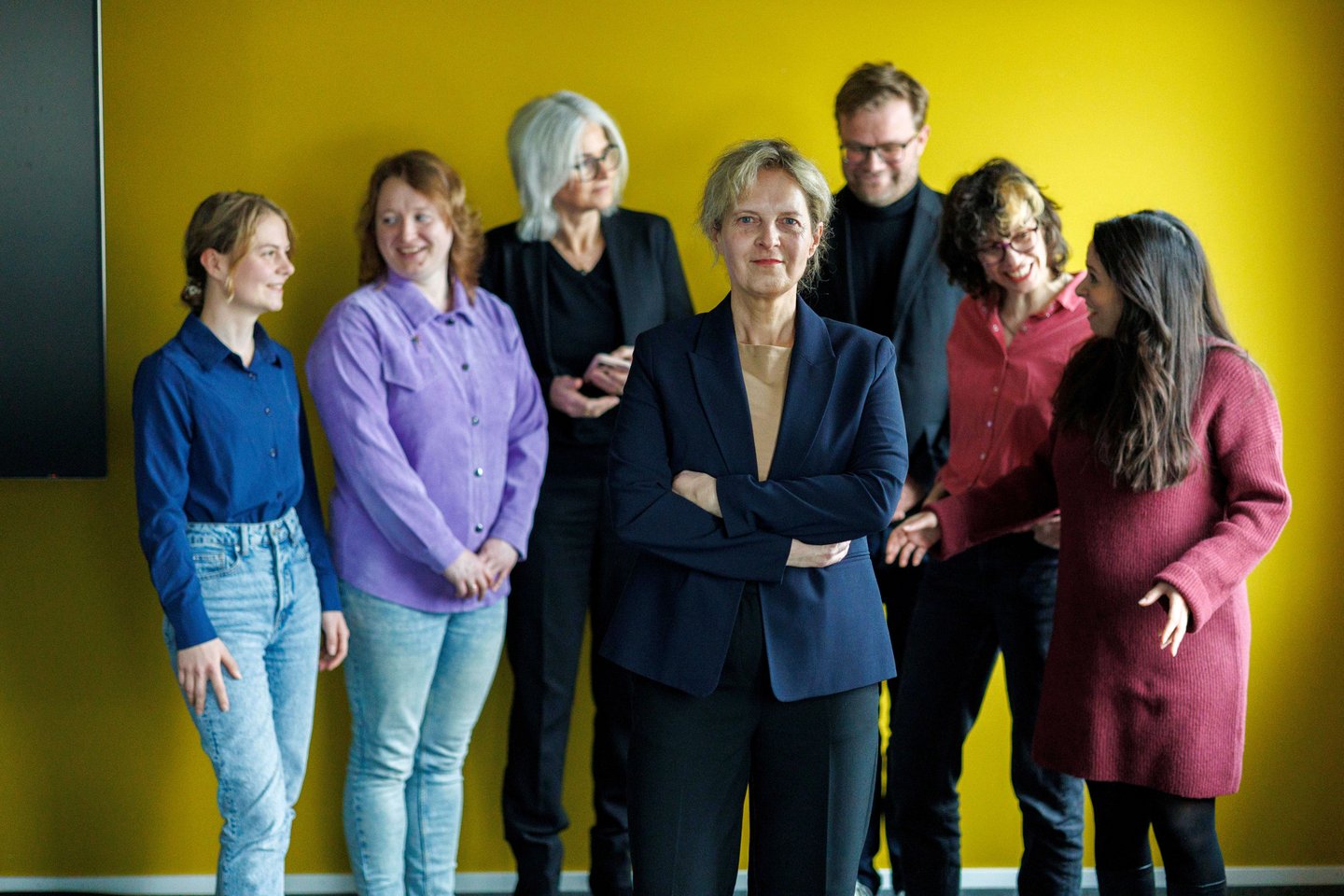
A research team led by Dr. Lena Rudolf, Dr. Sophie Klüser and Prof. Dr. Heike Bruch investigated the topic of shared leadership in organisations facing complex challenges.
Read more

Prize-winning research - Impact Awards 2026

Enable This Content

Content required confirmation

Accept
Show More

Promoting sustainable consumption

Based on several years of research, the book "The 60% Potential – Using marketing to win over mainstream consumers for sustainable consumption" by Prof. Dr. Johanna Gollnhofer presents a powerful concept for promoting sustainable consumption.
Enable This Content

Content required confirmation

Accept
Show More

AI-based detection of malnutrition

As part of the Innosuisse innovation project "AI-based nutritional assessment of malnourished patients in care facilities," the Institute for Technology Management collaborated with the startup ALPINA+SANA to develop a solution to combat malnutrition in the healthcare sector.
The project is receiving interest from the healthcare sector: over 50 hospitals are already considering its introduction. Thus, the initiative by Prof. Dr Dietmar Grichnik and Dr Robert Schreiber not only makes an important contribution to increasing efficiency in the healthcare system but also improves the quality of life of an ageing population.
Enable This Content

Content required confirmation

Accept
Show More

The Circular Economy of Skills and Competencies

In the face of skills shortages, digitalisation, and rapid changes in competencies, the Innosuisse flagship project "Swiss circular economy of skills and competencies" creates a much-needed link between educational provision and labour market demand.
At the heart of the project from Dr Andreas Janson, Dr Roman Rietsche, Prof. Dr Bernadette Dilger, Prof. Dr Ivo Blohm, and Prof. Dr Jan Marco Leimeister is a scientifically grounded competency model that systematically links skills, tasks, and requirements, thereby establishing for the first time a common "language" for companies, education providers, and the workforce.
Promoting sustainable consumption
AI-based detection of malnutrition
The Circular Economy of Skills and Competencies

1

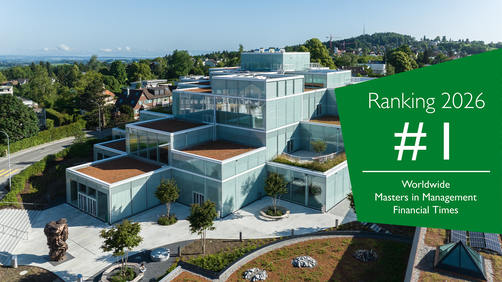
Financial Times Masters in Management Ranking

Once again, the University of St.Gallen’s Masters in Strategy and International Management is ranked by the FT as the #1 programme globally for the fourteenth time.
Read more

8

Financial Times Ranking

The 2025 ranking of the international business newspaper ‘Financial Times’ (FT) recognises the HSG as the leading business school in Switzerland and the German-speaking world with 8th place in Europe.
Read more

24

Financial Times Executive MBA Ranking

The University of St.Gallen's Executive MBA (EMBA) programme has been ranked #1 in Switzerland, #11 in Europe and #24 worldwide by the Financial Times Executive MBA Ranking 2025, consolidating its position as one of the best executive education programmes worldwide.
Read more

3

Triple Crown

The European Foundation for Management Development (EFMD) has renewed the EQUIS label of the University of St.Gallen until 2028. EQUIS stands for European Quality Improvement System. There are 210 accredited business schools worldwide. Only 123 institutions globally can boast the ‘Triple Crown’ of all three quality seals EQUIS, AACSB and AMBA.
All rankings and accreditations

HSG on the social networks

more than 150,000 followers on LinkedIn

over 5'500'000 video views on YouTube

more than 540,000 podcast downloads

News of the year

Social Media Wall

From a commercial academy to a business school of European significance - the history of HSG at a glance

2025
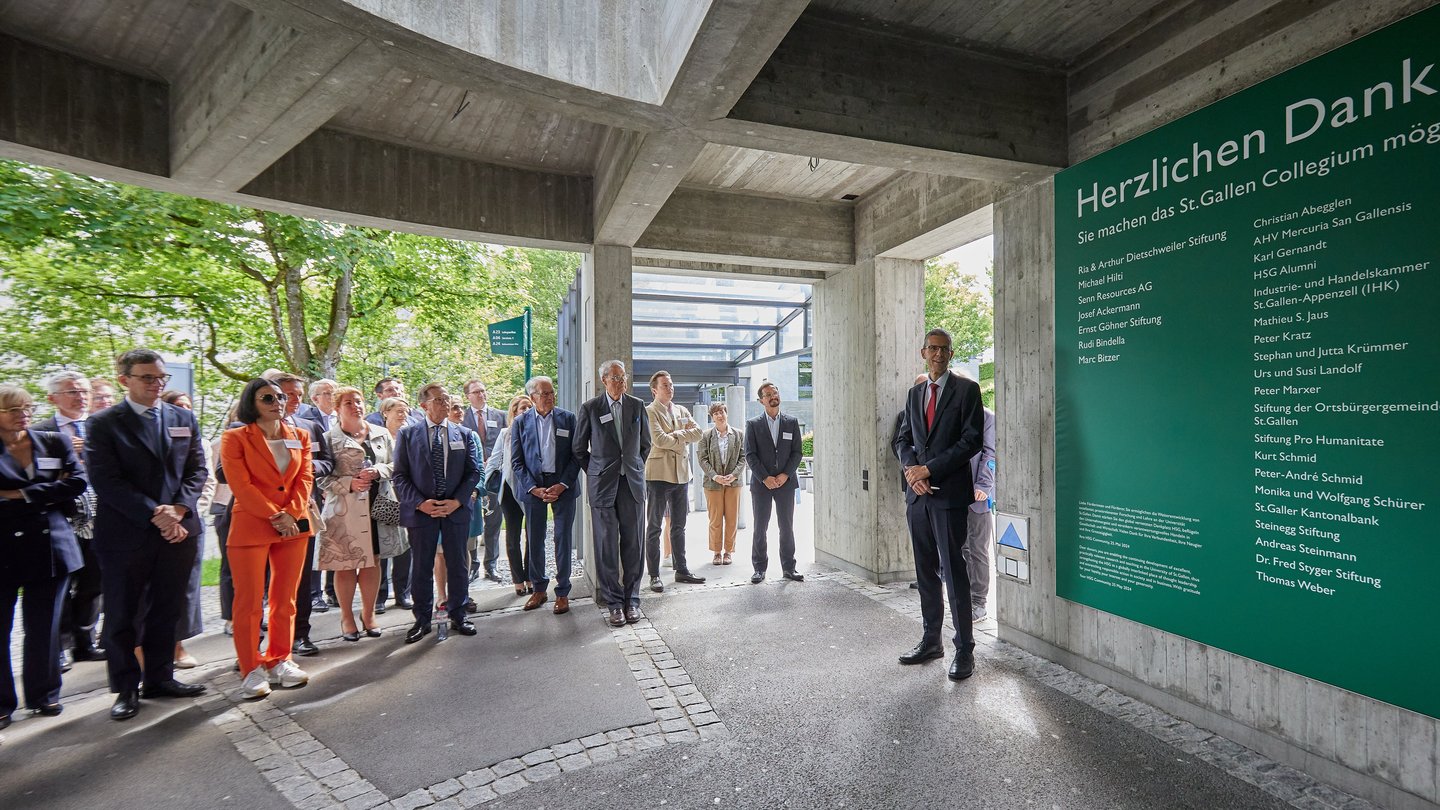
St. Gallen Collegium begins its work
Starting in September 2025, international and interdisciplinary researchers and other experts will exchange ideas on the topic of ‘re-interpreting freedom’ as part of the St. Gallen Collegium. The Collegium is dedicated to a new research topic each year and is financed entirely by donations.
2023
125 Years HSG
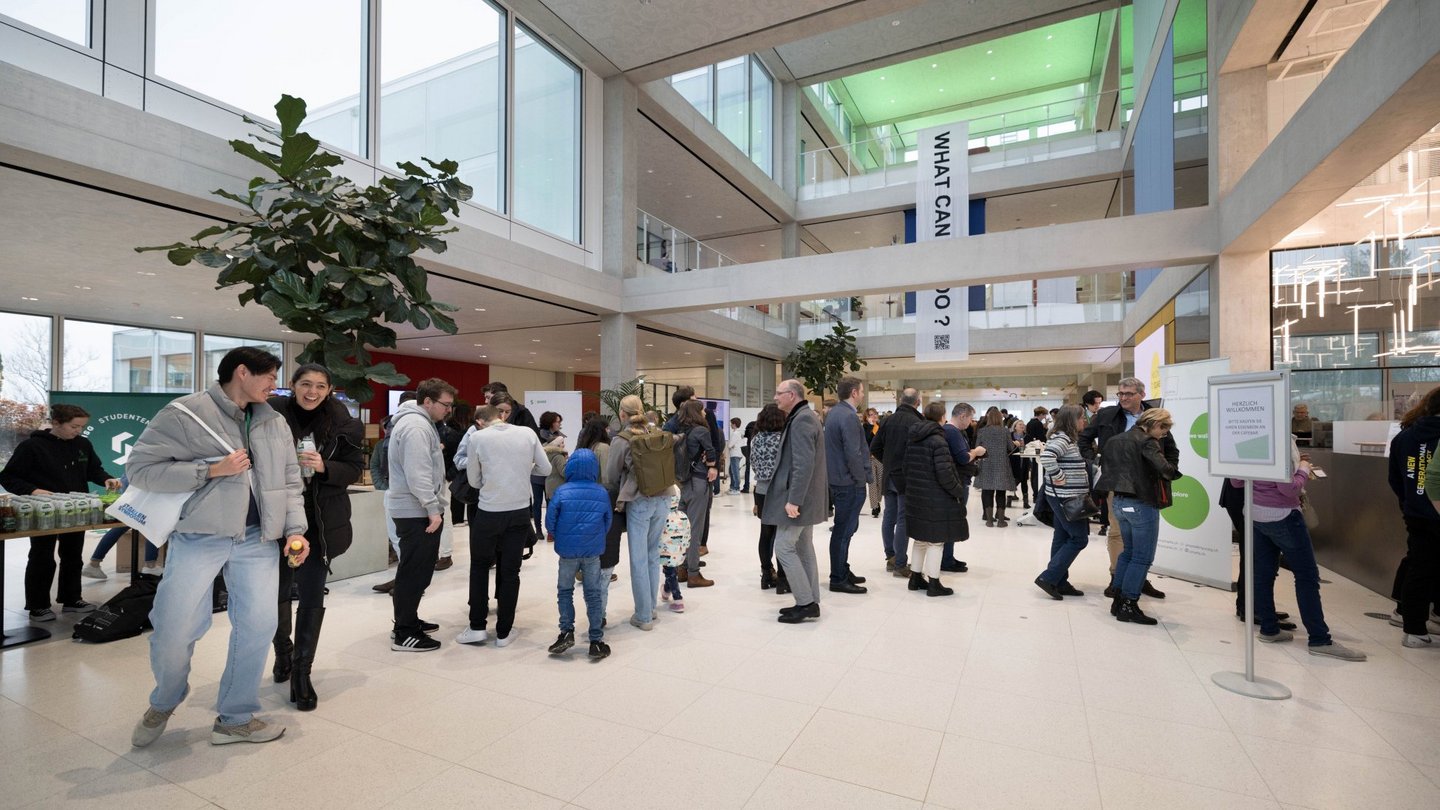
The HSG celebrates its 125th anniversary with a broad public programme. Around 3,000 visitors discover the HSG, its teaching and research as well as student initiatives at the Open SQUARE.
2022
SQUARE Opening
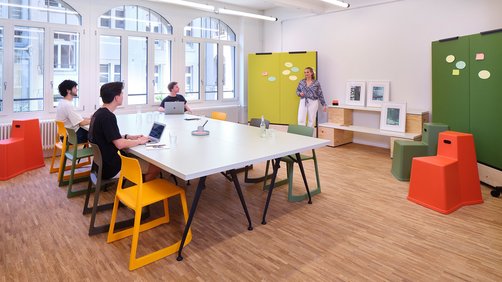
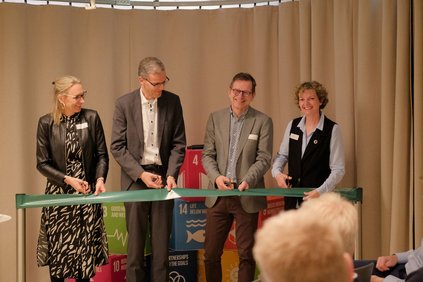
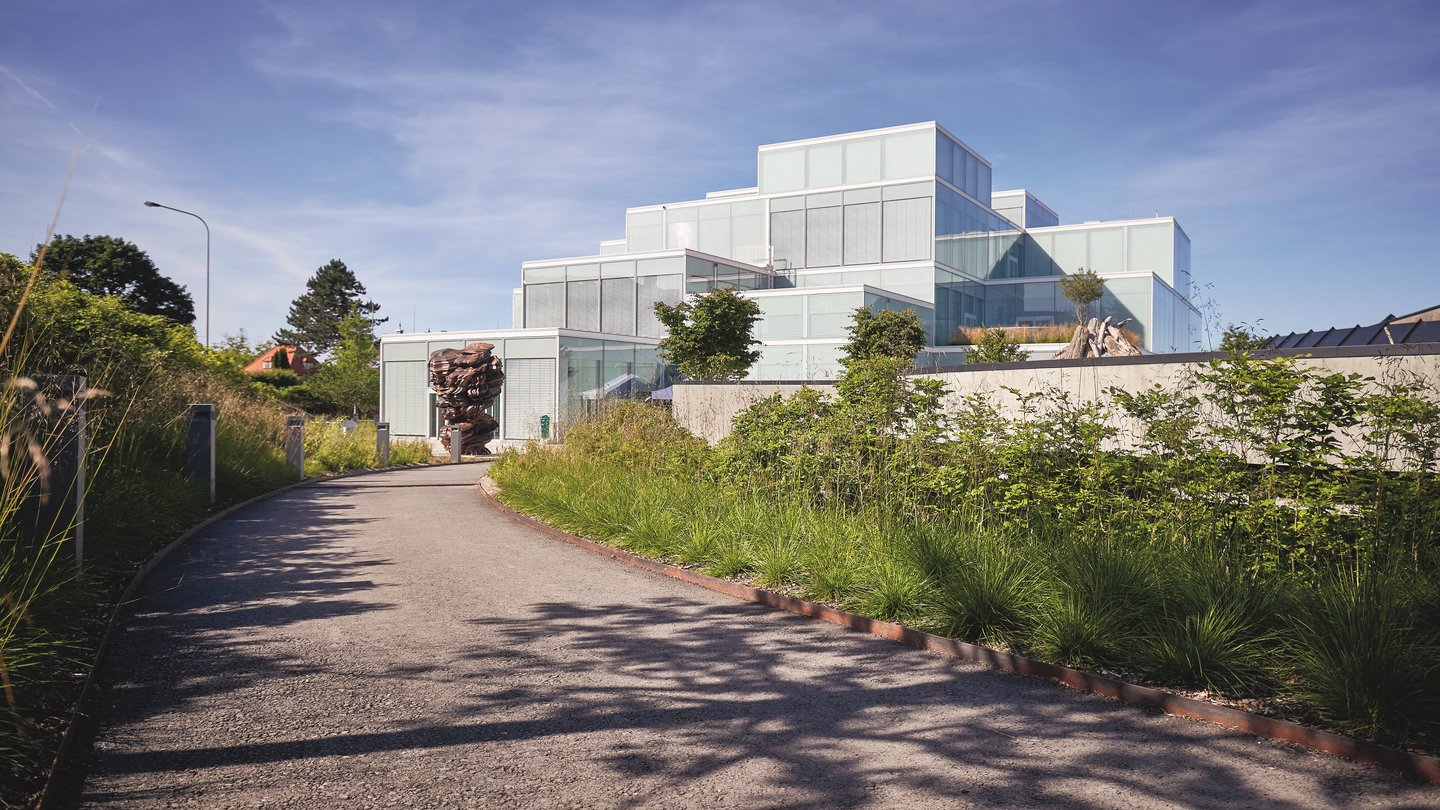
With SQUARE, the HSG is dedicating an entire building to testing the future of teaching and learning. The building, designed by the Japanese architect Sou Fujimoto, was financed entirely by donations - many of them from HSG alumni.
2020
Two new degree programmes
The HSG founds the School of Computer Science. This offers Bachelor's and Master's degree programmes in computer science. The Joint Medical Master started in 2020, where the HSG trains 40 prospective doctors every year.
2017
New teaching and research building
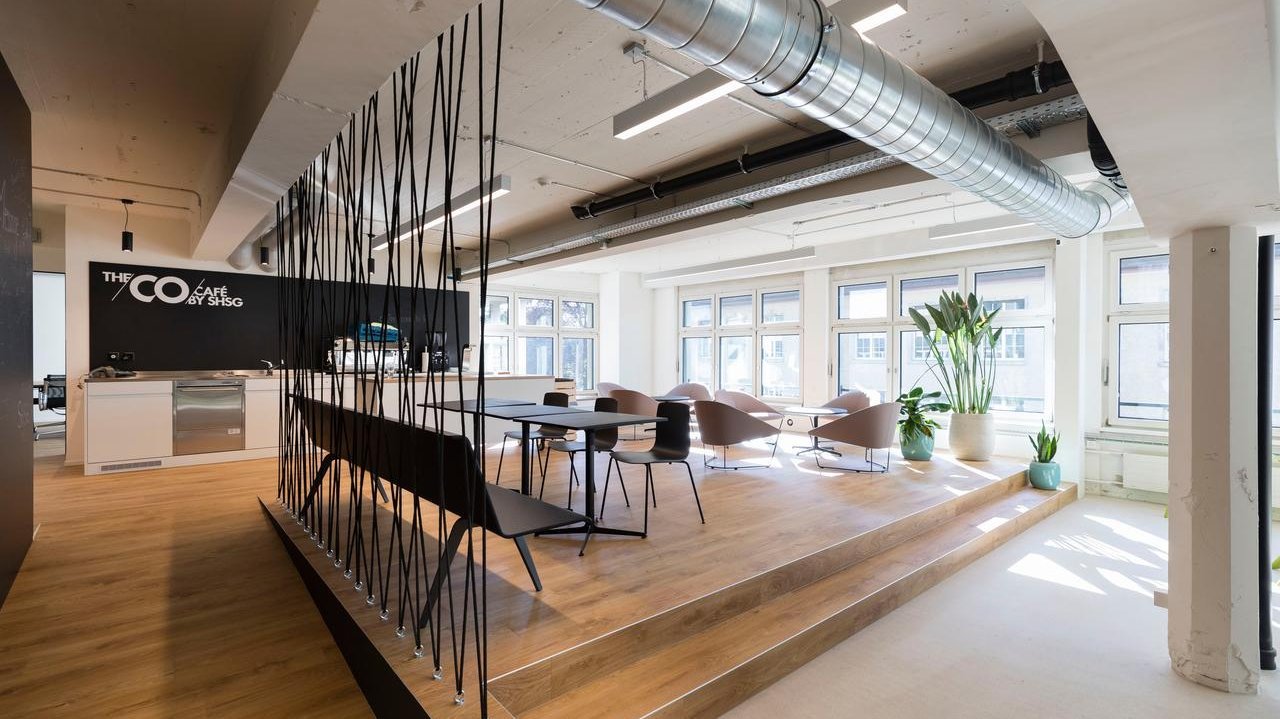
A new teaching and research building opens at Müller-Friedbergstrasse 6/8 after remodelling work. Researchers from the School of Humanities and Social Sciences (SHSS) and the School of Economics and Political Sciences (SEPS), among others, work here. HSG students run the co-working space TheCO here.
2005
ES-HSG strengthens lifelong learning
The HSG is bundling its continuing education programme in the newly founded Executive School of Management, Technology and Law (ES-HSG). Continuing education for professionals from a wide range of sectors and positions is part of the HSG's identity. It also generates a large proportion of its own funds with continuing education programmes.
2001
HSG-Studierende im HSG SQUARE
Introduction of the Bologna system
HSG is one of the first universities in Switzerland to adopt the Bologna system, introducing Bachelor's and Master's degree programmes.
1989
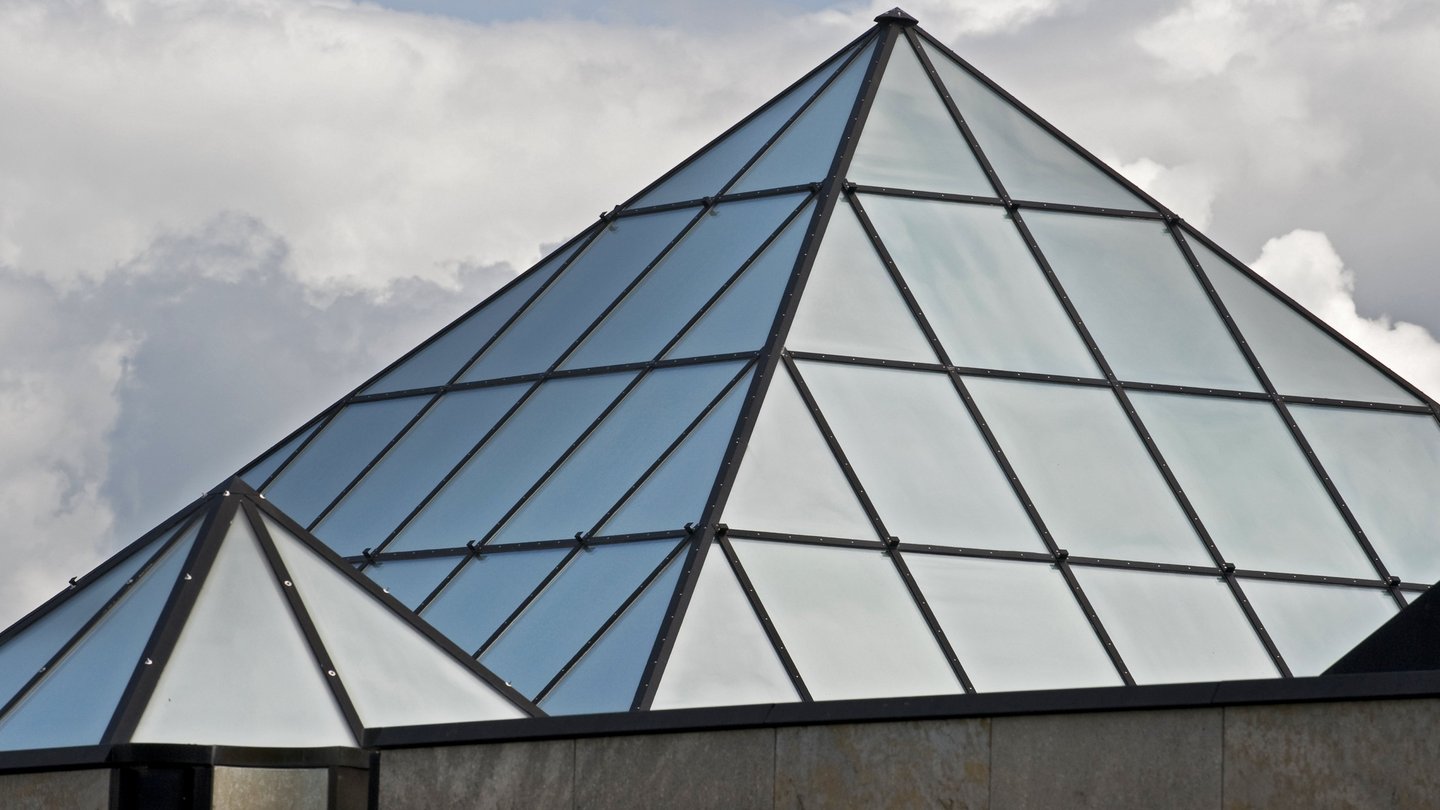
Move into the library building
With the construction of its own library building - the picture shows the characteristic roof - an academically orientated library was created in the middle of the HSG campus. It is also open to the public and has a collection of over half a million books and journals.
1963
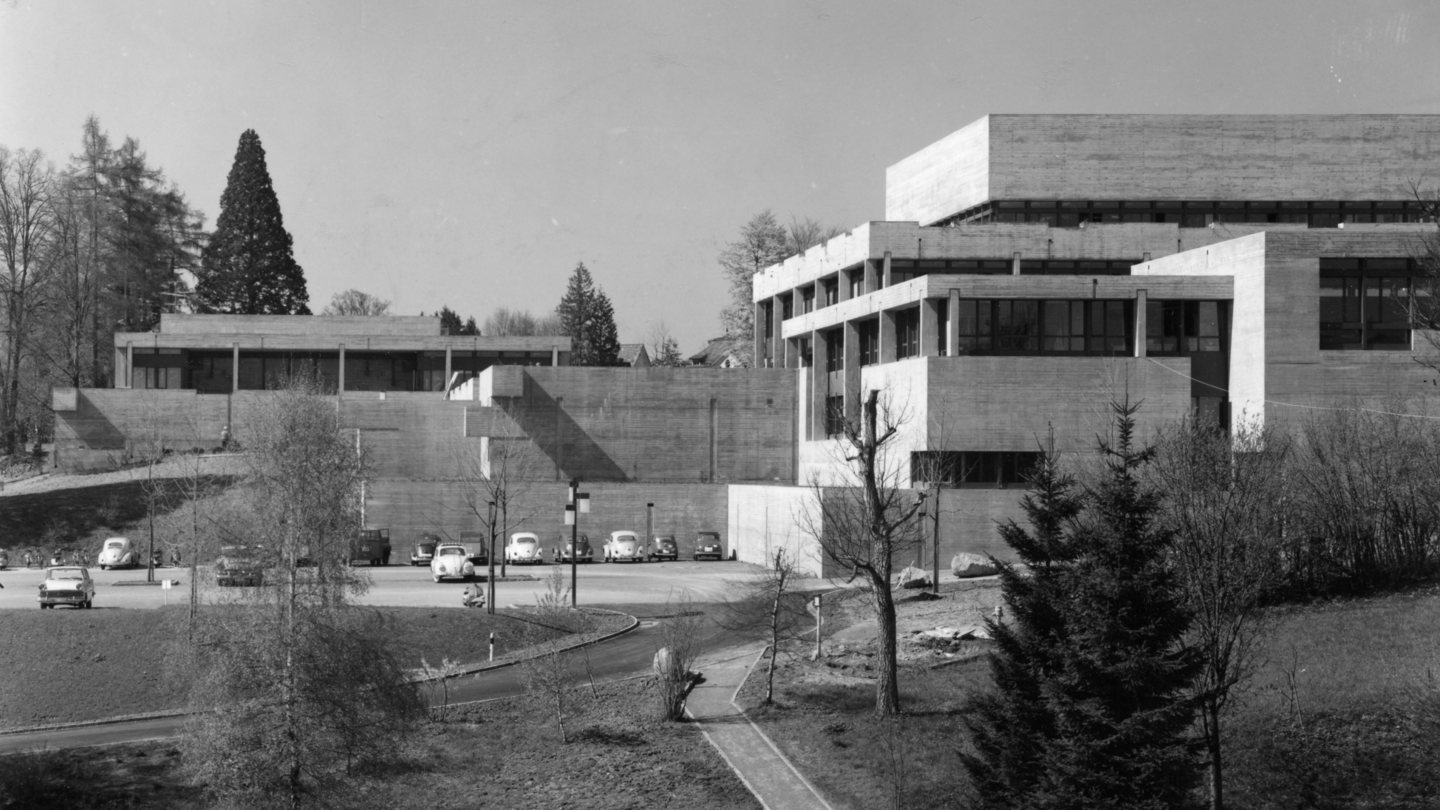
A university campus on the Rosenberg in St.Gallen
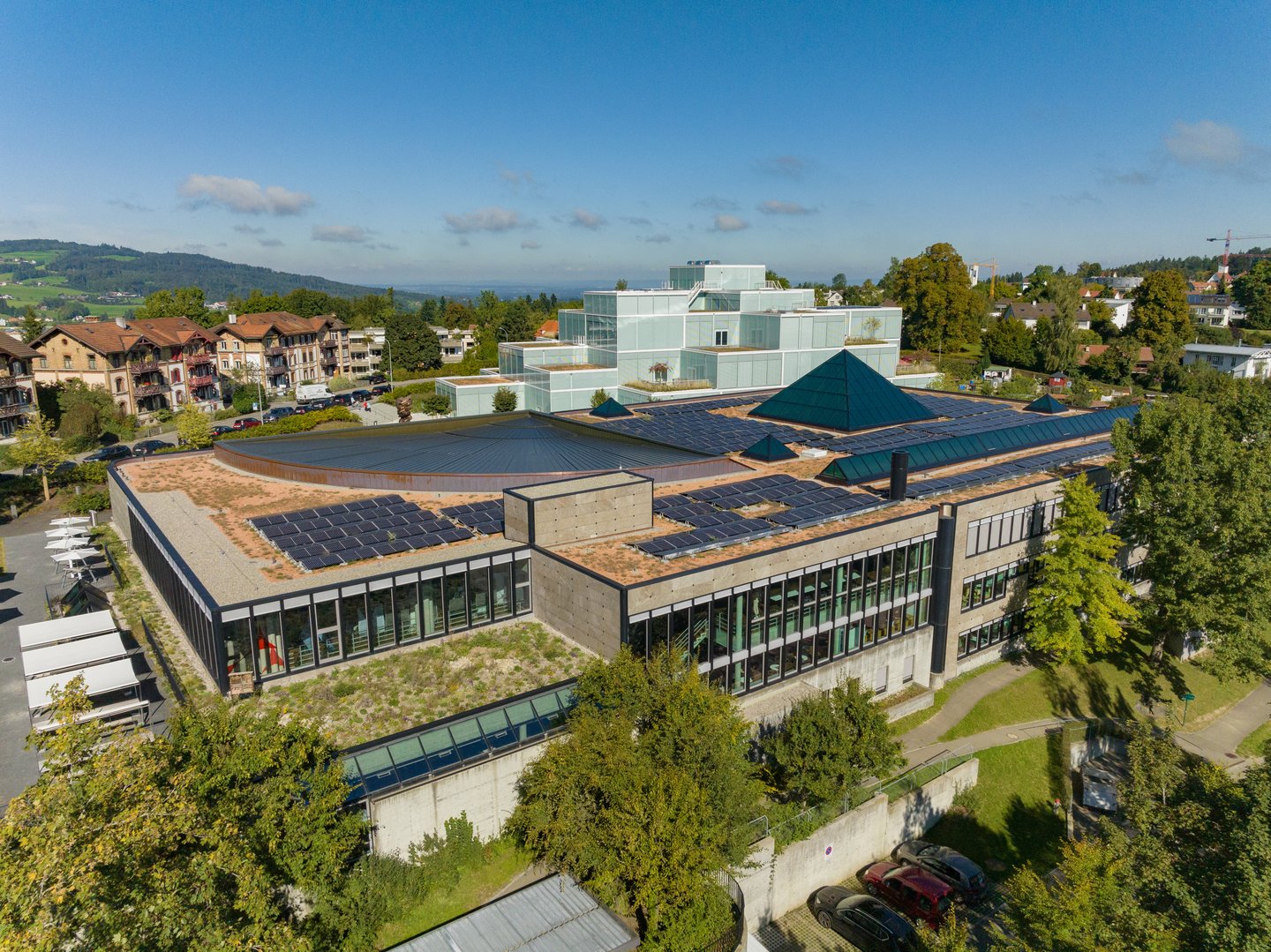
St.Gallen opens the newly built HSG campus on the Rosenberg with a three-day celebration. Architect Walter M. Förderer designed the striking concrete buildings. These also contain artistic elements such as the ingeniously constructed concrete staircase in the main building. In the same year, the school was renamed the University of St.Gallen (HSG). Since 1995, the official name has been the University of St.Gallen (HSG).
1911
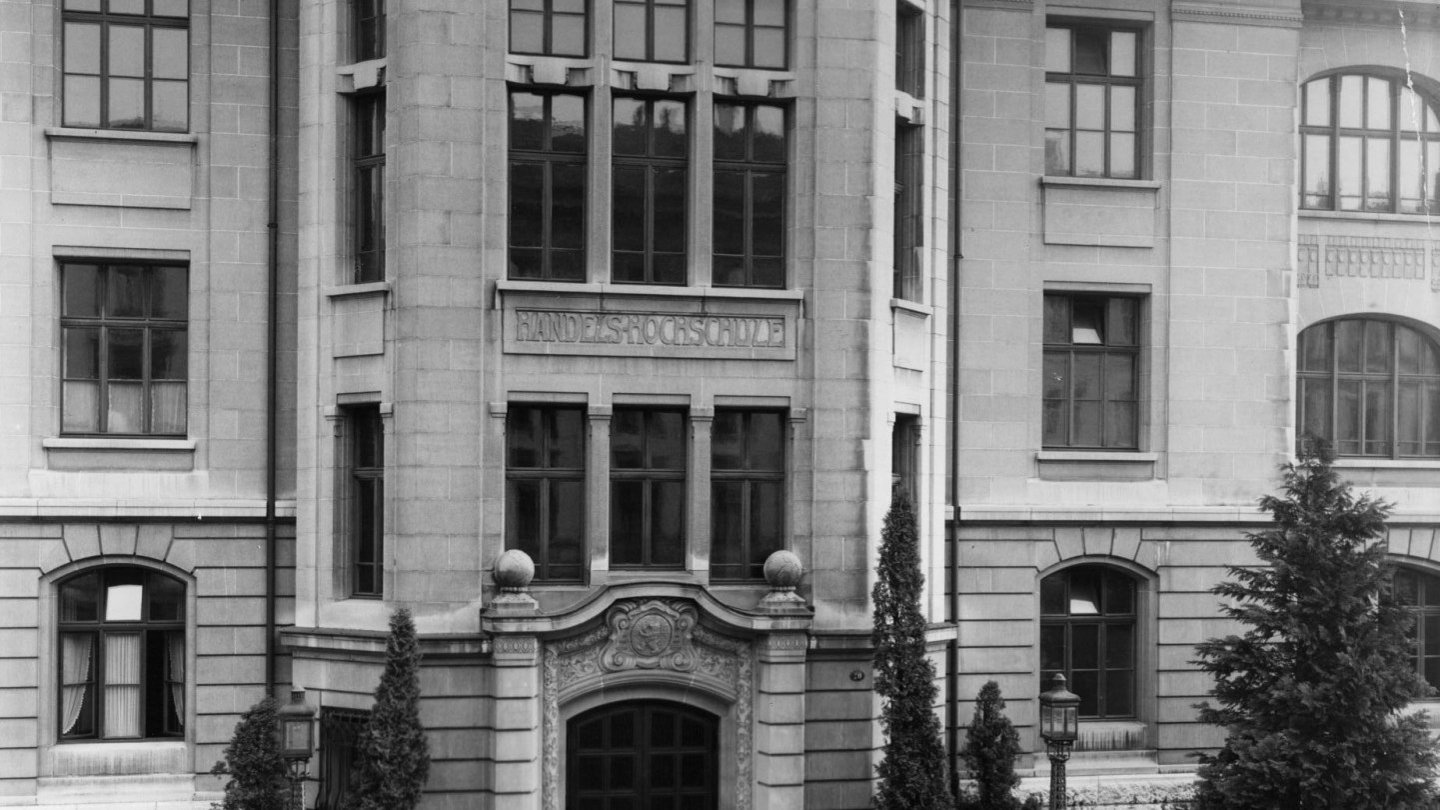
More space in the city centre
The new building at Notkerstrasse 20 gives the institution, now called the business college (Handelshochschule), more space for the growing number of students.
1898
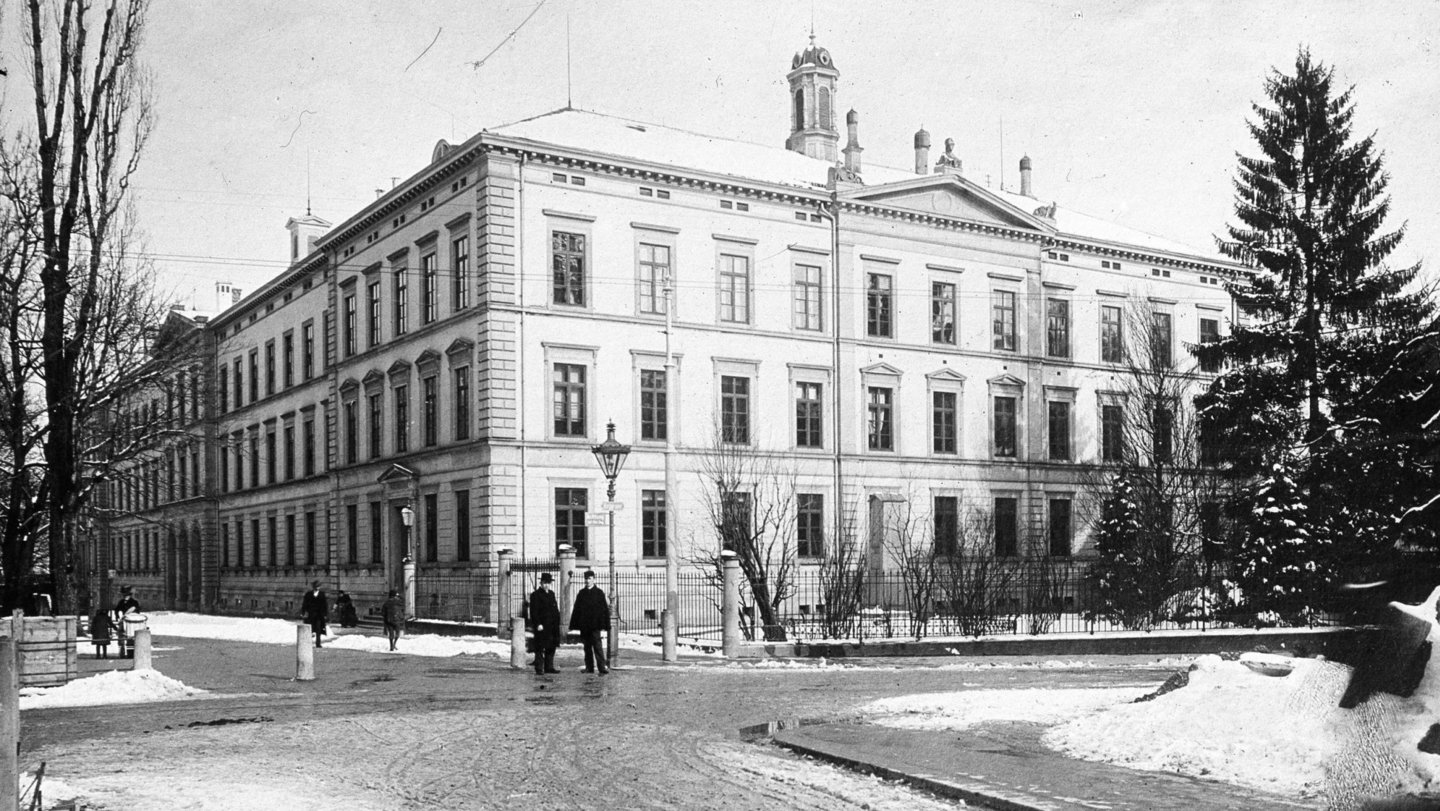
Foundation of the commercial academy
In order to train skilled workers for the booming textile industry, the academy for trade, commerce and administration was founded in the west wing of the cantonal school on Burggraben. Seven students were enrolled on the first degree programme. In 1901, along with 25 male fellow students, the first woman began her studies.

Further links

north