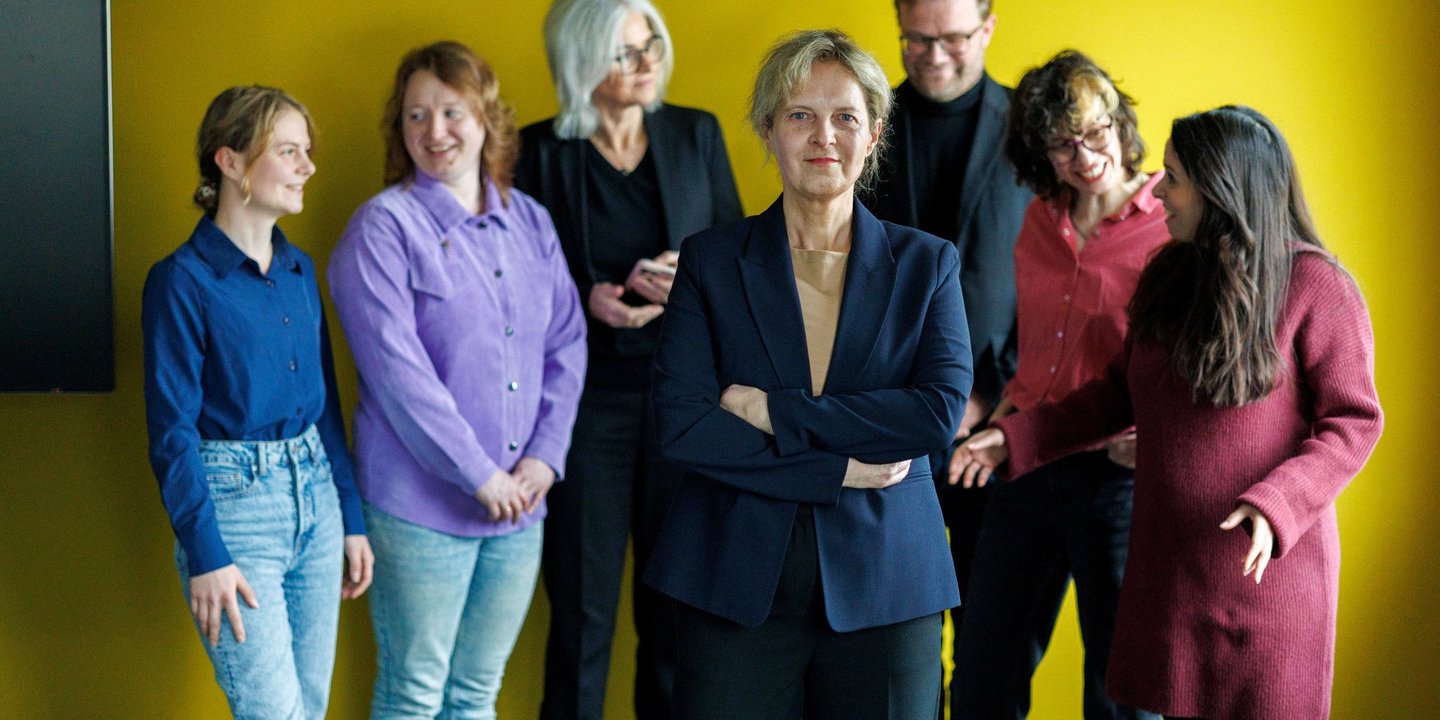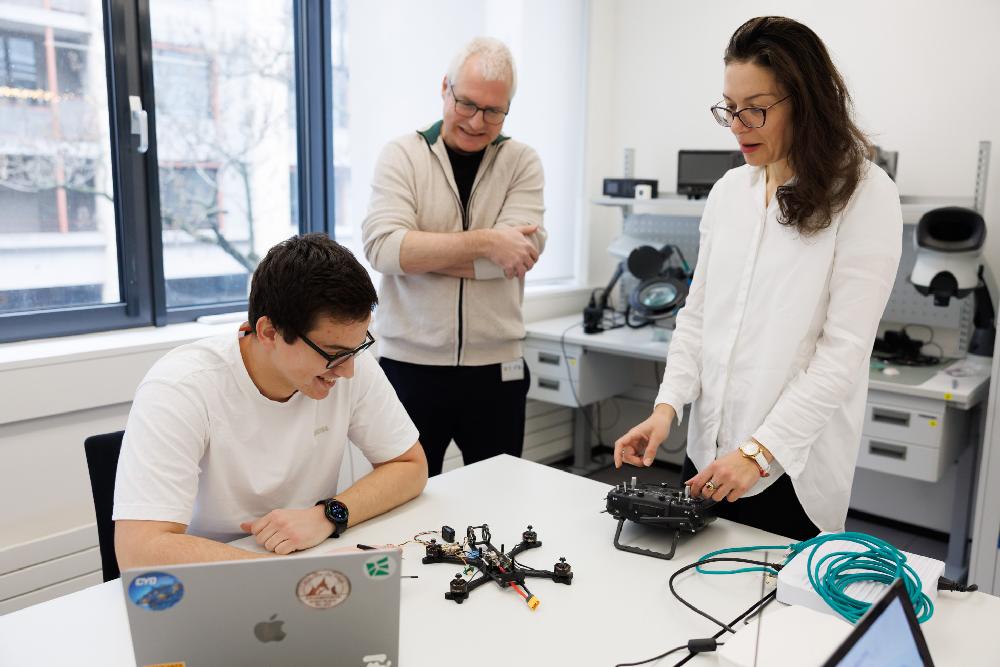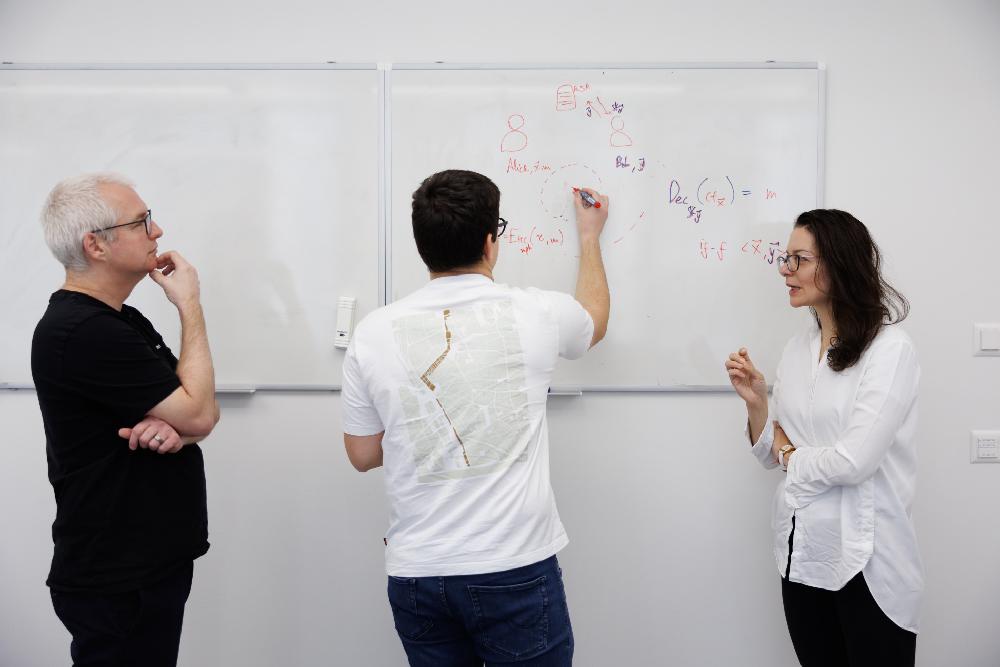
One of the eight research groups at the School of Computer Science (SCS-HSG) is dedicated to cyber security.
With the digitisation of our world, cybersecurity has become a top priority. Hardly a day goes by without us hearing about malicious cyberattacks that steal data, disrupt computer systems and cause costly damage. “Our research interests lie in information security and applied cryptography. Our work aims to protect communication and provide strong data protection guarantees,” emphasises Prof. Katerina Mitrokotsa.
The methods and mechanisms of cyber security benefit all internet users, explains the professor, who has been researching and teaching at the HSG since 2020. On the one hand, this involves preventive measures, such as the use of secure communication protocols or cryptographic primitives. These are used, among other things, in authentication or encryption processes. On the other hand, cyber security also includes mechanisms used for the early detection of hacker attacks. “Although we are often unaware of it, we use the methods and mechanisms of cyber security practically every day. Whether it’s when conducting business, using online banking or communicating with our friends, to name just a few examples,” explains Prof. Mitrokotsa
According to Prof. Katerina Mitrokotsa, cryptography is one of the most important cornerstones of security. “Today’s encryption methods are based on advanced mathematical algorithms and protocols developed to protect sensitive information from increasingly sophisticated cyber threats. These methods ensure that data can only be read by authorised parties with the correct cryptographic keys.” When applied, data is altered in such a way that it is only readable by those who possess the correct key or decryption method.
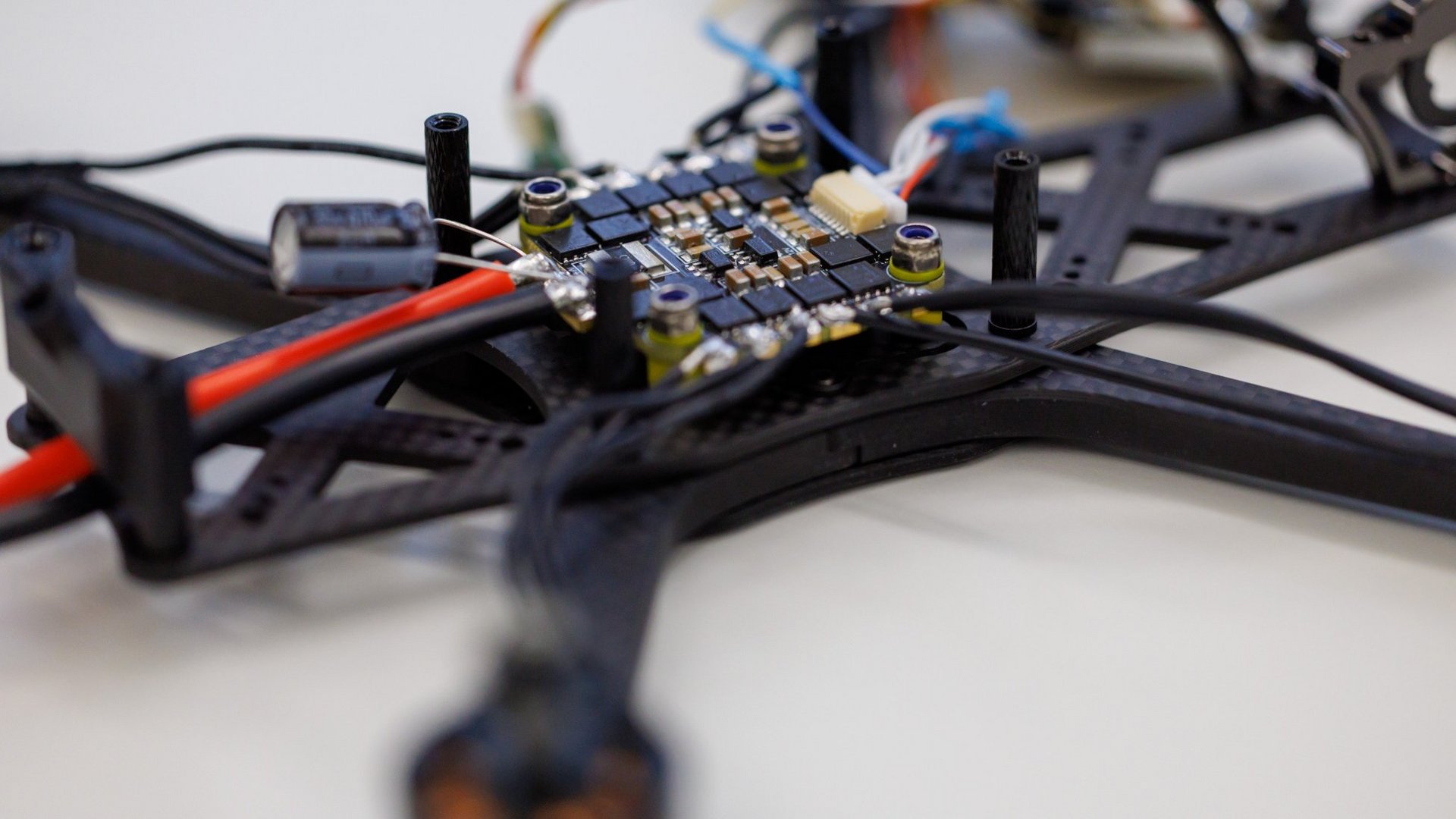
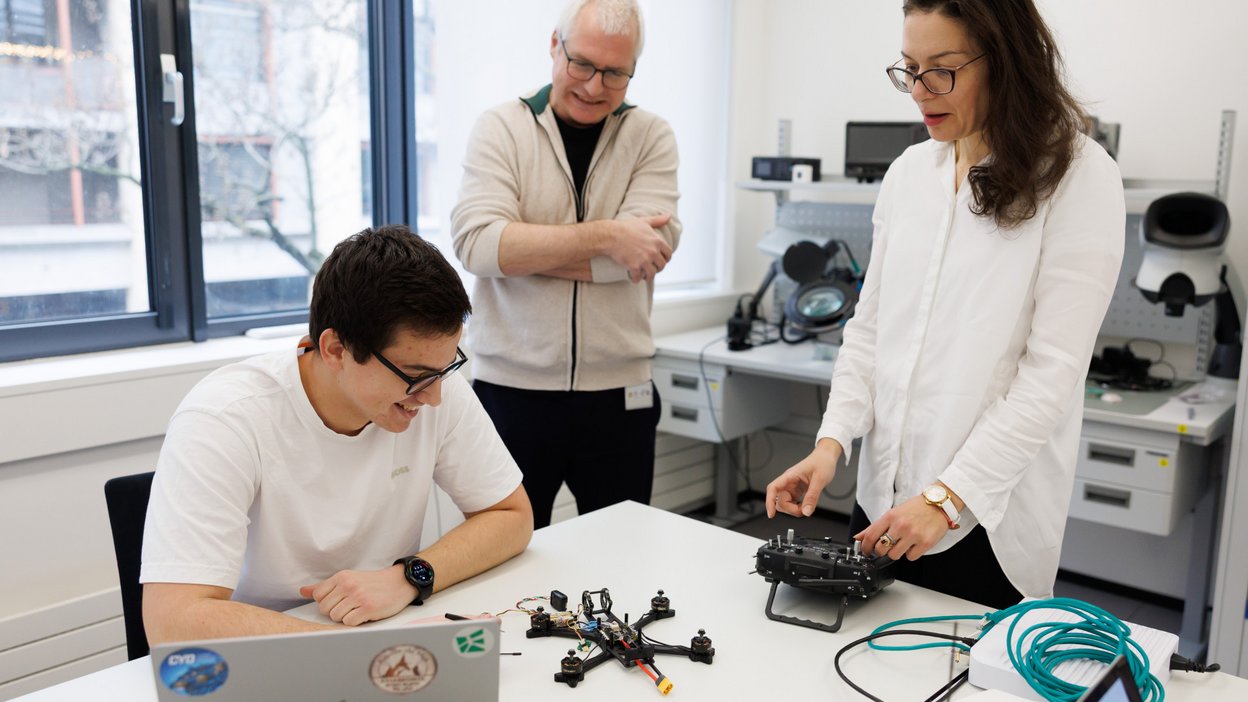
One of the current projects the Cyber Security research group is working on is entitled ‘Privacy-Preserving Primitives for Proximity Tracking and Collision Avoidance’. The aim of this project is to develop a privacy-friendly method for detecting approaching objects, such as drones, and avoiding collisions. “Unlike many existing solutions that compromise security or efficiency, our approach incorporates advanced cryptographic techniques that enable secure detection without revealing private data. This enhances the safety of drones, optimises air traffic management and strengthens cyber defence capabilities,” emphasises Katerina Mitrokotsa. The project is supported by the Cyber Defence Campus (CYD) at armasuisse Science and Technology as part of a PhD scholarship in collaboration with Dr Martin Burkhart from the CYD. It began in February 2025 and will run for four years. The Ph.D. student working alongside Katerina Mitrokotsa is Florias Papadopoulos, who completed both his Bachelor’s and master’s degrees at the University of Thessaloniki.
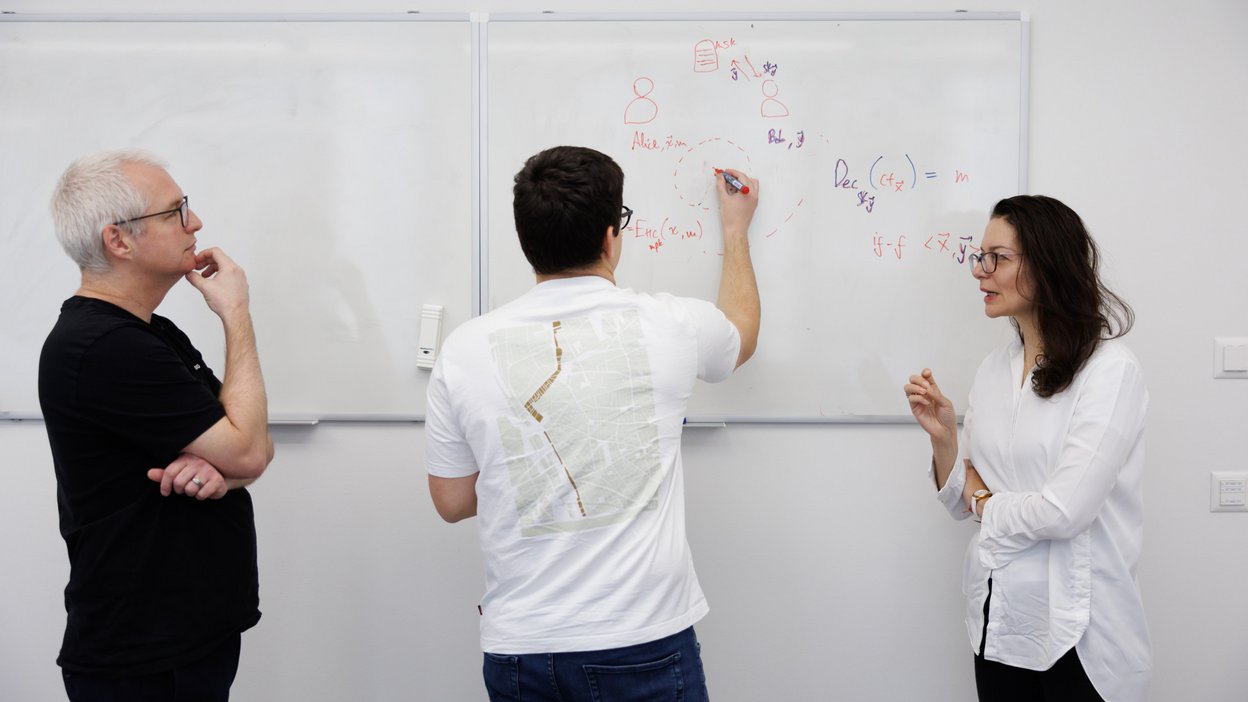
In its current project, the research group is addressing two key challenges. The first concerns what is known as Privacy-Preserving Proximity Tracking (PPPT), which investigates how two users can determine whether they are in close proximity without either party revealing information about their location. The second challenge is entitled Privacy-Preserving Collision Avoidance (PPCA) and addresses the question of how collisions between moving entities (such as vehicles, drones and satellites) can be prevented without disclosing sensitive data such as position or speed.
Although methods for safeguarding privacy already exist in this field, they all have vulnerabilities, as Florias Papadopoulos explains. Prof. Mitrokotsa explains the consequence: “For this reason, companies rarely use such techniques and continue to rely on configurations that compromise data protection and security, leaving them vulnerable to attacks.”
Current collision avoidance systems in drones rely on the transmission of location data, which exposes them to attacks such as jamming or tracking. For military drones, location tracking poses an unacceptable security risk, as it could even reveal the position of military bases.
“Unlike many existing solutions that compromise security or efficiency, our approach incorporates advanced cryptographic techniques that enable secure detection without revealing private data.”
“Collision avoidance is also of crucial importance in aviation. The Traffic Collision Avoidance System, a global standard for preventing collisions in the air, does not have any inherent security measures, making it vulnerable to manipulation through radio frequency attacks and other threats,” adds Florias Papadopoulos.
The third example concerns the ESA’s space security programme. Whilst it is of fundamental importance, it is frequently hampered by concerns regarding the protection of privacy in relation to sensitive data. Current systems struggle to balance data protection and accuracy. “Here too, there is a clear need for effective solutions to safeguard privacy,” emphasises Prof. Mitrokotsa.
“The Cybersecurity research group at the School of Computer Science is working on several projects aimed at creating a secure digital environment for individuals, businesses and Cantonal Councils,” explains Prof. Dr Katerina Mitrokotsa. This covers all aspects of information security and applied cryptography as well as security and data protection. “We also deal with current topics such as privacy-preserving cloud computing, privacy-preserving authentication and private digital identity. Digital security has become an extremely important topic for all of us in today’s world.”
Prof. Dr. Katerina Mitrokotsa ist Full Professor of Cyber Security at the University of St.Gallen.