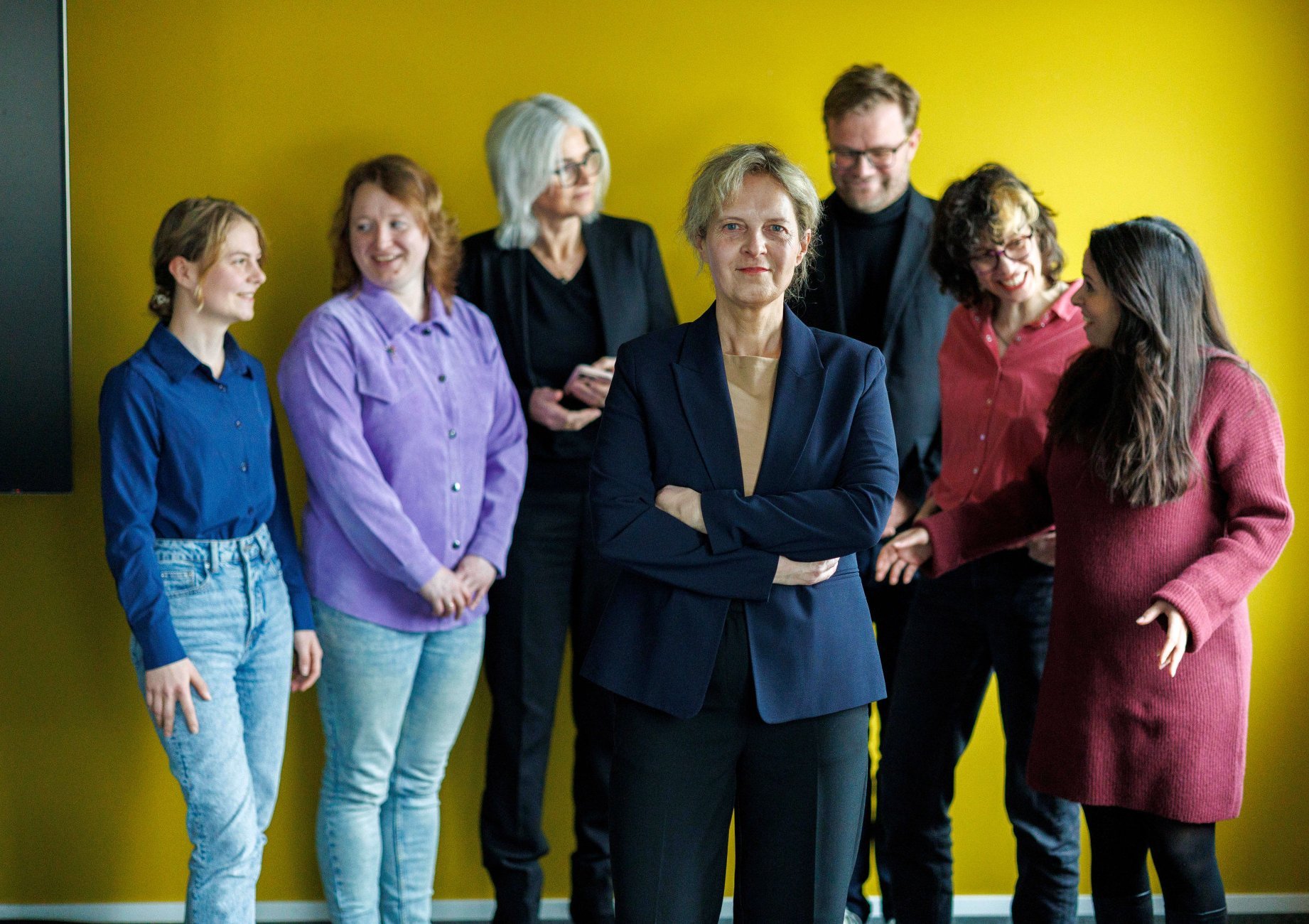
AfroGrow, LandShift, Nostradamus and Nemesis: four Horizon Europe projects funded by Switzerland and the EU are developing forward-looking solutions for agriculture and land use.
Agriculture and land use are not topics that one would immediately associate with the University of St.Gallen. The four newly launched Horizon Europe projects AfroGrow, LandShift, Nemesis and Nostradamus all aim to bring about systemic change in agriculture, education and governance: improved food security, fairer power structures and more resilient environmental systems. Under the leadership of SHSS, the HSG is contributing its strengths: "In technology and science-oriented projects, SHSS ensures that human aspects such as values, knowledge, social practices and education are also taken into account," says project manager Sabine Hoidn.
How do transformation processes affect people, organisations and societies, and what conditions enable them to be successfully implemented? The SHSS analyses the socio-economic factors in the projects: "We develop concepts for social innovation, transformative education and gender equality, thereby helping to ensure that technological solutions are not only possible, but also meaningful, accepted and sustainable," says Professor Hoidn. Education plays a key role as a central lever for social change. HSG researchers develop conceptual foundations for digital learning content, advise on its didactic implementation and support project partners in planning and implementing interactive training formats and offerings in executive education for stakeholders from politics, agriculture, administration and civil society. "The learning platforms, training modules, webinars and AI-supported toolkits create a fertile breeding ground where insights can flourish and be put to sustainable use in practice – even beyond the project contexts. The SHSS team ensures more inclusive learning spaces, to which, for example, more women, young people and older people have access. We prepare the project results and training content in a way that is tailored to the target group," says Hoidn, summarising her commitment to capacity building and knowledge transfer.
So-called living labs play an important role in the research projects. These are real-life experimental spaces in which various groups of actors – from land managers and researchers to political decision-makers and civil society – work closely together in a multi-actor approach. In these living labs, ideas are sown, cultivated together and thus developed into viable solutions for sustainable land management. Not only is knowledge generated jointly, but the actors also test it in a concrete application context. Living labs are used, for example, in the AfroGrow and LandShift projects to accompany transformation processes on the ground. In AfroGrow, surveys, case studies and focus groups are used in six African countries to investigate the socio-economic impacts of agroforestry systems on living conditions, knowledge and innovation potential . Sabine Hoidn's team is working with project partners, local communities, NGOs and authorities to develop sustainable agroforestry systems that are not only ecologically viable and economically viable, but also socially just and inclusive, particularly with regard to existing inequalities in decision-making processes. AfroGrow uses digital tools and knowledge networks to disseminate sustainable practices and support evidence-based political decision-making processes. LandShift accompanies transformation processes along agricultural value chains in Europe. New forms of regenerative agriculture are being tested in Greece, Italy, France, Poland and Ukraine. LandShift develops nature-based solutions according to the principles of the New European Bauhaus, establishes harmonised monitoring and verification systems, and transforms living spaces into transferable beacons for climate-resilient land use in Europe. Social science research aims to analyse and promote the practicability, acceptance and impact of these innovations: "For us, living labs are not just a method, they embody an approach to transformative research that puts people at the centre and enables collaborative learning. Because at the heart of every transformation are people and their knowledge, their values and their ability to actively shape change," says Sabine Hoidn.
“Agriculture is exemplary of the systemic challenges of our time: it touches on issues of sustainability, resource distribution, technological innovation, education and social justice.”
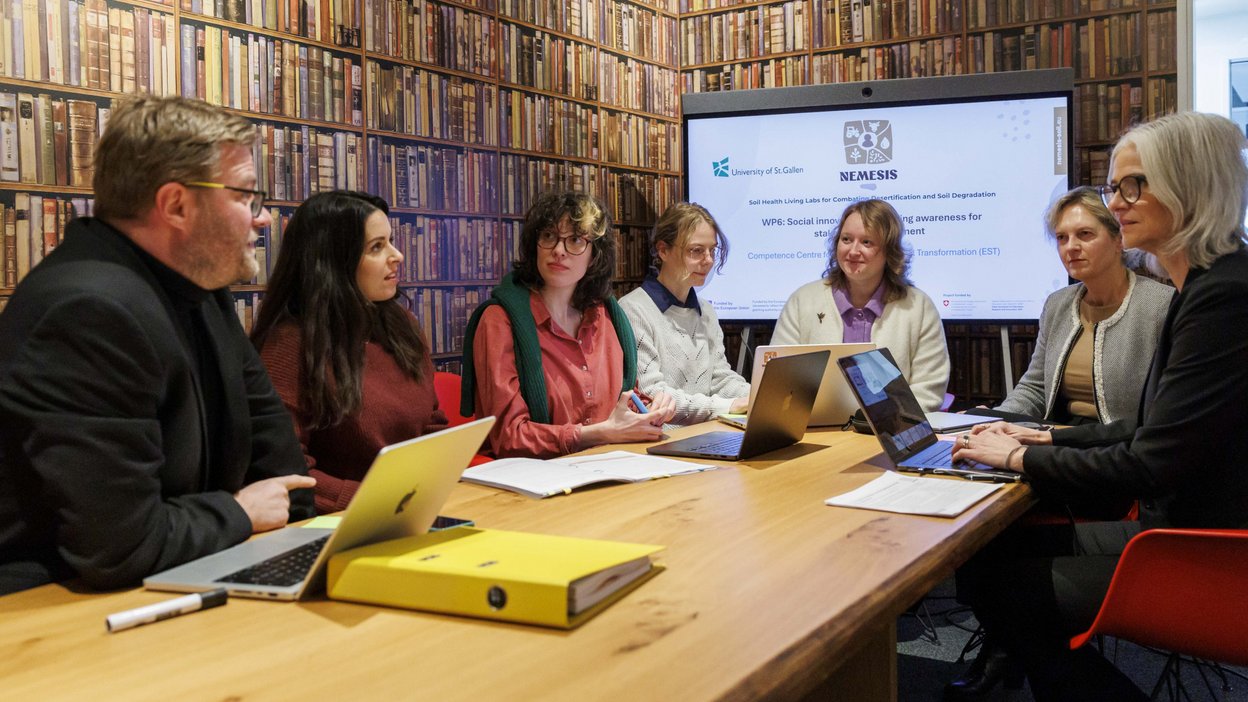
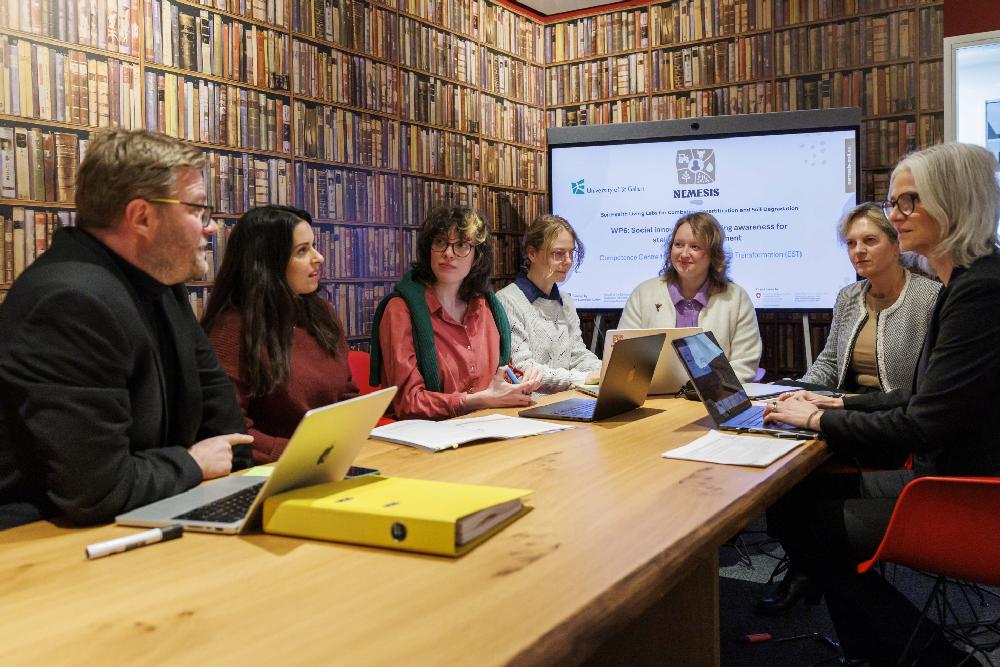
The new Nemesis project, which launched in October 2025, promotes soil health to combat desertification in the Mediterranean region. Here, academic exchange in the innovation environments also takes place digitally: Nemesis is developing a "digital twin" in the form of an online living lab that complements analogue experimentation spaces and creates a virtual space for exchange, learning and participatory experimentation across regional boundaries. In the digital living lab, for example, land managers, decision-makers, young people and citizens interactively play through scenarios and develop solutions together.
The targeted use of AI and technological solutions connects all four projects: AfroGrow is developing a digital toolbox, a participatory app and a knowledge hub for sustainable agroforestry systems. LandShift uses AI-supported decision-making models, Earth observation data and crowd-sourcing apps to record and analyse regenerative agriculture strategies, thereby paving the way for informed decisions at local and European level. To this end, harmonised monitoring, reporting and verification (MRV) systems are also being set up to make the impact of the measures transparent. A mobile app enables citizens to collect data on site, thereby improving the data basis. Nostradamus focuses on agricultural monitoring and management using an improved data basis to strengthen the independence of EU agriculture and food security. Nostradamus thus contributes to the implementation of the Farm to Fork Strategy, the Common Agricultural Policy and the European Data Strategy. The University of St.Gallen leads the analysis of agricultural market trends and socio-economic factors and contributes to the development of new governance models to promote sustainable agricultural practices in the EU. For example, AI, gamification and learning platforms are being combined to develop models for improving decision-making support for agricultural businesses and policy-making. To ensure that data-driven approaches in agriculture are effective, SHSS is supporting the development of an e-learning platform with materials and the implementation of digital training courses to improve the knowledge and skills of all stakeholders in relation to sustainable agricultural practices.
What motivates Sabine Hoidn to engage with social transformation processes in areas such as agriculture, education, governance and technology? "I am interested in how collective learning and transformation processes succeed and how people act, learn and develop new solutions together in complex, often contradictory contexts," says Sabine Hoidn, summing up her motivation. Agriculture is also exemplary of the systemic challenges of our time, as it touches on issues of sustainability, resource distribution, technological innovation, education and social justice. With her transformative research, Sabine Hoidn wants to help bring the HSG's vision to life: "Science should not remain in an ivory tower, but should have an impact on society, politics and international cooperation. Only through dialogue with practice can innovative and accepted solutions for the future be achieved," Sabine Hoidn is convinced. She and her team therefore work closely with other universities, agricultural businesses, associations, NGOs, administrative authorities and international organisations. "Our aim is not only to analyse transformation, but also to actively support it through participatory research, transdisciplinary educational processes and socially innovative solutions. Major issues for the future, such as sustainability, climate resilience, land use change, food security and social justice, require a multi-actor approach and interdisciplinary responses," emphasises Sabine Hoidn. Her research team of postdocs and research associates also draws on a range of disciplines, including agricultural economics, econometrics, environmental and social psychology, education science, sociology and social sciences.
The transformation expert also sees the knowledge and resources that Sabine Hoidn and her team are gathering in the four Horizon Europe projects as a valuable investment in the future in order to exploit synergy effects: while the scientific field is now being cultivated, the fruits can be harvested together later.
Detailed information on the Horizon Europe projects AfroGrow, LandShift, Nostradamus and Nemesis, as well as on the respective role of the HSG in each project, can be found here.
The projects are funded by the Swiss State Secretariat for Education, Research and Innovation (SERI).
Sabine Hoidn is an Adjunct Professor of educational science, higher education and social science transformation studies at the University of St.Gallen. She studied business education, earned her doctorate at the University of St.Gallen (Dr. oec.) and habilitated at the University of Zurich in educational science, specialising in higher education didactics. International research stays took her to Harvard University, Stanford University and the London School of Economics (LSE), among others. She contributes her expertise to European and global research initiatives, advises EU institutions and is an elected member of the Board of Governors of the Academy of Management (AOM). Her research and teaching focus on student-centred higher education teaching, educational innovation, organisational learning and social transformation processes through teaching and learning. At the University of St.Gallen, she leads several Horizon Europe research projects in the fields of agriculture, education, governance and technology. Together with her interdisciplinary team, she brings social science perspectives to European research alliances – with the aim of developing evidence-based, participatory and effective solutions to key issues of the future.
With a budget of €95.5 billion for the period 2021–2027, Horizon Europe is the EU's largest research and innovation programme to date. The European Union's framework programme for research and innovation aims to promote Europe's competitiveness and innovation potential through excellent research. The central pillars of the programme are: scientific excellence, promoted by the European Research Council and the Marie Skłodowska-Curie Actions; global challenges and European industrial competitiveness, to support projects in areas such as health, climate, energy and mobility; and innovative Europe, to strengthen innovation potential through the European Innovation Council and the European Institute of Innovation and Technology.
Since January 2025, Swiss researchers have been able to participate in the EU research programme again and put their own research topics on the agenda. Switzerland was excluded from Horizon Europe for three years: "Despite Switzerland's exclusion from Horizon Europe until the end of 2023, we subsequently succeeded in acquiring four projects as associated partners. This underlines both the international competitiveness of our research and the strength of our network," emphasises Professor Sabine Hoidn. The EU projects in which the HSG is involved as an associated partner not only provide impetus in terms of content, but also create targeted capacities for research, education and the expansion of international cooperation with a total funding amount of around 4.5 million euros.
Horizon Europe understands scientific progress not only in technological terms, but also in social terms. In order to implement this commitment to sustainability and social responsibility, the European Commission has defined that social sciences and humanities should be an integral part of all thematic clusters in Horizon Europe – especially in Cluster 6, which deals with agriculture, the environment, the bioeconomy and natural resources. Here, ecological, technological and social issues are inextricably intertwined – for example, in sustainable land use, biodiversity or the transformation of food systems: "Our task is to analyse societal impacts, help shape social innovations, develop governance models and involve stakeholders in a participatory manner," says Professor Hoidn about the indispensable perspective of the social sciences and humanities for the success of Horizon Europe projects.
In order to consolidate research activities at an institutional level in the long term and develop them strategically, Sabine Hoidn established the Competence Centre for Education and Social Transformation (CEST) on 1 January 2026. Based at the IIDM-HSG in close collaboration with the School of Humanities and Social Sciences (SHSS-HSG), the centre creates a strategic platform for interdisciplinary transformation research and strengthens the social science perspective within European research alliances.
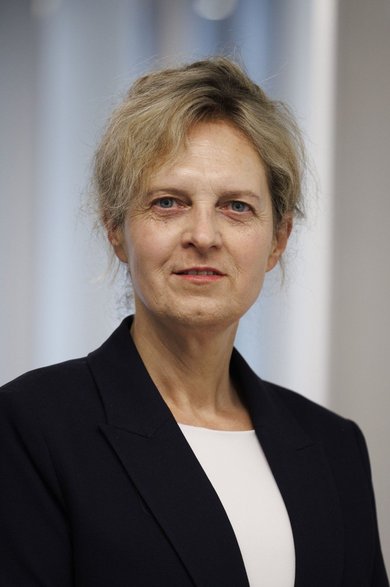
Prof. Dr. Sabine Hoidn is an Adjunct Professor of educational science, higher education and social science transformation studies at the University of St.Gallen.