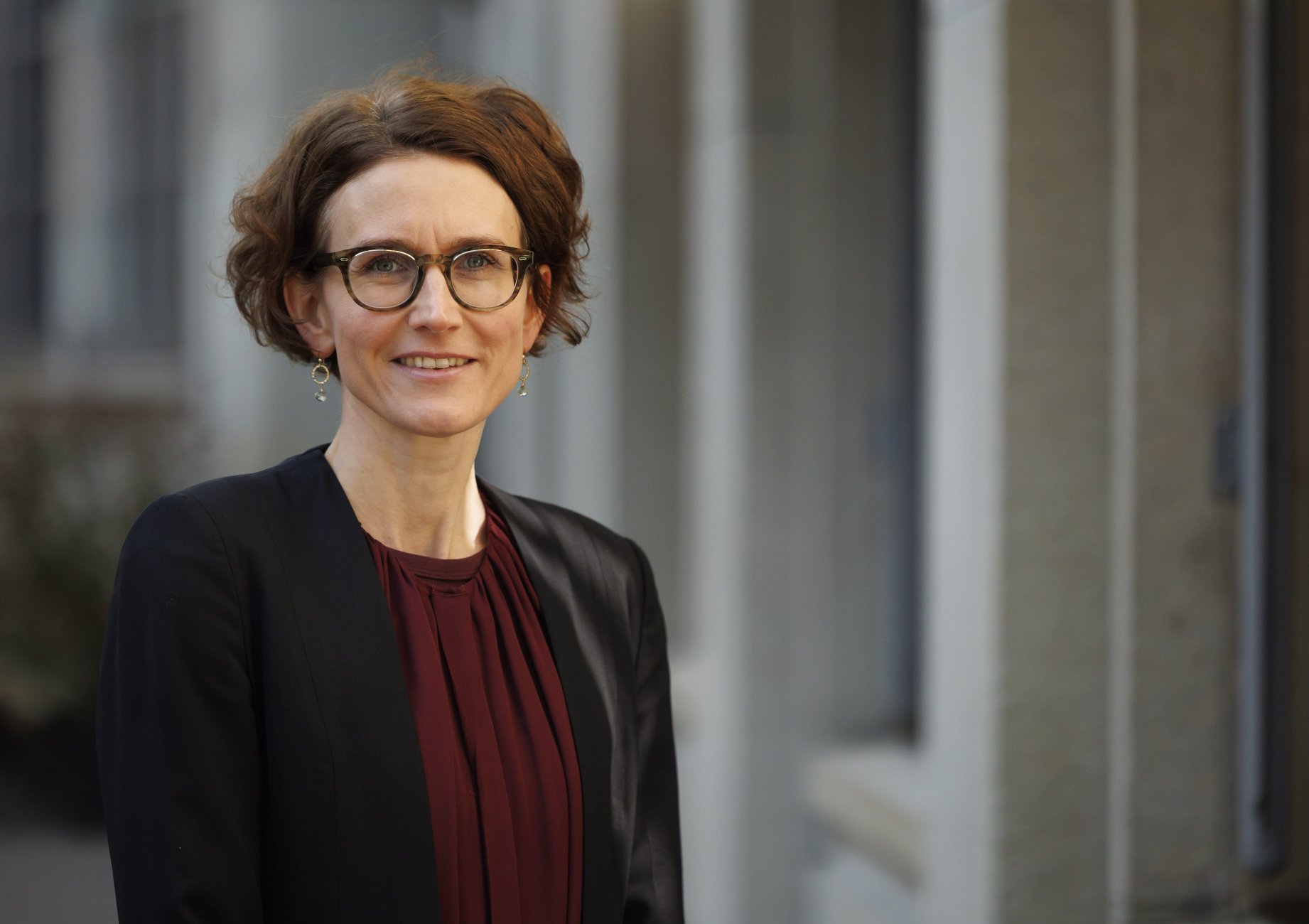
The resolution of systemically important banks such as UBS is a hotly debated topic that is also being addressed by the University of St.Gallen.
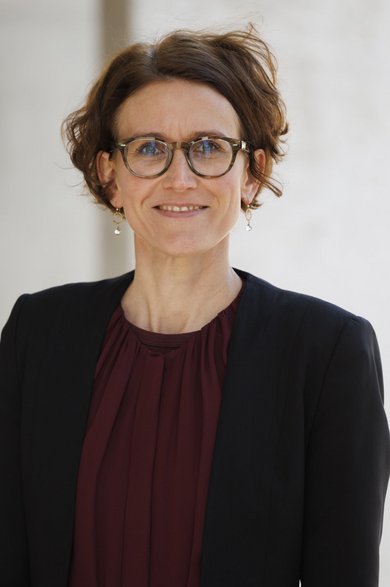
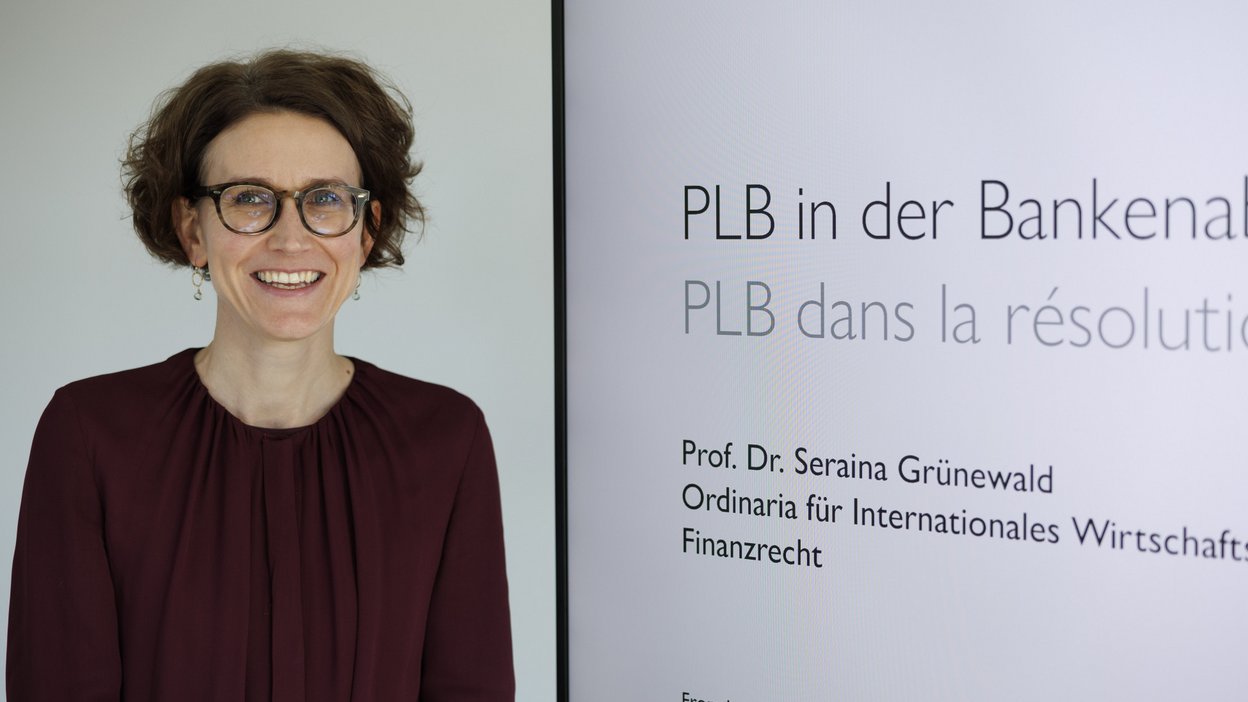
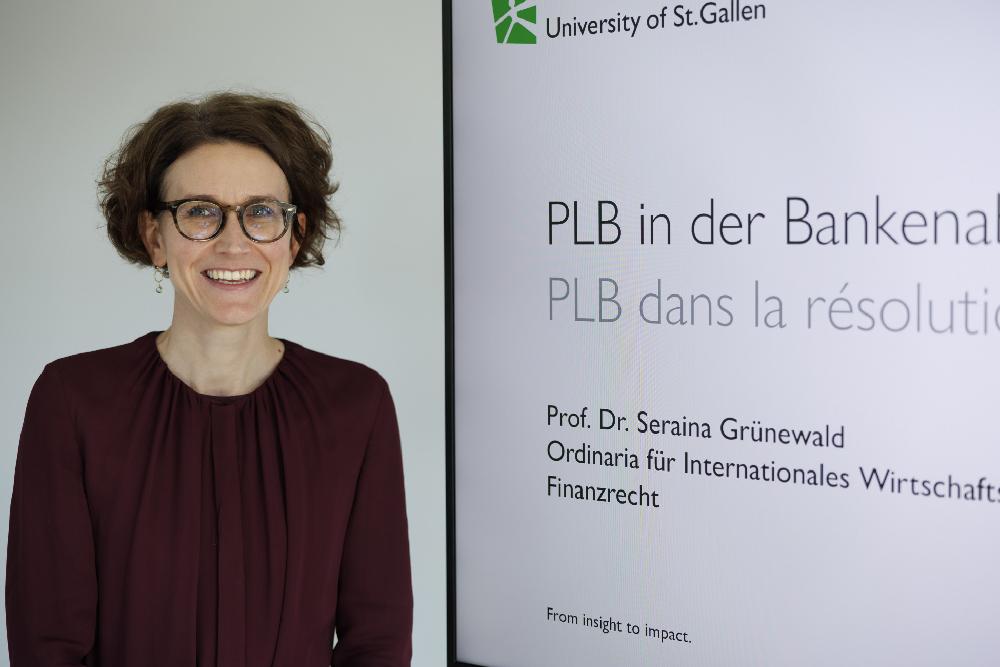
When it comes to the Public Liquidity Backstop (PLB), Seraina Grünewald's position is clear. "The PLB is necessary for bank resolution. Any resolution strategy will fail if the bank runs out of liquidity. Without liquidity, a bank cannot be restructured and its systemically important functions cannot be continued," she emphasised in spring 2025 before the Council of States' Economic Affairs and Taxation Committee. She was one of four professors who were heard during the deliberations on the matter in the Federal Parliament.
It is no coincidence that the professor of international business law and financial law, who grew up in Bern, is a sought-after expert by authorities at home and abroad. Seraina Grünewald has been researching how to deal with banking crises since 2008, when the investment bank Lehmann Brothers collapsed in the wake of the major financial crisis. While working on her doctoral thesis, she spent several months at the International Monetary Fund in the USA, where she witnessed first-hand the consequences of the financial crisis and the creation of international standards for bank resolution. The Credit Suisse crisis in 2023 once again highlighted the relevance of the topic she had chosen at the time.
Bank resolution, together with central banks, the digitisation of money and the development of sustainable economic processes, are among Seraina Grünewald's main research focuses. In recent years, she has advised the International Monetary Fund, the European Central Bank, the European Stability Mechanism and FINMA, among others. Her research appeals to a wide audience due to its economic and socially relevant topics.
“Now is the time to learn the right lessons from the CS crisis – and this clearly includes the need for a public liquidity backstop.”
Seraina Grünewald emphasised that the hearing before the Council of States committee was a special honour. After the four professors gave their short presentations, the committee members asked questions for almost three hours. In her contribution to the discussion, the HSG professor first made it clear that neither resolution nor the PLB are about rescuing a bank in crisis. "Resolution offers a solution to avert economic damage and minimise the use of taxpayers' money," she explained. Various strategies could be pursued in this regard.
To emphasise that a bank without liquidity cannot be restructured and its systemically important functions cannot be continued, Seraina Grünewald compared bank resolution to open-heart surgery. "If the blood reserves run out, no matter how precisely the operation is performed, the patient will still die. With the PLB, the federal government provides these blood reserves if necessary. It guarantees the SNB the repayment of liquidity and thus assumes a risk of loss." In order to minimise this risk of loss, the PLB bill rightly provides for various safeguards. As an example, the professor cited the design of the PLB as a last resort. It only comes into play when other sources of liquidity have dried up. Furthermore, it is not available in the event of resolution. If a bank needs the PLB, it will be compulsorily resolved.
During the hearing, Seraina Grünewald felt it was important to emphasise that meaningful discussion of the PLB can only take place once parliamentarians know what and whom it is intended to finance. "The current bill is insufficiently aligned with the necessary adjustments to resolution regulation. Firstly, the law must regulate the various resolution strategies more comprehensively. In particular, the strategy of market exit through sale needs to be better established as an alternative to continuing and restructuring the bank," she pointed out to the committee members. This also includes the capital adequacy requirements for UBS's foreign subsidiaries, as this is directly relevant to the feasibility of such a strategy. "The issue of capital requirements is giving rise to particularly heated discussions and is at the centre of the political debate on future regulation, especially of UBS as the remaining major Swiss bank. She regrets this a little, explains Seraina Grünewald. "Liquidity is an equally important piece of the puzzle."

The HSG professor also considers it necessary to expand the circle of banks that can be wound up in the event of default. "Many of the so-called medium-sized banks, such as Julius Bär, Valiant and various cantonal banks, pose a systemic risk in the event of default. Contagion effects can quickly arise. It therefore makes sense to plan for the orderly winding up of these banks." Bankruptcy remains a possibility, however. "Smart, comprehensive and forward-looking resolution rules are the best protection for the public liquidity backstop. If the resolution works, the federal government will not incur any losses from the PLB."
Seraina Grünewald has been researching and teaching at the University of St.Gallen since early 2024. She emphasises that her current report on the Public Liquidity Backstop is very good at fitting in with the University of St.Gallen's efforts to address socially and politically important research topics. In a country like Switzerland, where banks play an important role in the economy, it is particularly important to create the conditions for a functioning bank resolution. "The CS crisis has already unfolded differently than the UBS rescue in 2008, thanks to the regulatory measures taken at that time. Now it is important to learn the right lessons from the CS crisis – and this clearly includes the necessity of the Public Liquidity Backstop," Seraina Grünewald concludes.
Prof. Dr. Seraina Grünewald joined the University of St. Gallen in 2024. Her research and teaching focus on central banks, the digitalization of money and the transition to a more sustainable economy.