Citizens who benefit from political decisions often do not question undemocratic processes. This is shown by the study The Critical Role of Political Winners in Safeguarding Democracy, published in the subject journal Political Behaviour, which is based on surveys conducted in the United Kingdom.
Democracy thrives on different opinions, parties and ideas that compete for approval in a free exchange. As in sport or games, fair play is also important. Winners in democracies not only win elections, but must also take responsibility for upholding democratic principles and norms. How do citizens actually react to violations of democratic norms when they leave the political playing field as winners – that is, when the election results correspond to their preferences?
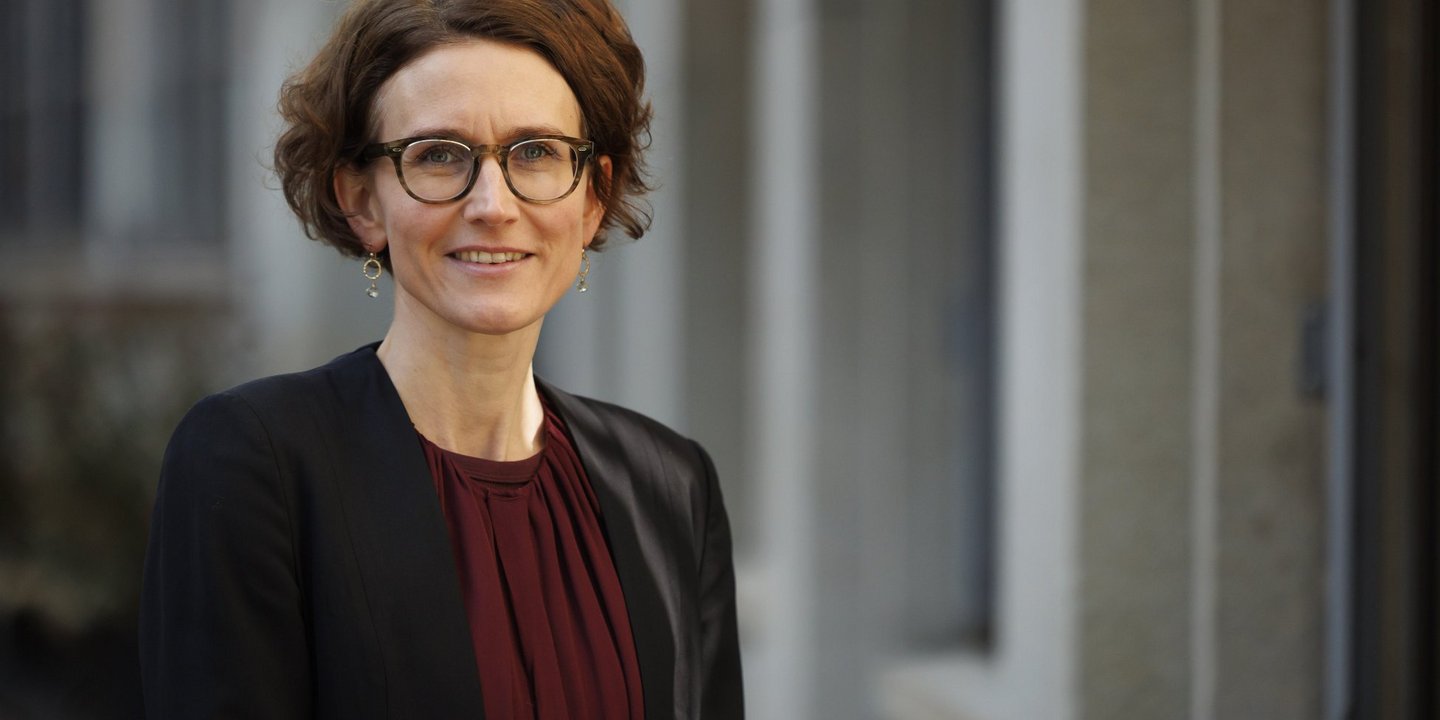
Based on a survey and two experiments conducted in the United Kingdom, the study The Critical Role of Political Winners in Safeguarding Democracy examined the extent to which respondents tolerate an accumulation of procedural violations before changing their minds. Political scientist Eri Bertsou led the study together with researchers Hannah Werner and Sofie Marien. The team focused on the role of political winners in preserving democracy: "This is an aspect that has received little attention so far, as the legitimacy of democratic systems has traditionally been based on the behaviour of the losers," explains Assistant Professor Eri Bertsou. If political winners accept rule violations in democracy and are unwilling to see mistakes and injustices, they can contribute to the weakening of democracy. The survival of democracy and its fundamental values therefore depends not only on acceptance by the losers, but also on the vigilance and restraint of citizens who benefit from political decisions.
The study's findings have significance beyond the UK – for example, for the US and other established democracies. At a time when democratic norms are under pressure worldwide, the study is particularly relevant, according to Bertsou – even if the circumstances and actors have changed: "It is now more important than ever to research democratic systems and draw attention to the fact that democracy is not a stable system. However, many people take the democratic form of government for granted – but it is not," emphasises the democracy expert.
The first survey for the study took place during the height of the Brexit negotiations and procedural controversies. The other two studies focus on the winners in political processes dealing with two other controversial political topics: immigration and climate change. The study results show a significant gap between how winners and losers perceive violations of democratic norms – even in an established democracy like the UK. When winners are confronted with deeply ly flawed democratic processes, only 58 per cent believe that the decision should be challenged – compared to 80 per cent of losers. One of the key findings of the study is that the more democratic norms are violated, the more likely winners are to reject the result. However, even with four violations, the rejection rate remains below 60 per cent. People who are heavily involved in certain policy areas such as migration, climate or the EU show less reluctance when they are among the winners. In addition, conservatives and supporters of the British Conservative Party show less democratic reluctance than left-wingers and Labour voters.
“Political winners have a great responsibility to defend democratic principles. These are at risk if winners are not prepared to acknowledge mistakes and injustice.”
Political scientist Eri Bertsou researches current challenges for democracies, such as the climate crisis, technological change and social crises. She has a particular orientation towards the relationship between citizens and experts, the rise of populism and the decline of democratic norms. In addition to political behaviour, public opinion and technocratic governance, Bertsou's research focuses on the topic of trust and distrust in politics and institutions. How does this trust – or distrust – influence political decisions, changes in society and political stability? In her doctoral thesis Citizen attitudes of political distrust at the London School of Economics, Bertsou formulated criteria for measuring trust and distrust in political systems. "All human coexistence is based on trust; it holds all social relationships together. I find it fascinating to explore this trust scientifically," says Eri Bertsou. In her everyday research, she observes a decline in trust in political institutions and democracy: "The goal is to strengthen this trust again. Often, the values and interests of the ruling elites have nothing to do with the reality of citizens' lives," says Bertsou, explaining the reasons for this mistrust. "When people repeatedly lose in the democratic game, their reaction is 'I'm not playing anymore' – and then their interests are no longer represented at all."
The trigger for the scientist's decision to conduct political research was her professional experience at an investment bank: "After completing my degree course, I took employment as a financial analyst. That was just when the global financial crisis of 2008 broke out, triggered by the inflated US real estate market. I wanted to better understand what was happening in the world and how people were affected," says Eri Bertsou. After many years of political research, she is clear: "Democracy is currently at stake. Under these circumstances, it is all the more important to defend democratic values such as freedom of research, freedom of speech and freedom of the press," the professor states emphatically.
Prof. Dr. Eri Bertsou is Assistant Professor of Comparative Political Behavior at the University of St.Gallen.