Campus - 21.07.2026 - 07:45
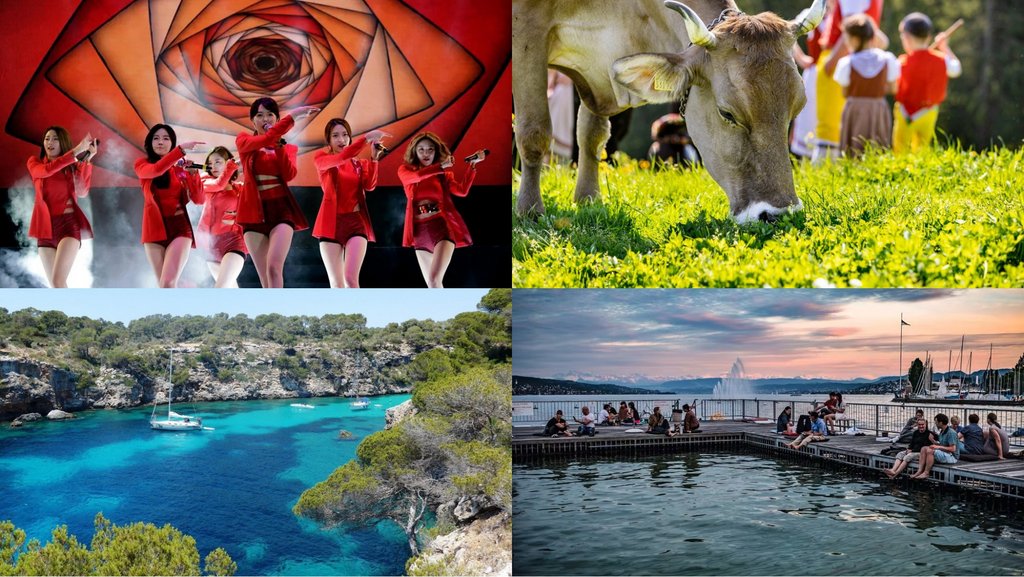
"What do Lionel Messi, K-pop, a state museum and a viral travel vlog have in common?" There is a moment of silence in the seminar room at the University of St.Gallen. The question sounds puzzling. Then the discussion begins. Messi is a football idol, K-pop is a pop-cultural phenomenon, and a museum often represents the state’s perspective on the country’s history. And the travel vlog? Is it a report on the journey? The answer to the riddle is that all four examples show how states shape their international image. This happens not only through diplomatic negotiations or political interventions, but also through culture, history brought to life, sport and tourist experiences.
Tourism experts Prof. Dr. Pietro Beritelli and Dr. Gulnaz Partschefeld from the University of St.Gallen explain that what political science refers to as "soft power" often goes completely unnoticed by travellers. Together, they lead the Bachelor's course "From a thirst for adventure to sustainability: tourism as a journey between the self and the world". Together with the students, they analyse tourism as an interface between economics, culture, and politics.
While tourism is generally regarded as a leisure and economic sector, researchers are increasingly viewing it as a geopolitical factor. Those who decide what history visitors experience of a country influence that country’s international reputation. The focus is no longer just on hotel stays or flight connections, but on trust, attractiveness, and societal interpretative authority. Bachelor's students at the University of St.Gallen have explored this development. Rather than evaluating travel destinations, their task was to highlight interconnections and mechanisms of power. They considered everything from the authenticity of a travel experience to new, technologically created spaces for experiencing travel, and reflected on its impact.
A common theme emerged from all the presentations on the final day of the course: tourism never conveys an objective reality. Every destination decides which story it tells about itself. Museums select which historical events to highlight. Tourism organisations determine which images are shared around the world. Major events stage national identity. Influencers and travel platforms also shape how countries are perceived.
Gulnaz Partschefeld demonstrated that this selection can have political implications, citing a behind-the-scenes mechanism. What appears authentic in travel vlogs is sometimes a paid-for product or one with political backers. For example, the channel "Sasha Meets Russia", which, according to OCCRP, received funding from the state broadcaster RT and a cultural fund close to the Kremlin, was consequently sanctioned by the EU in June 2026. Full shop shelves, quiet streets and punctual metros paint an effective picture of Russia precisely because it does not look political. According to Partschefeld, authenticity is not a state that a place possesses, but an impression created by the camera and editing. The same principle applies to a historical site such as the controversial Stalin Museum in Gori, Georgia, which can portray Stalin either as a military commander or as a tyrant. "The problem here is not the untruth, but the selection of what is and isn't told," says Partschefeld, adding: "People who travel today often choose not just a destination, but a narrative they are keen to embrace. Sometimes an algorithm and a sense of authenticity are enough for that," says the course leader.
Such processes are described by international research as "soft power": influence arises not through pressure or military strength, but through a country being perceived as attractive, credible or culturally fascinating. Reputation thus becomes an economic and political resource. According to a thesis put forward by tourism experts at the University of St.Gallen, states today are competing not only for investment and skilled workers, but also for attention and trust.
This dynamic is particularly evident at major international events, which the HSG students examined in detail during their seminar. For them, the 2022 FIFA World Cup in Qatar was far more than just a sporting tournament. It was a global showcase for a country that wanted to present itself as modern, efficient and hospitable. Billions of television viewers witnessed cultural rituals, spectacular stadiums and perfectly organised events.
However, the World Cup also highlighted the limitations of tourism-driven soft power. Restrictions on press freedom, the situation facing LGBT people, and poor working conditions on construction sites could not be hidden behind a facade of positivity. On the contrary, these issues became part of the global spotlight too. When Lionel Messi was presented with the traditional "bischt" after the final, this piece of clothing became a symbol of cultural identity — as well as an element of strategic branding.
The students used the concept of "staged authenticity" to explain this: authenticity is not simply experienced, but deliberately crafted. Visitors are meant to perceive a country as genuine, albeit one whose backdrops have been carefully arranged. "For well-informed visitors, this can sometimes feel as grotesque as the Truman Show," says Gulnaz Partschefeld.
Similar mechanisms are evident in South Korea. There, K-pop, TV series, cuisine and tourism come together to create a global success story. Culture becomes a country’s calling card, eliminating the need to openly articulate political messages. Switzerland operates partly according to this principle, too. During the discussion at HSG, the question arose as to whether Roger Federer was already part of Swiss soft power. The answer was nuanced: Federer embodies values such as fairness, quality and reliability. These attributes are not imposed by the state, so they are perceived as credible and certainly not as propaganda.
For Pietro Beritelli, this reflects a fundamental development. Switzerland Tourism, a state agency funded by the federal government using taxpayers’ money, engaged Roger Federer as an ambassador for Switzerland to promote the country as a holiday destination both at home and abroad. "My research showed that the ‘ambassador’s message’ does not resonate with potential visitors from around the world." Beritelli goes on to say that the messages fail to make an impact because they are usually too fleeting and interchangeable. However, almost all Swiss media and a section of the population are well aware of these campaigns and help to spread them. "The campaign has therefore served more as a means of fostering national identity," concludes the HSG tourism expert. The same phenomenon can be observed in other countries: national advertising using stereotypes is effective with the domestic audience. However, the actual target audience is usually not reached.
Another issue is that the very mechanisms that make a country attractive can also work against it as a destination. In the seminar room at HSG, Barcelona is often cited as the prime example of this. For years, the Catalan metropolis was regarded as a prime example of successful city marketing. But then the locals began to protest against mass tourism, sometimes resorting to violence. Rising rents, overcrowded neighbourhoods and a declining quality of life caused this success story to unravel. What had functioned as an appealing place externally lost acceptance amongst the local population. Mallorca is another example. Even Zurich is considering discontinuing its city marketing as it can no longer cope with the crowds of visitors.
Prof. em. Dr. Thomas Bieger, former president of the University of St.Gallen and a tourism researcher, is not surprised by this development. For decades, he has been emphasising that tourism must always be considered in the wider context. "Tourism is never just a business. It is always a reflection of how a country is developing, and how it deals with growth, boundaries, and change". Consequently, authenticity is becoming increasingly important. HSG communications researcher Prof. Miriam Meckel speaks of "the real as a new scarcity". The more advanced artificial intelligence becomes at generating perfect images, videos and travel narratives, the more valuable genuine experiences become – as does a country’s credibility.
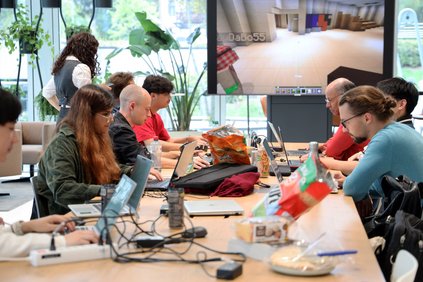
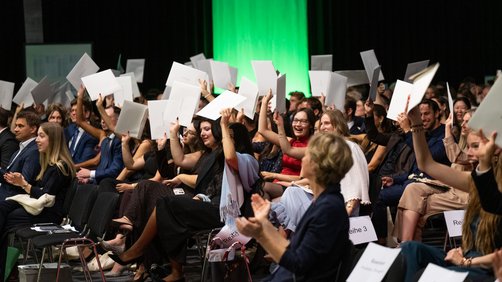
What made that afternoon at the University of St.Gallen so remarkable was not only the topic, but also the approach to learning. The students worked in small research teams. They combined academic theories with current case studies, discussed the differing interests of states, the population, businesses and travellers, and developed their own positions based on this. The aim was not to find one "right" answer, but rather to highlight the ambiguities.
After three hours of discussion, the closing session ended without a clear answer to the initial question. Where does legitimate self-presentation end? Where does political staging and propaganda begin? Perhaps this very uncertainty is the most important insight gained from the course. The students left the seminar room with a new perspective on everyday life.
Holiday travel suddenly appeared not just as a leisure activity that broadened one’s horizons, but also as part of a global competition for attention, trust, and influence. Stereotypes that have become ingrained in people’s minds, partly through 'soft power', can be examined and refuted during new travel experiences through real-life encounters.
Conclusion: In the past, destinations mainly sold landscapes. Today, they sell stories. Along with these stories come values, whether consciously or unconsciously.
Dr. Gulnaz Partschefeld is a lecturer and heads the Events Office at the University of St Gallen. Prof. Dr. Pietro Beritelli teaches and conducts research at the Institute for Systemic Management (IMP-HSG).
More articles from the same category
This could also be of interest to you
Discover our special topics