Campus - 04.11.2026 - 09:30
“For our start-up, AI has been at the heart of our work right from the start. However, when we want to solve an important problem, we often start by working in an analogue way,” says Lorenz Hieber. His start-up Qontext is developing a platform through which AI agents can access corporate knowledge; a sort of digital memory that processes, links and continuously expands existing knowledge.
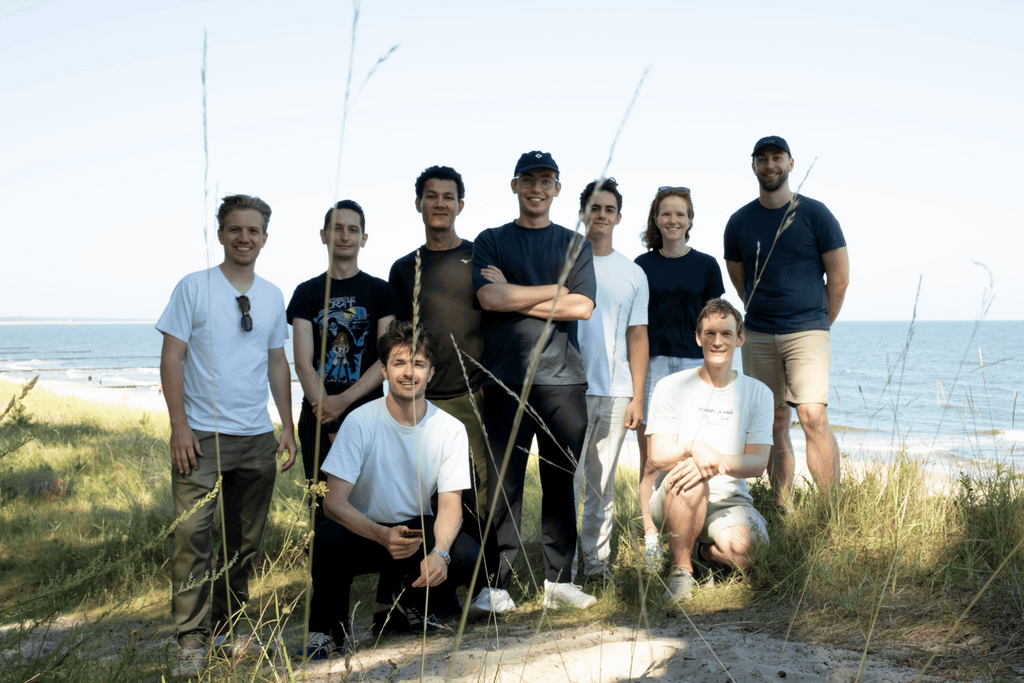
This memory – or, indeed, the context – is crucial to the quality of the work carried out by AI agents, says Hieber. Qontext itself is also programmed with the help of AI agents. The foundation for this is laid by the 13-strong team, the majority of whom are IT developers. “It always starts with our clients’ problems, our ideas and detailed instructions.” The AI agents then translate these into code. “We don’t write a single line of programme code ourselves, but we test and evaluate everything thoroughly,” says Hieber.
Qontext has had a whirlwind of a year: at the end of 2025, HSG graduate Hieber and his university friend Nikita Kowalski founded the company. A few months later, they secured their first investment of over 2 million Swiss francs from HV Capital in Munich and Zero Prime Ventures in San Francisco, as well as from several founders of highly valued AI start-ups. With this funding, the two founders built up their team in Berlin. Several companies are now already relying on Qontext in their day-to-day operations, many of which operate in the AI, automation and software sectors.
In mid-October 2026, Hieber returned to HSG and spoke to students about his experiences during an entrepreneurship lecture given by HSG Professor Thomas Zellweger. “I still remember very clearly what made my start as an entrepreneur difficult and how much it helped me to hear honest feedback from founders who were already a few steps ahead,” says Hieber, who once attended the lecture himself as a student. During his time atHSG, he particularly valued the environment of ambitious students and researchers. He also gained valuable experience in teamwork through practical projects at HSG.
Qontext has entered the market at an exciting time: AI agents capable of autonomously carrying out complex tasks are regarded as the next step in AI applications for businesses. However, their use raises questions: how do companies ensure that the agents access relevant knowledge, take internal guidelines into account and do not carry out unauthorised actions?
This is where Qontext comes in. The platform is designed to structure corporate knowledge and make it accessible to AI agents. This includes, for example, content from contracts, product documentation, customer service or meetings. Companies can connect their existing tools – including common language models and AI applications – to the database and specify how the knowledge is structured.
The database is designed to regularly synchronise with the connected sources, incorporate new information and establish links between different areas of knowledge. Furthermore, companies can specify which areas of knowledge individual AI agents are permitted to access.
For Hieber, knowledge and its structuring represent a decisive competitive advantage. “Everyone uses the same AI tools – but the knowledge that the AI can work with is what makes the difference.”
On LinkedIn, Hieber also repeatedly champions Europe as a hub for technology. “We absolutely must strengthen our technological sovereignty.” When it comes to the development of LLMs in particular, Europe can only keep up to a limited extent. And the continent is also lagging behind in terms of computing power. Qontext hosts its data and infrastructure in Europe.
Now the start-up wants to grow further – but the past year has also shown Hieber that he and the team must, above all, be flexible. “Of course we have a vision for the coming years, but in practical terms we only plan about two to three months ahead.” The upheaval in the field of AI is simply too rapid and hardly predictable.
More articles from the same category
This could also be of interest to you
Discover our special topics