Campus - 12.11.2026 - 09:00
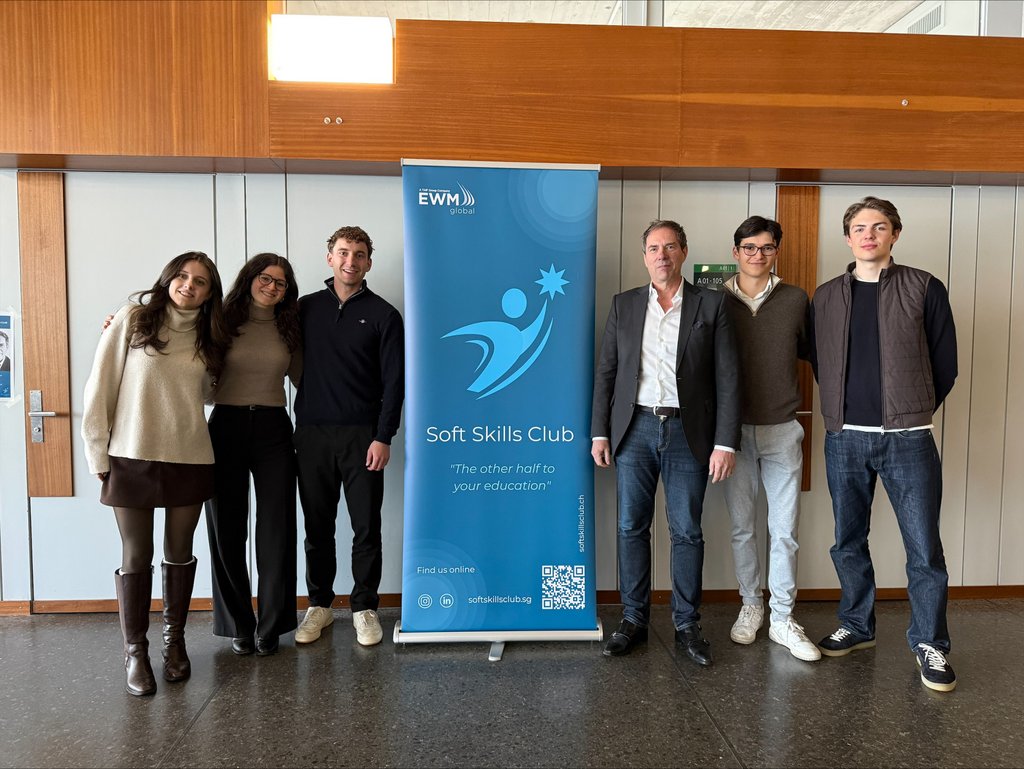
A professor of rhetoric, a longevity consultant, business advisers and a start-up founder: these are just some of the guests that the Soft Skills Club has invited to the HSG for workshops over the past few months. “We want to use a wide range of input to help HSG students develop skills that complement their studies,” says Eric Schroter.
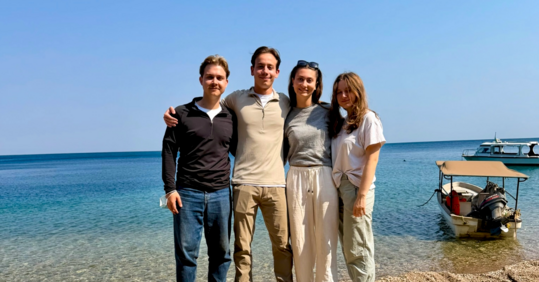
The 22-year-old founded the Soft Skills Club – one of around 150 student societies at the HSG – in autumn 2025 together with his childhood friend Leif De Boni.
The idea came to the pair through their own experiences of looking for work. “We noticed that in interviews for work placements, there were hardly any questions about grades or subjects studied. Instead, companies wanted to see how you present yourself, how you speak and how you function in diverse teams – in other words, what sort of person you are.” Added to this is the rapid rise of artificial intelligence. “For HSG students, the upheaval caused by AI is a major issue, and also a source of stress. Finding a job as a graduate has become more challenging because of AI,” says Schroter.
This is where the Soft Skills Club comes in: “Our idea is to strengthen those skills that enable students to set themselves apart from AI.” Schroter highlights communication, leadership qualities, resilience and the ability for self-development in particular. The club points to forecasts from consultancy firms such as Deloitte and the Boston Consulting Group, which predict that interpersonal and cross-disciplinary skills will continue to grow in importance in the world of work. “It is also important to note that soft skills are in demand across all sectors,” says Schroter.
There appears to be considerable interest: within the first two weeks of its founding, more than 100 students joined the club. It now has around 300 members. More than ten events are planned each year. Anyone who attends ten of these can also obtain a club certificate documenting their participation in the professional development programmes.
Another aim is to build a professional network. According to Schroter, the club has so far been in contact with around 30 companies. Some of them took part in workshops or went on to chat with students afterwards. “A visit to the AdHoc campus bar is a fixed part of the programme after our workshops – good conversations often arise there between students and speakers.” Around three-quarters of the invited speakers are HSG alumni who wish to give something back to the students of their alma mater. “The fact that the club has been able to achieve so much in such a short time is mainly down to the board: here, we put into practice every day the soft skills we aim to teach – communication, trust and mutual support,” says Schroter.
The club also receives support from within the university: HSG affiliate professor Andreas Krafft is the club’s new faculty advisor and is contributing his own network.
Schroter is himself active in several student societies. For him, the vibrant society scene forms an essential part of HSG’s campus culture. “In the societies, you meet students who share similar interests. Close friendships often develop as a result.” At the same time, the societies offer the opportunity to gain practical experience. For example, in organising events, securing funding for them, or building a network.
Schroter also draws on this experience for his own entrepreneurial activities. This summer, he founded the start-up Featured, which is building a platform where musicians can develop and market joint projects. The start-up is taking part in the HSG’s current Entrepreneurial Talents Programme.
Through this programme, the HSG supports up to twelve start-ups per semester. What are the most important soft skills for the people behind a start-up, in the view of the young founder Schroter? “You have to be self-critical and reflective, and be prepared to constantly question and further develop your initial idea.”
More articles from the same category
This could also be of interest to you
Discover our special topics