Background - 01.07.2026 - 10:00
In senior management and on the board, uncertainty is part of everyday life: geopolitical developments put a strain on supply chains, tech competitors shake up business models, and internal resistance slows down necessary transformations. And it's exactly in these kinds of situations that executives often have to make far-reaching decisions.
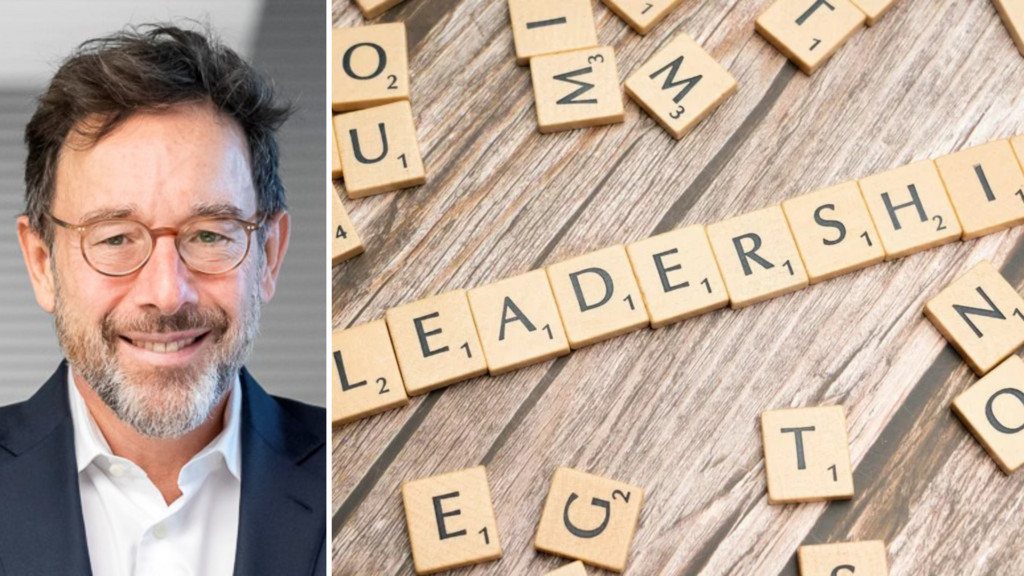
How successful decision-makers handle uncertainty is shown by the “Superdeciders” approach, which Professor Claudio Feser presented in the latest “HSG Highlights Online” webinar by the Executive School of the University of St.Gallen (HSG).
Imagine you’ve just taken on the CEO role at an international company, says Claudio Feser. The situation: new tariffs are threatening profitability, inflation is dampening demand, and digital competitors are attacking your core market. At the same time, you've got a problem on the executive board. The highly regarded Chief Operating Officer (COO), who is responsible for more than half of the costs, seems to be holding up digitalisation projects.
So, what's the right call here?
a) Do you part ways with him, send a clear message, but leave yourself without a successor?
b) Or do you keep him on, invest in some coaching, and risk further stagnation?
Under intense pressure, we often fall back on evolutionary patterns when faced with this sort of dilemma, explains Claudio Feser: “Because time is short and information is missing, our brain oversimplifies.” Quite often, we’re left with just two opposing options: take action or wait and see, keep or sack, invest or cut costs.
This phenomenon is known as “binary bias”. While it definitely helps us make quick choices in everyday life, it can be quite dangerous when setting strategic directions, simply because key options aren't even noticed in the first place.
As a former Senior Partner at McKinsey, Claudio Feser knows this kind of decision-making under uncertainty from firsthand experience. Today, he teaches innovation and leadership at the Executive School of the University of St.Gallen (HSG). Together with an interdisciplinary research team, he developed the Decision Navigator Canvas. This tool helps executives and management teams structure difficult decisions in a systematic way.
The crucial step here: an option isn’t immediately judged as right or wrong. Instead, assumptions are brought out into the open.
• Why do we believe that letting the COO go would be the best solution?
• What risks might we be overlooking?
• What alternatives haven't we explored yet?
This creates some distance from your initial gut reaction. A rigid “either-or” turns into a much broader spectrum of possible options. In our example, a solution could be to supplement the COO's area of responsibility with a strong new digital role, whilst setting verifiable goals for the COO at the same time. You could still part ways later on, but that decision would then be on much firmer ground. “Better decisions are made when leaders bring their assumptions to light, test alternatives, and systematically tackle uncertainty”, concludes Claudio Feser.
1. Break out of the either-or trap. If you can only see two options, your decision space is probably too narrow. Consciously develop further options that mix risk, speed, and stability in different ways. Do this as a team – it really broadens the range of solutions.
2. Treat your beliefs like hypotheses. Strong opinions are no substitute for a solid basis for a decision. Test your assumptions with facts, counter-arguments, and different perspectives before taking any far-reaching measures.
3. Protect your cognitive resources. Constant stress limits your ability to assess complex situations with nuance. That's why sleep, breaks, and exercise aren't just nice to have – they're absolute prerequisites for making brilliant strategic decisions.
Fancy diving deeper? Watch the webinar with Claudio Feser now and find out exactly how to apply the Decision Navigator in your own company: Webinar with Claudio Feser
The Executive School of the University of St.Gallen (HSG) brings together executive education from more than 40 university institutes and combines cutting-edge research with practical business application. Explore all modules on the ES-HSG platform and find those that match your career stage and industry: es.unisg.ch
Picture: Unsplash / Markus Winkler
More articles from the same category
This could also be of interest to you
Discover our special topics