Research - 14.07.2026 - 15:00
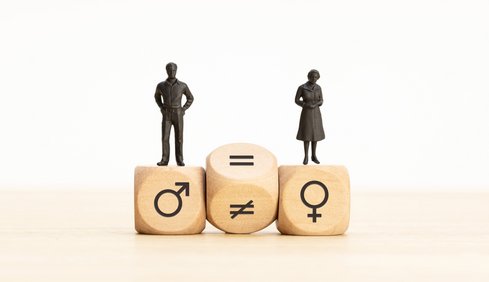
The same personality trait in a CEO can cause a company to either operate in a more environmentally friendly way or be less committed to environmental issues. The decisive factor is whether the CEO is male or female: a male CEO is celebrated in the media for his sustainability initiatives and becomes even more committed to his company’s environmental performance. In contrast, a female CEO is praised for her sustainability performance and then tends to take a step back. Why do executives behave so differently?
Visionary, self-assured and assertive: these are traits frequently attributed to top female and male managers alike. However, they can also go hand in hand with narcissistic traits such as self-importance, arrogance, boldness, dynamism and receptiveness to praise. However, these same personality traits are not viewed in the same light by everyone. In a recent study, researchers from St. Gallen, Tel Aviv and Houston investigated why this is the case.
Whether these traits promote or hinder a company’s environmental performance depends on the executive’s gender and the level of media attention. The analysis's findings provide new insights into debates on diversity, sustainable corporate governance and successful leadership.
The study, published in the Journal of Management Studies and comprising six investigations in total, employed a variety of methods. The team analysed around 8,800 observations from 1,392 listed companies and 1,778 CEOs over 15 years (2001–2015). HSG researchers Jamie Gloor and Judith Walls collaborated with Giannina Faktor (now at the New Environmental School in Tel Aviv) and Sana Chiu from the University of Houston in the USA. The analyses were supplemented by an experiment involving over 500 executives, real-world data, and a controlled experiment.
The focus was on how narcissistic personality traits in CEOs interact with their gender and the impact this has on a company’s environmental performance.
The researchers demonstrate that, when companies receive positive media attention for their sustainability achievements, narcissistic male and female CEOs react differently. While male CEOs tend to expand their sustainability activities under these conditions, female CEOs with comparable personality traits tend to reduce them.
The cause does not lie in differences in leadership qualities or styles. Rather, the study shows that societal expectations and gender stereotypes shape perceptions of leadership. Women in senior roles often receive less recognition for similar achievements or are judged more harshly than men. Those with pronounced narcissistic personality traits are particularly sensitive to public recognition. This can have consequences for strategic decisions.
'For these high-calibre executives, our findings clearly show that it's not just what you do that matters, but who you are too — particularly with regard to concrete, decisive business outcomes such as environmental sustainability,' says Judith Walls, Professor of Sustainability Management at the University of St Gallen. 'Our findings show that leadership cannot be understood in isolation from the social context. The same performance is perceived differently depending on gender,' adds Jamie Gloor, Swiss National Science Foundation Assistant Professor at the University of St Gallen.
The findings are relevant for companies seeking to improve their sustainability performance. As this varies depending on the gender and level of narcissism of the CEO, both factors should be considered when appointing executives. This does not mean favouring narcissistic men, even though they demonstrate stronger sustainability performance when receiving positive media attention. In fact, the best results were achieved by less narcissistic women, which is another argument for specifically appointing women, who may be more authentically committed to sustainability than men.
Boards of directors can also play a part, for example by presenting sustainability as an opportunity for prestige combined with appropriate incentives and oversight. They could also emphasise a collaborative focus, which could boost the sustainability performance of narcissistic CEOs of both genders. This would be preferable to relying on attention. This tends to fuel narcissism.
The key findings of the study at a glance:
The study thus offers a new perspective on companies' environmental performance. It shows that responsible leadership depends not only on a CEO's characteristics, but also on the societal expectations and reactions that accompany their actions.
For companies, this means that, if they wish to promote sustainability, they should select the right leaders and critically assess narcissistic tendencies. They should also create an environment in which leaders' commitment is recognised equally, regardless of gender.
The study by Jamie Gloor, Judith Walls, Giannina Faktor and Sana Chiu was published in June 2026 under the title ‘Chasing – Or Escaping – The Limelight of Sustainability Media Attention? Narcissism’s Opposing Effects for Women and Men CEOs on Environmental Performance’ in June 2026 in the «Journal of Management Studies», a renowned management journal recognised by the Financial Times as one of the leading publications and featured in business school rankings.
More articles from the same category
This could also be of interest to you
Discover our special topics