Campus - 28.10.2026 - 09:00
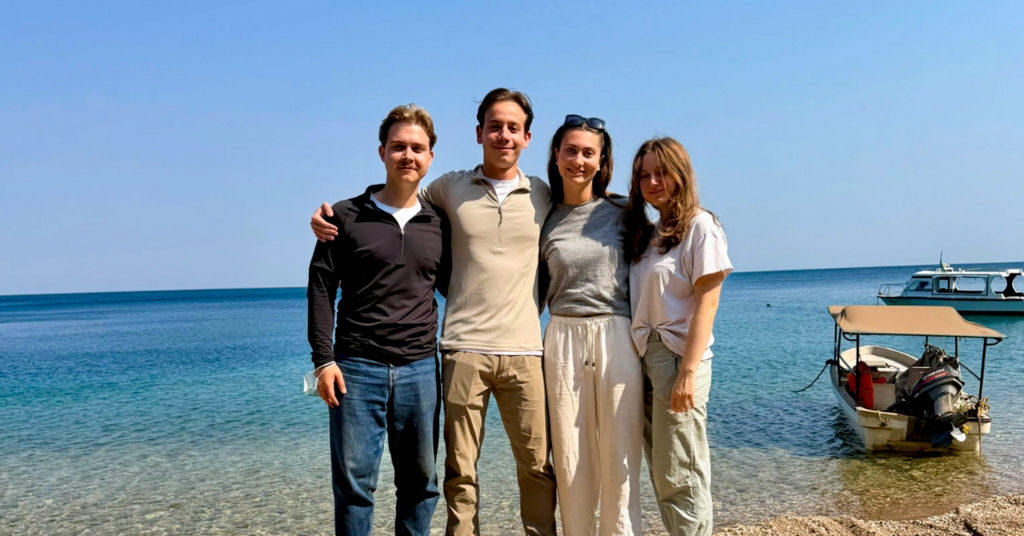
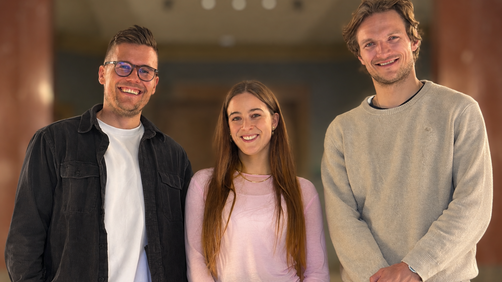
In July and early August 2026, HSG students Cinzia Bertea, Nicolas Greiner, Viola Suter and Henri Pinar worked alongside the local organisation Clear Vision for Change (CIVISCE) in Kigoma, Tanzania. The town is situated on Lake Tanganyika in the East African Great Lakes region, in close proximity to Burundi and the Democratic Republic of the Congo. Cross-border trade and refugee movements characterise the region, which is one of the economically weakest in Tanzania. According to estimates, around two-thirds of the population there live below the poverty line.
The idea for WAVE – Women in Africa Venturing Education – was conceived at the end of 2025. Cinzia Bertea and Nicolas Greiner had met whilst on a voluntary placement in Mongolia and decided to develop a project themselves this time: from finding partners and securing funding to implementation. With the addition of Viola Suter and Henri Pinar, the team grew to four HSG students. They raised around 6,700 Swiss francs for the two programmes. “We held just under 100 meetings for this, many of them within the HSG network,” the students write in their final report, which has since been published. They covered the travel and accommodation costs themselves.
WAVE was designed to reach women at different stages of life. ‘She Builds’ is aimed at adults who already run a small business and wish to develop it further. ‘Pad Power’ supports schoolgirls for whom a lack of sanitary products can make attending school difficult. Together with CIVISCE, the team developed two programmes that build on existing local structures and address specific needs.
As part of ‘She Builds’, the students worked alongside 20 female entrepreneurs from the fish trade, soap-making, poultry farming and the production of embroidered bed linen. They began by spending a week at the women’s businesses to familiarise themselves with processes and bottlenecks. This was followed by a five-day workshop on pricing, bookkeeping, cost accounting, procurement and customer management, during which the women worked with their own business figures and a specially developed workbook.
The WAVE team only decided which materials were appropriate after gaining these insights. Just how important local conditions were became clear in the fish trade: For the sellers, ice and its transport are among the biggest running costs. However, equipping every woman with her own freezer would have been impractical – partly because not everyone has a reliable electricity supply at home.
Instead, three freezers were set up at a central location near the market, which is guarded by security staff and has an electricity supply. The women can use them collectively in return for a monthly fee, which covers the running costs and is lower than their previous expenditure on ice and refrigeration. Eight female fish sellers were also provided with insulated cool boxes. In the other three business areas, too, specific machinery and materials were procured.
With ‘Pad Power’, the team targeted a younger audience. In Tanzania, around 17 per cent of schoolgirls report missing lessons for reasons related to their periods. WAVE wanted to reduce one of the associated barriers: the lack of access to suitable menstrual products.
At four secondary schools in Kigoma, the students, together with CIVISCE, distributed 1,000 packs of reusable sanitary pads and underwear. If cared for properly, the products can be used for up to 18 months. This was accompanied by educational sessions on menstrual health, hygiene and how to use the products. In addition, the WAVE team left emergency stocks at the schools. Further follow-up will show whether this leads to a reduction in absenteeism in the long term.
Even after the HSG team’s departure, CIVISCE remains on site to support the female entrepreneurs, oversee the use and maintenance of the newly acquired equipment, and provide support to the schools. Agreements set out responsibilities and the shared use of larger purchases. Over the coming months, an assessment will be carried out to determine whether operational processes and costs have actually improved and how the menstrual products are being used.
“We are also currently in discussion with various organisations that could take over the projects,” says the WAVE team. It remains to be seen whether a new team of students from HSG, an established organisation or CIVISCE will lead future iterations of the project.
More articles from the same category
This could also be of interest to you
Discover our special topics