Campus - 28.05.2026 - 09:00
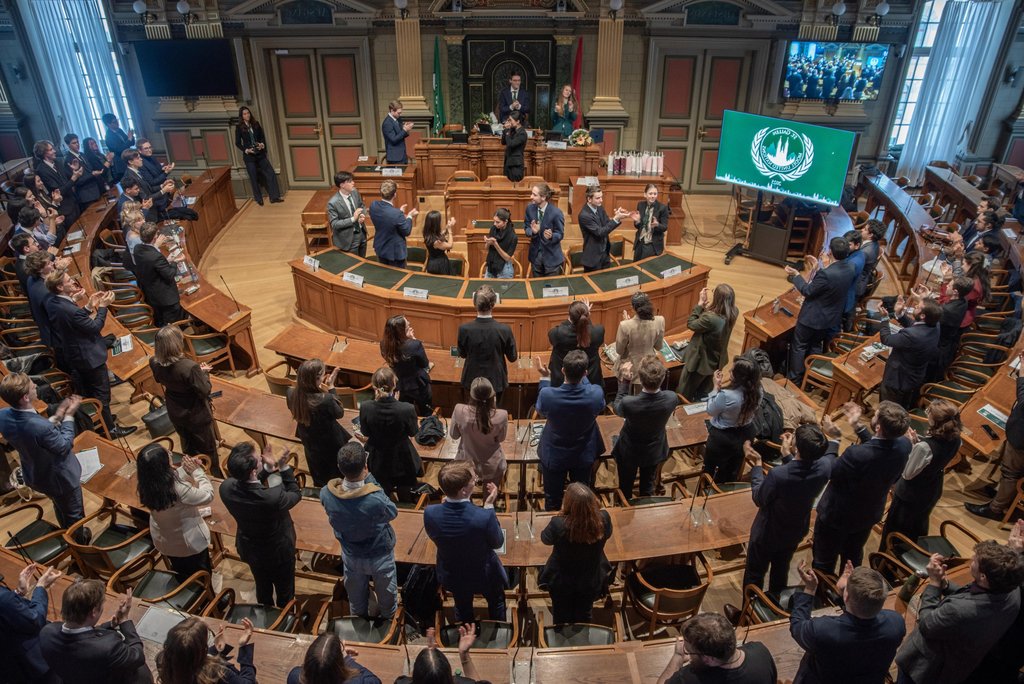
“Imagine you have to represent the position of Russia or Iran. That requires preparation and the ability to put yourself in completely different shoes,” says HSG student Kajsa Wenger, President of St.Gallen Model United Nations (SGMUN). The student society – one of around 150 at the HSG – organises events where students can practise diplomacy, negotiation tactics and international relations in a practical setting. At the heart of these are weekly debates modelled on the UN, in which participants take on the positions of individual states – for example, in the Security Council. But bodies such as BRICS, UNHCR and NATO are also simulated.
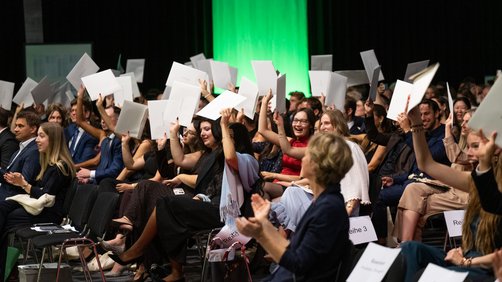
In line with the simulated committees, the aim of these debates after several weeks is to adopt a joint resolution. In the spring semester of 2026, participants addressed security policy issues such as ‘starvation as a weapon’ war crimes and hybrid warfare. ‘We base our work on real-life cases,’ says Wenger.
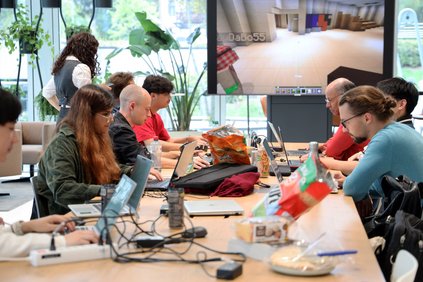
A highlight is SGMUN’s annual international conference in the autumn: in 2025, 130 students from 13 countries came to St. Gallen for four days and debated topics ranging from the safe disposal of nuclear waste to improving global maritime security. Twelve students from the society work solely on organising this conference; the society as a whole has around 100 HSG students as members.
At the same time, the St. Gallen team itself attends around seven conferences a year, travelling to places such as Munich, Copenhagen or Heidelberg. “This creates an international network,” says Wenger. “What’s more, the MUN community is like a big family – you get to make new friends everywhere.”
Many members of the association study International Affairs at the HSG, but the association is open to all disciplines. “Different perspectives enrich the discussions,” says Head of Marketing Denise Kemter. With formats such as the one-day “SGMiniMUN”, the association specifically targets all HSG students. This takes place on 23 May and brings interested participants together for a one-day simulation.
The association’s main aim is to promote objective and fair debates – even on controversial topics. Proceedings follow the established rules of international bodies. “This trains you to formulate criticism precisely and to withstand it,” says Wenger. At the same time, participation strengthens specific skills: “I can now give presentations in English to a large audience – before joining St.Gallen MUN, that would have been difficult for me,” says Kemter. Many members have had similar experiences.
When preparing for debates – whether at the HSG or at a MUN conference at another university – St.Gallen MUN encourages its members to use AI as sparingly as possible. “It’s about training a way of thinking, devoting several hours to a topic and drawing your own conclusions – anyone who uses AI too early interrupts this process,” says Wenger. The rule against using AI during debates also leads to a strong presence from the participants.
Many members aspire to careers in international organisations. For example, Samuel Cobbi, who founded St.Gallen MUN at the HSG, now works at the Federal Department of Foreign Affairs (FDFA) as a consul in Italy. To help students launch their careers, St.Gallen MUN offers insights and networking opportunities, such as visits to embassies or workshops with guests like Philipp Rösler or EU Commissioner Magnus Brunner. “Through our events, we also want to show students that multinational organisations work and are important for the world’s progress,” says Wenger. This is particularly important at a time when international law and organisations are under fire. “We are politically neutral, but we stand for multinational debate and compliance with international regulations,” says Wenger.
More articles from the same category
This could also be of interest to you
Discover our special topics