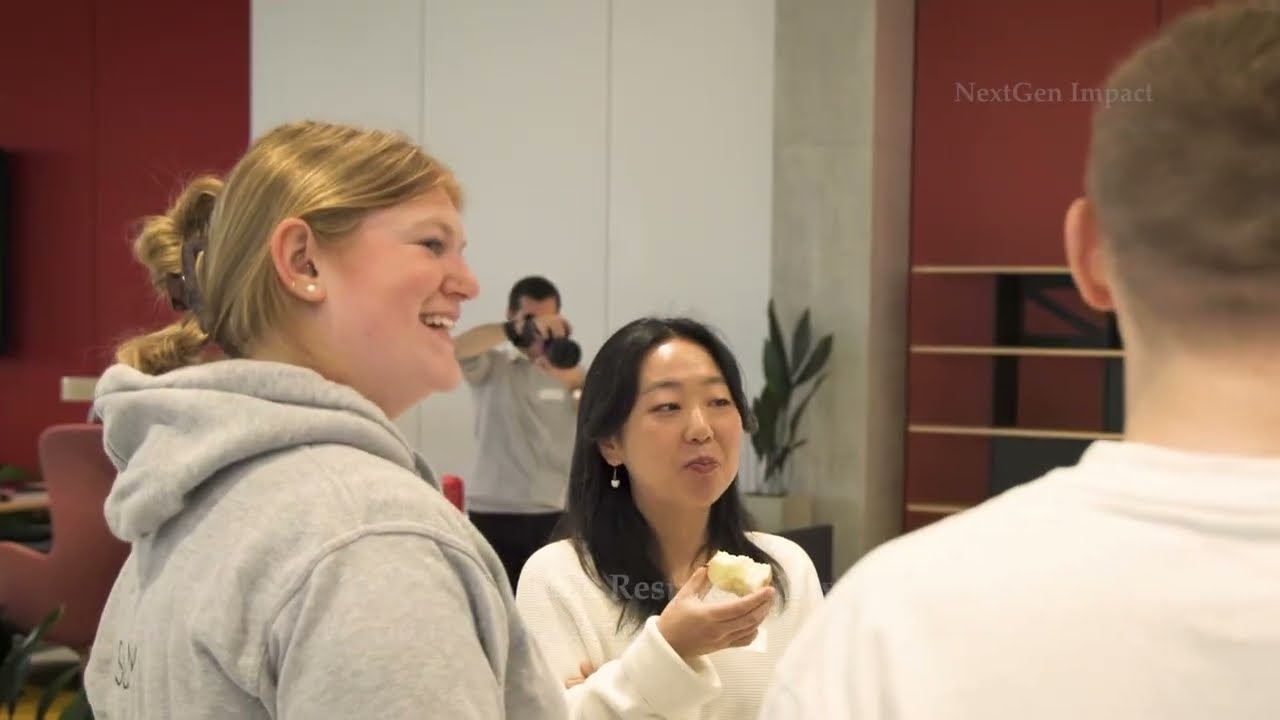
The educational approach at HSG integrates curricular and co-curricular learning to develop students’ ability to think and act in future-oriented, systemic and integrative ways. By engaging with real-world challenges, students connect academic knowledge with practical action while learning to navigate complexity and uncertainty with an entrepreneurial and responsible mindset. They are encouraged to think critically, work across disciplines, cultures and perspectives, and develop the creativity, adaptability, and strategic thinking needed to shape transformation. In this way, HSG prepares students to take an active role in creating a sustainable future.
The space where innovative and impact-oriented teaching takes place at HSG is its Contextual Studies programme. The courses offered here provide a holistic view of sustainability, considering not only the ecological but also the social, political, and economic dimensions. Every semester, students can choose from a wide range of courses that seamlessly integrate with their core subjects, enhancing and complementing them.
One flagship project is the Be the Change course series, which is now firmly embedded in the curriculum. The peer-learning-based format brings students together with start-ups, NGOs, and alumni, creating a learning environment of mutual respect. In small teams, students work on real-case challenges - from market launch strategies and process development to socio-ecological product innovations—gaining deep insights into the complexity of sustainable business models. This results in solutions with a visible impact for both the students and the partner organisations.
What makes the Be the Change course series unique is the close cooperation with HSG student associations and the fact that the students themselves help to shape the course content. This turns a seminar into a learning lab for sustainable transformation that combines critical thinking, practical relevance, and social responsibility.
"The most important lesson for me was that an idea will change a lot through iterations and that the idea changing is meant to happen for the final outcome to be better. Therefore, what I have learned is to not try to make a perfect idea from the beginning but to invite iteration and change to arrive at a solution that aligns best with all the stakeholders that it impacts."
Participant, 2025, Be the Change course
Contextual Studies offer much a selection of individual innovative course formats. It provides a structural framework in which sustainability and social responsibility are anchored in teaching and practice. This is where local and international links are established. For example, the course Amazonia. Socio-Bio-Economy and Entrepreneurship in the Green Heart of Latin America opens up new perspectives on sustainable business in the Global South. Another example is the Energy Transition and Material Flows in a Net Zero Society course, run in cooperation with Empa, which explores the complex challenges of the energy transition. Social responsibility can be experienced in everyday situations as part of the Social Engagement in Practice and Theory course, thanks to the collaboration with the local Spitex.
These offerings emphasise the role of Contextual Studies as an integral part of HSG education, systematically integrating sustainability, responsibility, and innovative strength into teaching, thus giving students access to experiences far beyond the classroom.
Students' desire to work on real-world challenges is also evident in their co-curricular activities. Student-led sustainability initiatives at the University of St. Gallen (HSG) continue to show remarkable vitality and societal impact. One highlight this year was the successful relaunch of the Vegan Club, which has resumed its activities.
HSG's student organisations are increasingly collaborating across clubs, building a cohesive and dynamic network that strengthens knowledge sharing and community engagement throughout the university. They are supported in this by the NextGen Impact initiative, launched by the Delegate's Team for Responsibility & Sustainability in collaboration with various HSG partners.
The NextGen Impact initiative serves two purposes. First, it connects students and creates informal spaces for exchange and co-creation throughout the year, helping student projects get off the ground and gain visibility. Second, it embeds sustainability topics in the university's co-curricular services, such as the HSG Mentoring Programme, HSG Career Services, the Student Union and HSG Alumni. The aim is to engage students with sustainability in an even more targeted and nuanced way.
"The NextGen Impact initiative helps engaged students and internal university stakeholders discover the impact ecosystem at HSG, become part of it, and see clearly where they can support and build on each other's ideas and projects in a meaningful way. This approach unlocks potential and scales impact within the university and beyond."
Maryna Potriina, Lead of the Co-curricular NextGen Impact Initiative
Once a year, everyone involved comes together at the NextGen Impact Forum. Through formats such as workshops, project fairs, awards and career roundtables, participants exchange perspectives, gain new insights, network with sustainability professionals, and find food for thought on current developments in sustainability.
One highlight of the NextGen Impact Forum is the Impact Career Roundtable, which brings together voices from very different corners of the impact space, from biotech and finance to AI research and sustainability consulting. Despite this diversity, certain themes emerge as key across industries: passion, self-reflection, self-care and finding your own unique pathway.
The HSG Mentoring Programme offers another way to support students individually. It pairs students with experienced professionals who specialise in impact careers, supporting and encouraging their development.