Research - 20.07.2026 - 11:00
At FIFA, every member association has exactly one vote, regardless of its size. Why does this democratic principle mean that World Cups are becoming ever more commercialised?
Stefan Legge: At FIFA, every vote carries equal weight — Switzerland’s as much as Brazil’s. And because there are far more small associations than large ones, it is effectively the smaller associations that decide which country gets to host a World Cup. Their support is ‘bought’ with financial commitments: development funding, bonuses and grants. This creates a cycle that no one can escape. Every tournament has to generate more than the last because expectations of payouts rise each time.
What geopolitical levers must FIFA therefore use to secure this growth over the long term?
China and India are the obvious target markets: each has around 1.4 billion people, and football has yet to gain much of a foothold there. Whether that can be turned into revenue is another matter — India is a cricket nation, while the billions China invested in its domestic league ended in a debacle. Population size is not the same as willingness to pay. But if FIFA President Gianni Infantino managed to stage a joint World Cup in the two countries, that would be the economic pinnacle. It would also outdo his predecessor Sepp Blatter, who repeatedly said: ‘Football can bring nations together.’
FIFA has expanded the tournament to 48 teams and is openly considering increasing it to as many as 64. Where does this expansion strategy hit its natural operational limits?
The limit is eventually reached because only a limited window is available for the matches. Then there are the players: travel demands and additional fixtures push them to their physical limits, leading to more injuries. That is the hard constraint on the supply side — you cannot offer an unlimited number of matches.
And what happens on the demand side when there are so many matches: does audience interest fall as the market becomes saturated?
That concern is justified. Even at this World Cup, some fixtures look only moderately attractive to local audiences on paper: will a match between two smaller footballing nations, such as Algeria and Jordan, attract enough fans to an American stadium? So far, FIFA has been remarkably successful at filling even these games — 68’000 spectators attended the match in question. But stadium attendance is not the only metric that matters, because revenue comes from television rights. And there the question is different: more matches do not automatically create more value if the quality of each match falls. That is the real limit.
What are the consequences for club football? As co-author of the book ‘Football needs more money or different rules’, you argue that the traditional system needs reform. Do you still stand by that view four years after its publication?
Absolutely. It is no longer the case that every new media deal — the sale of television broadcasting rights — automatically generates record revenue. We are reaching the limits of both interest and willingness to pay. If fans in Switzerland now need one subscription for the Super League and Champions League, a second from 2027 for the Europa League, and a third for the Bundesliga or Serie A, the cost quickly adds up to 70 to 80 Swiss francs a month. Eventually, the wider fan base is systematically priced out.
The economic dimension is also widely debated as women’s football grows. Where is the financial survival threshold for a professional club, in terms of the relationship between costs and revenue?
To operate a genuinely professional club, you need around 20 full-time players and 20 full-time staff. At an average cost of 100’000 Swiss francs per person, that means 4 million Swiss francs in staff costs alone. Since these typically account for half of a football club’s budget — the rest goes on stadium rental, logistics and other costs — the threshold for professional football is around 8 million Swiss francs in revenue. No club in Switzerland currently reaches that figure. In Germany, by contrast, women’s football has now reached a level at which fully professional clubs can operate.
Is economic growth in women’s football equally strong in Switzerland?
Swiss women’s football is still at a considerably lower level. Growth is often constrained by physical infrastructure. Clubs’ stadiums are either already fully utilised or are not the right size to create a compelling spectacle on matchdays even with smaller fan bases. Without that backdrop, the potential to market matches on television also stalls. In Switzerland, women’s football will remain at amateur level for the foreseeable future — unless other sources of funding can be found.
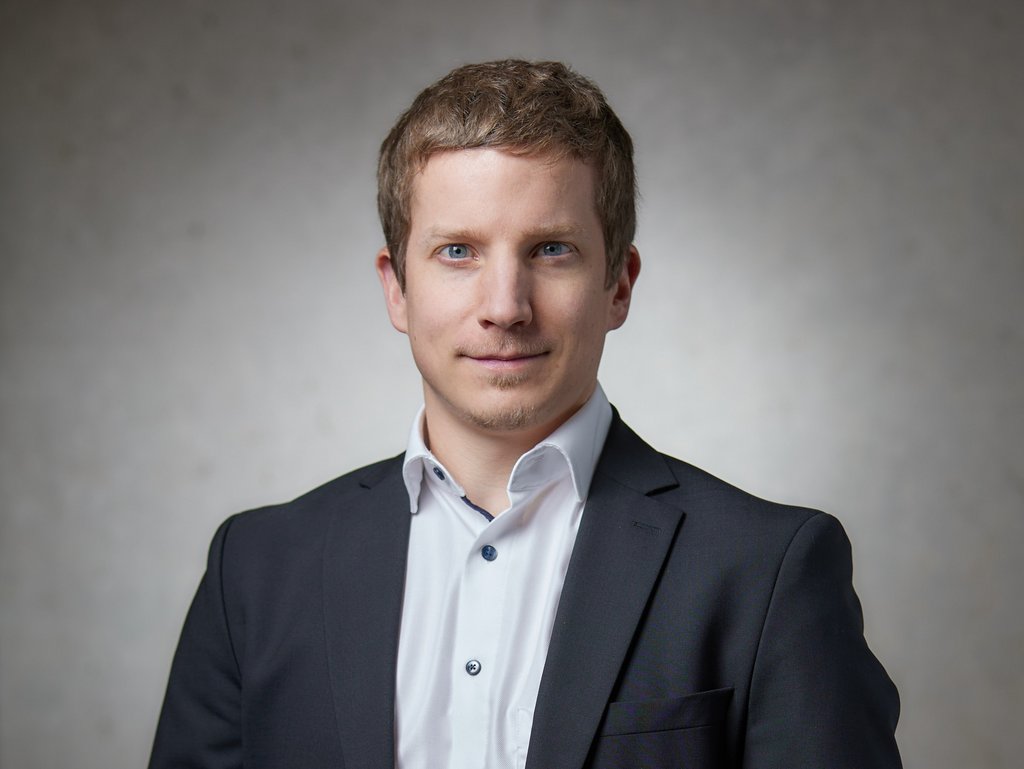
Dr Stefan Legge is Head of MBA Curriculum at the Executive School of the University of St.Gallen (HSG) and Deputy Director at the Institute for Law and Economics. He co-authored the book ‘Football needs more money or different rules’ with Steffen Löhr in 2022.
More articles from the same category
Discover our special topics