Research - 10.08.2026 - 10:00
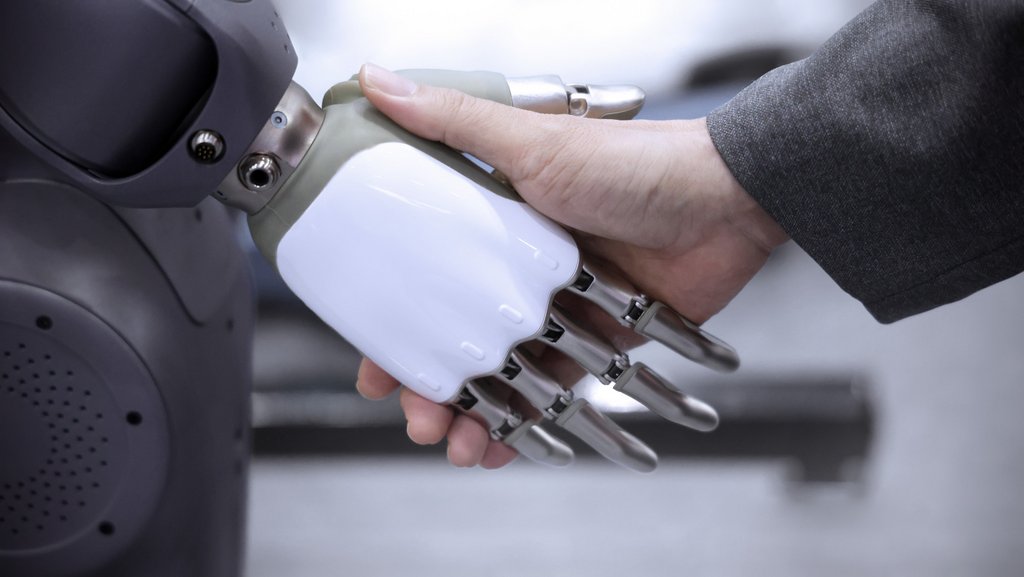
Since the introduction of ChatGPT and other generative AI systems, companies worldwide have been investing in new applications. Whether in product development, marketing or research – expectations of artificial intelligence are high. At the same time, many organisations report that the practical benefits fall short of expectations.
A new study by researchers at the University of St. Gallen (HSG), in collaboration with ETH Zurich and Nanyang Technological University in Singapore, now provides an explanation. They investigated how humans and generative AI can successfully collaborate in creative processes. In doing so, they found that the key to fruitful human-AI collaboration lies in the successful integration of the different cognitive abilities of humans and machines.
For their study, the researchers conducted interviews with experienced perfumers during the development of new fragrances with the support of generative AI. This field of research is particularly well-suited because perfume creation is based on a high degree of implicit experiential knowledge, intuition and sensory perception. Generative AI does not possess these human abilities. Collaboration on such creative processes therefore requires an appropriate translation into text form that the AI can process, as well as a retranslation into experiences that humans can perceive through their senses.
The researchers refer to this challenge as the “representational gap”: a gap in representation between human experiential knowledge and the way generative AI processes information. “Many companies believe the challenge lies in writing better prompts. Our research shows otherwise: what matters is whether humans and AI learn to combine their completely different forms of knowledge,” says study lead author Tomoko Yokoi, scientific director of the Zurich AI Lab, a joint initiative between the University of St Gallen (HSG), ETH Zurich and Zurich Insurance.
The study identifies three key practices for successful collaboration:
The study shows that companies do not benefit solely from more powerful AI models. Equally important are organisational skills that facilitate the exchange between human expertise and artificial intelligence. “Generative AI does not replace human creativity. It expands the range of possibilities. People continue to create the actual value – by contextualising, interpreting and further developing results,” says Tomoko Yokoi.
For companies, this means that investment in AI should be complemented by the development of new skills. There is a need for staff who possess both specialist practical knowledge and the ability to work productively with generative AI, and who can combine both perspectives. The success of using artificial intelligence in organisations depends not solely on the quality of the AI model, but on the successful organisation of collaboration between humans and AI.
Access the publication here:
Yokoi, T., Laureiro-Martinez, D., Magni, F., & Brusoni, S. (2026). Organizing across cognitive asymmetry in human–AI collaboration: A study of perfume creation. Strategic Management Journal, 1–25. https://doi.org/10.1002/smj.70089
More articles from the same category
This could also be of interest to you
Discover our special topics