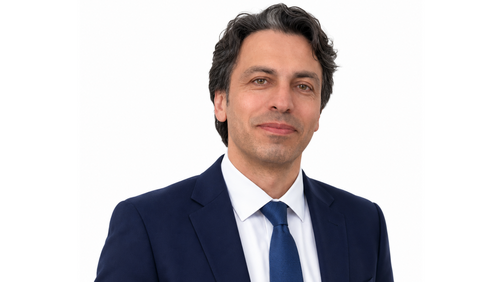
People - 01.08.2026 - 08:00
Kai Gehring studied business administration at the University of Mannheim (2005–2011), specialising in economics, marketing and finance, and went on to earn his doctorate in economics from the Universities of Heidelberg and Göttingen, awarded summa cum laude. Alongside his doctoral work, he taught at Kaiserslautern University of Applied Sciences from 2013 to 2015. He then spent six years at the University of Zurich, first as a postdoctoral researcher and subsequently as an SNSF Ambizione Fellow. From September 2021 until his move to St.Gallen, he was Associate Professor of Political Economy and Sustainable Development at the University of Bern and the Wyss Academy for Nature. He is also an Affiliated Research Professor at CESifo.
Kai Gehring works at the intersection of political economy, development economics and behavioural economics. He combines economic theory with insights from history, political science and psychology. He also draws on alternative data sources such as satellite imagery and text, and develops use cases for artificial intelligence throughout the research process.
A first strand of his research concerns conflict over scarce resources. Studying a market-based insurance scheme in Kenya, he shows that automatic payouts during droughts substantially reduce violent conflict — without the difficult institutional reforms that such progress usually requires. In Peru, he is among the first to use field and survey experiments to work directly with artisanal gold miners, examining what would persuade them to adopt cleaner extraction methods.
A second strand asks how group identities and narratives shape preferences and behaviour. Historical partitions, wars and foreign rule continue to shape political attitudes today; conversely, external threats can strengthen shared identities, as the European Union experienced after Russia's invasion of Ukraine in 2014. He also develops methods to measure narratives across large bodies of text, contributing to two emerging research fields: Economics of Identity and Narrative Economics.
A third strand examines how international organisations and development finance shape outcomes. The questions range from the creditworthiness of states, their assessment by rating agencies and their access to capital markets, to the effects of individual development projects on the ground and the geopolitical interests behind where such funding goes.
Kai Gehring's teaching combines demanding academic content with an interactive, student-centred approach. This allows students both to develop a thorough grasp of the subject matter and to build core skills such as critical thinking and problem-solving. Particular emphasis falls on putting theoretical concepts to practical use — in statistical analysis, software applications and research methodology.
More articles from the same category
This could also be of interest to you
Discover our special topics