Campus - 24.06.2026 - 14:00
HSG students are swapping the lecture theatre for nature reserves or soup kitchens. In spring 2026 and autumn 2025, members of the Student Impact association took part in various ‘Sustainability Challenges’. ‘Through these initiatives, we aim to promote sustainability as directly as possible,’ says HSG student Marco Rölli, a member of the association’s executive committee. ‘The Sustainability Challenges also complement our ongoing work.’
During the semester, Student Impact advises companies and NGOs on business issues relating to sustainability. The association’s approximately 50 members – all HSG students – work on a voluntary basis to promote a more sustainable economy through their consultancy work.
Students on the project teams contribute an average of at least 16 hours of voluntary work per person per week during the semester. Since its foundation in 2012, the association has advised over 160 organisations – including Appenzeller Bahnen, the HSG spin-off Planted and Hilti.
Each semester, Student Impact advises five companies or NGOs. A team is formed for each consultancy project. It is these teams that carry out the Sustainability Challenges during the semester. “It’s about team-building, but also about making a tangible, sustainable impact in the region,” says Rölli.
Projects implemented by the students over the past two semesters include, amongst others:
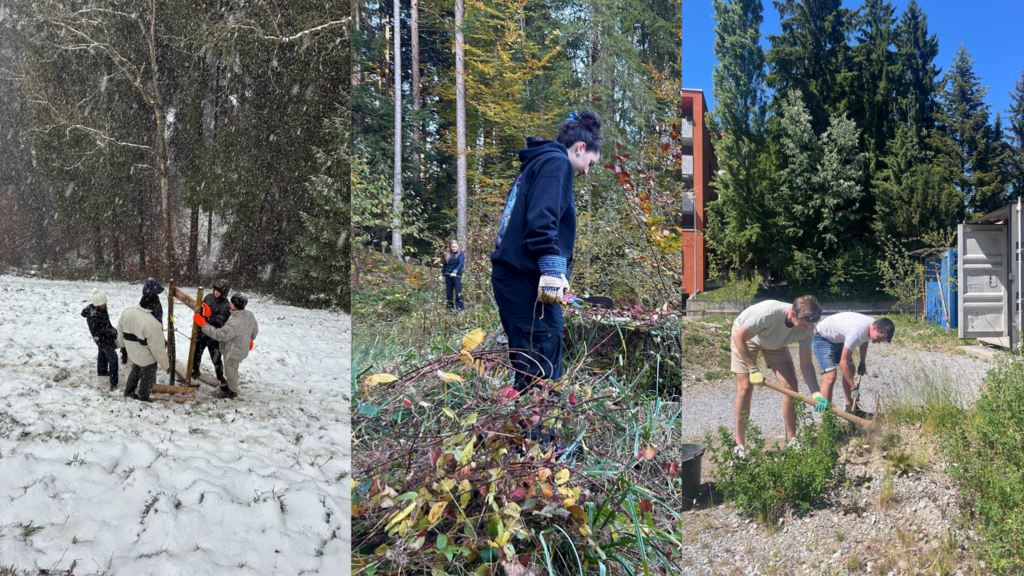
• In the “Löchli” nature reserve in Heiden AR, a group worked alongside Pro Natura to remove invasive plants.
• In the Bach area in St. Gallen-St. Fiden, a group maintained the local biodiversity areas. Under the guidance of the local WWF group, they removed weeds, amongst other things.
• In St. Gallen, a group helped to plant trees. This was also carried out in collaboration with the local WWF group.
• Two groups helped prepare meals at the Gassenküche in St. Gallen.
As well as their advisory work, these short-term assignments also give the students new perspectives. “It allows us to broaden our horizons. And we learn a great deal – for example, about nature conservation and biodiversity,” says Rölli.
More articles from the same category
This could also be of interest to you
Discover our special topics