Campus - 17.06.2026 - 09:32
Jules Rutishauser was frustrated: as an HSG student and as an intern at law firms, consultancy firms and courts, he was researching legal texts – and says: “Legal research is often inefficient and time-consuming. You have to access a variety of websites and databases, some of which are out of date.”
In fact, legal professionals work with a multitude of documents simultaneously every day: external sources such as court rulings, specialist literature and official publications on the one hand, and internal documents such as past cases and client files on the other.
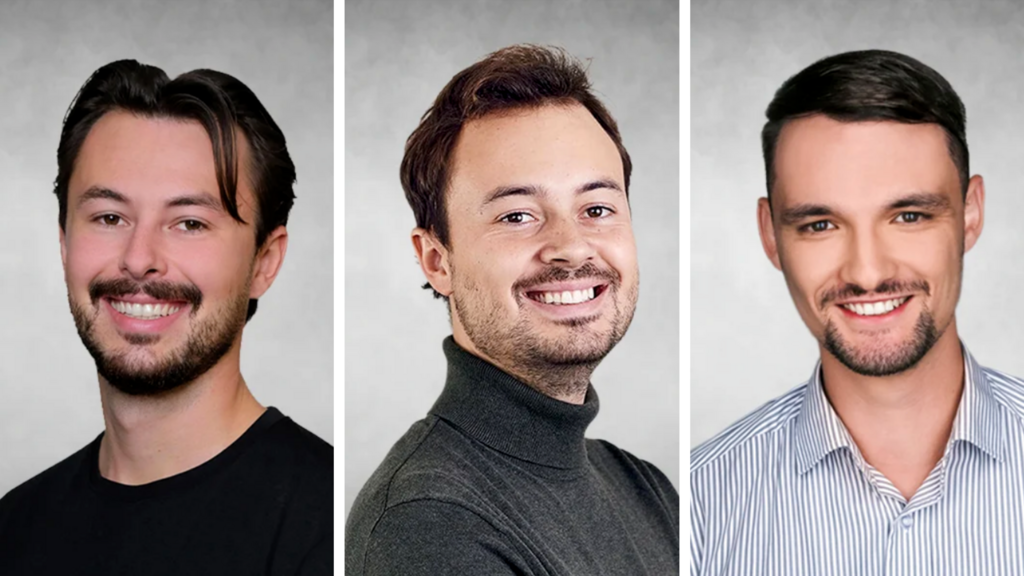
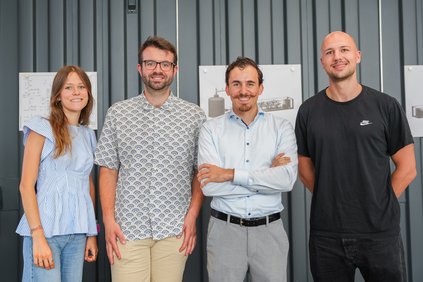
Rutishauser therefore began developing an AI-powered search engine for court rulings and legal sources at the end of 2024. Initially, this system automatically accessed around 700,000 court rulings. To this day, his brother Yves – a data scientist and AI expert – and his friend Noah Chavannes, also an expert in the field of artificial intelligence, remain part of the team at his start-up Lexplorer. The platform quickly developed into a research solution for publicly accessible content: federal law, cantonal rulings, legislation, official publications.
The next decisive step came through collaboration with HSG law professor Peter Hongler and his Institute for Law and Economics (ILE-HSG): thanks to the exclusive integration of the ILE’s specialist journal ‘Forum für Steuerrecht’, Lexplorer became a specialist provider in the tax law sector.
“I knew Peter Hongler from my Law and Economics degree at HSG and presented my idea to him. He was very open to it. We owe a great deal to our collaboration with the ILE-HSG,” says Rutishauser.
The major law firm Lenz&Staehelin also sponsored free access to Lexplorer for all HSG students. As a result, the start-up is now well established at HSG.
Since then, Lexplorer has evolved into an all-round working platform for legal professionals. In addition to external research, clients can now also upload their own documents – internal case files, client documents, templates – to the platform and search them using AI. “Data security is our top priority – particularly when working with lawyers, that’s the first question that comes up,” says Rutishauser. “We therefore adhere to the highest standards: in processing, storage and data residency – and, of course, the AI is not trained using client data.” Around 2,000 people now use Lexplorer, including several major Swiss law firms.
The start-up’s experiences revealed a general sense of uncertainty within the industry: what constitutes the safe use of AI for lawyers, and under what circumstances? This dilemma also gave rise to the Master’s thesis that Jules Rutishauser is currently writing at the University of St Gallen (HSG) as part of his Law and Economics degree. “My aim is to produce a practical guide on how lawyers can use AI in a legally compliant manner,” he says.
But how does Lexplorer deal with inaccuracies produced by AI? “Every statement made by the AI is directly attributed to a source and substantiated,” explains Rutishauser. “To avoid ‘hallucinations’, individual statements are cross-checked and verified – and assigned a score so that the user can immediately recognise when there is a risk of a ‘hallucination’.” This is a key concern, particularly in a professional field that relies on precision.
Lexplorer is consciously keeping pace with the rapid progress of AI technology: via MCP and API connectors, clients can use their legal data directly in other AI models – and can thus continue to work in their familiar tools. At the same time, it is a key priority for Lexplorer to ensure that access to state-of-the-art AI is not limited to large law firms: “Smaller law firms that have neither the resources nor the expertise for their own AI solutions should also benefit from this,” says Rutishauser. – which is why Lexplorer also offers consultancy services in this area.
More articles from the same category
This could also be of interest to you
Discover our special topics