Research - 02.10.2026 - 10:00
Switzerland is currently debating nuclear energy – yet again. After Parliament lifted the ban on the construction of new nuclear power plants in June 2026, a referendum was immediately initiated. The people will thus once again have the (for now) final say on this matter. Meanwhile, Switzerland experienced an unprecedented heatwave this summer, as climate researchers have demonstrated. A look at the history of science and technology reveals what today’s climate research owes to nuclear policy.
After World War II, nuclear physics experienced a boom. The atomic bombings of Japan had shown the world in a terrifying way the energy released by nuclear fission. Nuclear power was now seen as a peaceful alternative to supply the electricity needed to satisfy the growing energy demand of the prosperous postwar era. Switzerland, too, wanted to be part of this. Consequently, the Federal Council supported nuclear research with funding on an unprecedented scale. This also benefited a young field of nuclear physics that had emerged in the United States in the 1940s and this included radiocarbon, or C-14, dating. This method allows the age of organic materials to be determined. In 1956, one of the world’s first C-14 dating laboratories was established at the University of Bern. The technique of isotope analysis first revolutionized archaeology, as it made it possible to date artifacts with absolute precision. But Swiss glaciologists soon took an interest in this as well. Initially, the hoped-for C-14 dating of glacial ice failed; however, this later paved the way for measuring CO₂ in the ice. Although the boom and funding for nuclear physics had already come to an end by then, the Bern laboratory had long since outgrown its role as a dating service and became a center for climate research, where nuclear physics, glaciology, and climatology merged into a new discipline: the reconstruction of past climate conditions using glacial ice cores.
Today, it seems obvious to us that climate research is interdisciplinary. In addition to glaciology and meteorology, methods and insights from mathematics, physics, oceanography, and ecology also contribute to modern climate research. However, such interdisciplinarity does not arise on its own. It is the result of complex processes shaped by organizational structures, scientific, political, and cultural contexts, as well as the availability of funding and time.
Thus, in addition to Swiss nuclear policy, other political, cultural, and institutional conditions fostered interdisciplinary Swiss climate research. For example, Switzerland’s identity-defining neutrality: it had isolated Switzerland after World War II. International research collaborations now seemed to be an excellent option for integrating into the international community without violating neutrality. Furthermore, another aspect of the Swiss identity narrative played a role: that of a country of Alps and glaciers. All of this led the Federal Council to be willing to invest enormous sums in international polar expeditions. Only through this were Swiss researchers able to test C-14 measurements in Arctic glacial ice and further develop the technology for CO₂ measurement. Personal contacts and the short distances within our small country were also beneficial. Examples include the interdisciplinary networks between physicists and archaeologists within the University of Bern, as well as between physicists in Bern and glaciologists at ETH Zurich and the University of Zurich. This interplay of political, financial, and institutional support over decades enabled the emergence of a world-leading, interdisciplinary climate research center at the University of Bern.
In light of this year’s record-breaking summer – and others that will follow – one must ask how climate change will shape Swiss identity. Glacier retreat, in particular, marks a turning point. It is surprising that this topic has not received more media attention given the developments of recent months. Will the iconic white Alpine panoramas – for which our country is internationally known and which form an important part of Swiss identity – soon be a thing of the past? Is Concordia Place (Konkordiaplatz) in danger of turning into a barren wasteland? How would that affect our self-image? In light of climate change, it is fair to speculate on these matters. It would be desirable to further promote interdisciplinary collaboration at both the national and university levels. For it is not only in the case of climate change, but also with regard to other major challenges of our time – such as the threat to democracy, demographic change, or the consequences of the spread of artificial intelligence – that it will be necessary to bring together diverse areas of competence and disciplines in order to find robust solutions to these challenges. A look at the history of science shows that this does not happen on its own, but rather requires political and financial support, the promotion and recognition of interdisciplinary networks at the university and institutional levels, and, above all, a culture of openness toward diverse approaches and methods. Furthermore, research funding must take into account that what appears today to be the ultimate solution – such as nuclear power in the 1950s – may create unforeseen problems in the future.
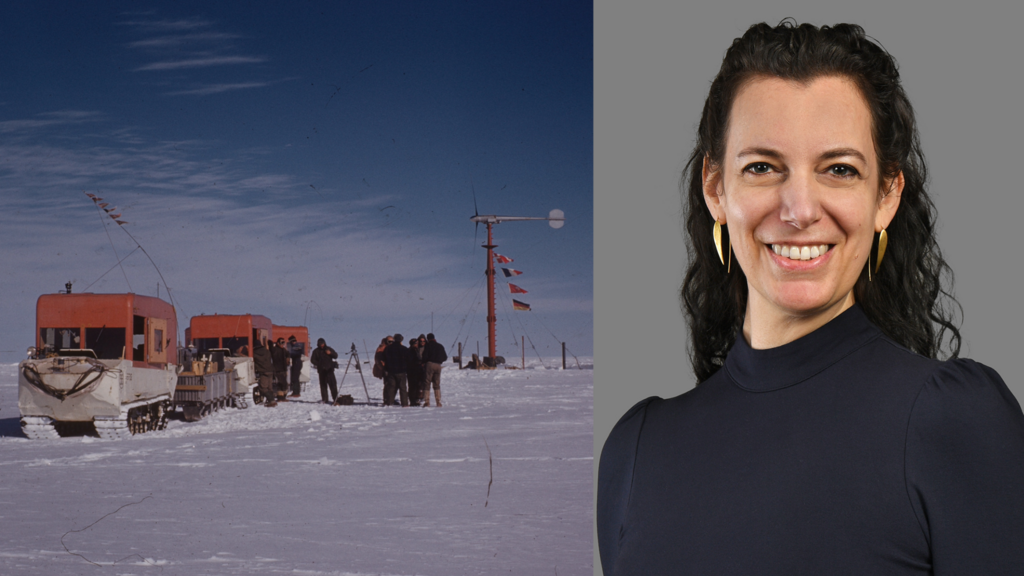
Prof. Dr. Dania Achermann is a professor of the history of technology and science. In her paper ‘Travelling with isotopes: radiocarbon dating and the interdisciplinarization of climate science’ (Open Access), recently published by Cambridge University Press, she traces in detail how the radiocarbon dating method has fundamentally transformed climate research in Switzerland and which political and cultural conditions shaped the emergence of ice core research.
Image: Fritz Brandenberger, ETH Library Zurich
More articles from the same category
Discover our special topics