
The CSI is the talk series of the School of Computer Science at the University of St. Gallen. Each semester, researchers from academia and industry present their work and discuss it with our community.
In the autumn semester 2026, three speakers visit us:
All talks take place on Thursdays at 16:15, details are outlined below
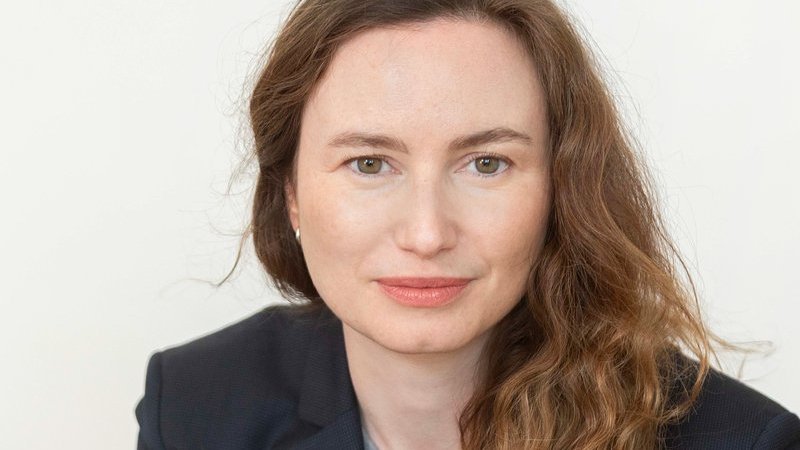
Abstract. Data shape how we understand the world and make decisions. Yet their meaning is rarely apparent at first glance. Making sense of data requires people to organize, connect, and contextualize, often through representations that make patterns and relationships visible. This process is shaped by the interfaces through which people encounter data, influencing what they notice, how they interpret information, and which conclusions they draw. Through an HCI lens, my work examines how people with different levels of data literacy engage with data in both everyday and professional settings.
In this talk, I will present research on data-centric sensemaking, beginning with work on dataset summaries and conceptual data models as ways to surface different strategies people use to construct meaning, from staying close to the data itself to developing broader narratives. I will then turn to visualizations as a key interface through which people encounter, interpret, and make decisions with data. While widely used for communication, it is often unclear whether audiences understand visualizations as intended. Drawing on four years of research from my WWTF project, Talking Charts, I will present studies examining how different audiences interpret messages conveyed through visualizations and how understanding can be assessed beyond measures of simple recall.
The talk connects these findings to wider HCI questions around Human-Data Interaction, explainability, and data communication, inviting reflection on how we might design tools that support more meaningful encounters with data.
Short bio. Laura Koesten is Assistant Professor at Eindhoven University of Technology, The Netherlands; Visiting Scholar at the Mohamed Bin Zayed University of Artificial Intelligence, UAE (MBZUAI); and Senior Scientist at the Austrian Institute of Technology (AIT). Her research examines how people interact with and make sense of data and AI systems, with a focus on collaborative data work, data visualizations, data reuse and governance, and explainable AI. She received her PhD in Computer Science from the University of Southampton in collaboration with the Open Data Institute (UK). In 2024, she was awarded the Hedy Lamarr Prize in Austria for outstanding achievements in information technology.
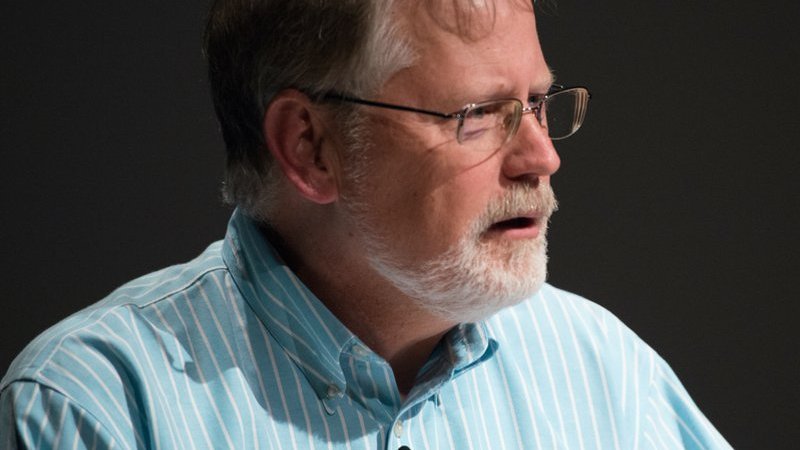
Abstract. The role of AI in scientific research is undergoing a fundamental shift, moving from passive data-processing tools to active, autonomous collaborators. As AI systems become capable of deep reasoning and autonomous experimental design, understanding how human scientists think about, interact with, trust, and understand these AI co-scientist systems is critical.
The success of agentic systems for scientific research depends entirely on having a human in the loop. We’ll discuss the mental models scientists have while working with AI collaborators, noting how misaligned mental models can lead to automation bias or algorithm aversion, and then explore how we can design AI systems that actively help users build accurate, calibrated models of the AI's capabilities.
We have found that accelerating scientific discovery requires more than simply scaling compute or engineering better objective functions; it also relies on designing AI systems that align with human cognition, providing accurate mental models, while working in a safe, trusted, and productive partnership.
Short bio. Dr. Daniel M. Russell has been working in Artificial Intelligence and Human-Computer Interaction for nearly 40 years at several of the top innovation companies in Silicon Valley (Google, Apple, Xerox PARC, IBM). He was in the core search engineering team at Google for over 17 years and now works on the Google Deep Mind "Co-Scientist" project to build an AI science collaborator. He currently teaches in the Human-AI group at Stanford’s Computer Science department and at the University of Zürich. He has been on the faculty at Stanford, the University of Maryland, the University of Zürich, Santa Clara University, UC San Diego. His online classes have been watched by millions of students for an accumulated YouTube watch-time of > 450 years.
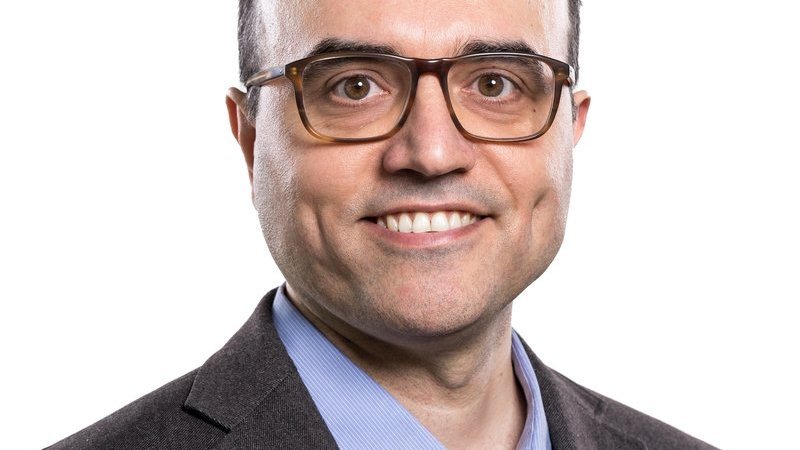
Abstract. Although eBPF is widely used to extend the Linux kernel, running programs in kernel space introduces critical security risks. Existing technical work often overlooks the entire security lifecycle of eBPF. This talk aims to address this gap by systematically analyzing eBPF vulnerabilities, mitigations, and architectural limits through a review of the current body of technical work and CVEs. We will map real-world exploits to specific components, arguing that current defenses target isolated attacks rather than systemic architectural risks. Finally, we will present key takeaways, outline open directions toward lifecycle-aware, composition-safe security models, and highlight understudied non-verifier components.
Short bio. Dr. Gürkan Gür is a senior lecturer at the Zurich University of Applied Sciences (ZHAW), in the InIT Information Security Group in Winterthur, Switzerland. He received his B.S. degree in electrical engineering in 2001 and Ph.D. in computer engineering in 2013 from Bogazici University in Istanbul, Turkey. His research interests include Future Internet, information security, 5G and Beyond networks, and critical infrastructure protection. Currently, he is involved in Horizon Europe NATWORK (https://natwork-project.eu/) and SNSF-NSF co-funded SATUQ (https://www.zhaw.ch/en/research/project/76264) projects. He is a member of IEEE 3394 S2CY - Space System Cybersecurity and IEEE 1920.2 Vehicle-to-Vehicle Communications for Unmanned Aircraft Systems standardization work groups. He is a senior member of IEEE and a member of ACM.