Research - 20.08.2026 - 10:30
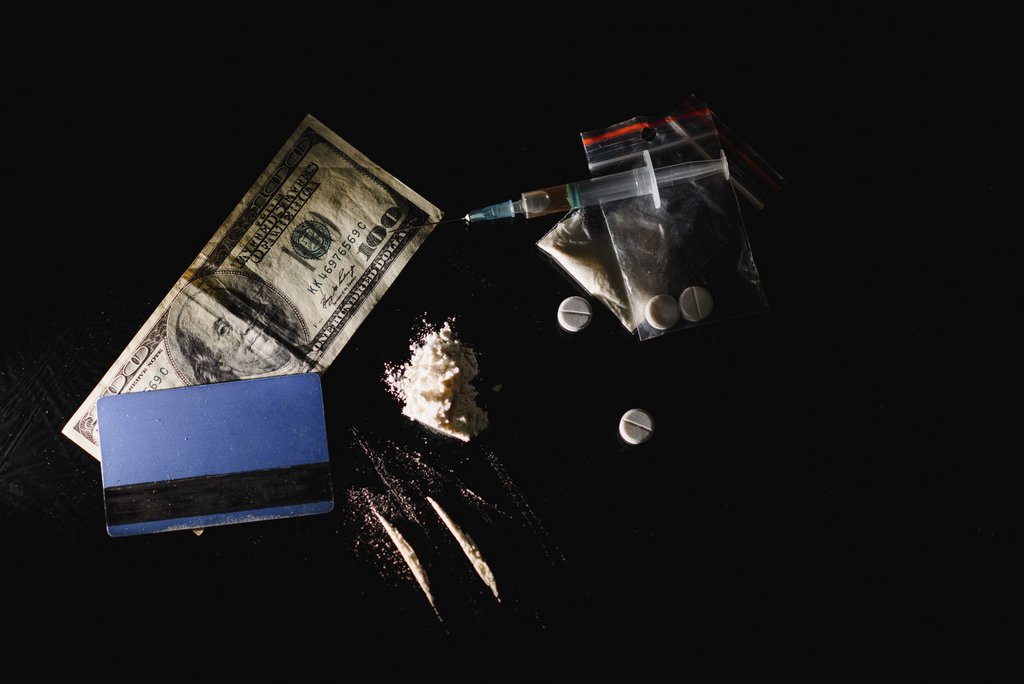
Cocaine from Latin America is increasingly being sold in Europe via encrypted online marketplaces. Payments are made in cryptocurrencies, orders are placed via anonymised platforms, and the drugs are delivered by post. At first glance, this development seems obvious: digital markets bridge distances and could, in theory, connect producers directly with consumers.
Yet this is hardly ever the case. Whilst so-called crypto-markets in Europe have developed into a major distribution channel for smaller quantities of illicit drugs, they remain marginal in Latin America. This is despite the region playing a central role in the global production and export of cocaine and cannabis.
HSG sociologist Matias Dewey has now examined this paradox theoretically in collaboration with international researchers. The study (here freely accessible) was recently published in the specialist journal "Trends in Organised Crime". Drawing on existing research and international comparative data, the researchers developed an analytical model designed to explain why the spread of crypto markets varies from region to region.
The key finding: whether drug trafficking becomes digitalised does not depend solely on technology or the willingness of criminals to innovate. Social practices, political frameworks and trust in a country’s infrastructure are decisive factors.
Cryptomarkets operate via encrypted communication channels, anonymous user accounts and digital payment systems such as Bitcoin. Platforms take on functions that would otherwise arise through direct contact between dealers and buyers: they enable reviews, manage payments on a trust basis and thereby create a certain degree of trust between anonymous individuals. For consumers, they offer greater choice, more convenience and, from their perspective, a lower risk of being stopped by the police when buying on the street.
However, the researchers argue that such a market does not simply emerge because internet access and cryptocurrencies exist. It requires an entire socio-technical environment. Their analysis distinguishes four closely interlinked factors:
social practices and cultures of trust
the political and social embedding of drug markets
trust in digital and postal infrastructure
trust in financial systems and digital payment methods
In Europe, these conditions often coincide. Illegal drug use is high, particularly within urban nightlife and party cultures. At the same time, the trade in and possession of small quantities are heavily prosecuted in many countries. This creates an incentive to shift purchases to an anonymous digital space.
The technical infrastructure in Europe is also robust. Around 90 per cent of households have fixed-line broadband internet. Digital payments, online shopping and banking services are part of everyday life for large sections of the population. In the eurozone, almost all adults have a bank or mobile money account. Added to this is a comparatively clear regulatory framework for cryptocurrencies. These factors do not make crypto markets legal, but they do make their use easier from a technical and organisational perspective.
The situation is different in Latin America. Although digital drug markets also exist there, they play a significantly smaller role in sales to local consumers. The study cites several reasons for this: only 62 per cent of households have fixed-line broadband access, and the quality of connections varies greatly between urban and rural areas. Postal systems are considered unreliable in many countries. This is particularly crucial for crypto markets, as digital orders must ultimately be physically delivered.
Added to this is a lower level of trust in digital technologies, banks and government institutions. In Latin America, around three-quarters of adults have a bank or mobile money account, whereas in the eurozone the figure is almost 100 per cent. In many parts of Latin America, cash remains the primary means of payment.
The structure of the drug trade also differs. In Latin America, markets are more characterised by informal personal contacts and export-oriented supply chains. Local consumption is lower than in Europe, and the sale of small quantities is sometimes prosecuted less rigorously. This means there is less of the pressure that drives European consumers towards anonymous digital markets.
The study thus contradicts a widespread assumption: Digital technologies do not automatically transform illegal markets in the same way everywhere. They do not replace existing social and institutional structures, but build upon them. Even an anonymous online marketplace requires trust – in the platform, the payment system, the delivery and, ultimately, in the systems that make all this possible.
“It surprised me that there is incredibly little research on how the digital world is impacting on illegal economies in general. The current funding cuts in research will not probably help to change this situation”, says Dewey.
He will continue to explore this topic in depth in his research: Together with HSG professors Roy Gava and Mariana Valente he acquired SNF funding (CHF 856.340) for a project entitled “Illegal transactions in the digital age: emerging practices and regulatory intermediaries in Latin America”. The project started in August 2026 and will analyze the role of perfectly legal platforms and digital payments, mainly virtual wallets, in the illegal markets for drugs, counterfeits and child sexual abuse material.
More articles from the same category
This could also be of interest to you
Discover our special topics