Research - 12.08.2026 - 15:00
Europe has been sweltering under a heatwave for weeks. In Switzerland, too, people are now widely considering the installation of air-conditioning systems. However, these also increase electricity consumption, particularly during heatwaves. A study, to which HSG financial economist Stefano Ramelli contributed, now shows that forests significantly reduce the amount of electricity used for cooling. The international authors (in addition to Ramelli, these are Claudio Rizzi and Simon Xu) of the study write that, through these electricity savings, forests generate direct economic value running into the billions. The study, entitled “The Value of Forests: Impacts on Extreme Heat and Electricity Demand”, is available free of charge here.
For their study, the researchers combined various datasets from the USA. They analysed changes in forest cover between 1985 and 2023 and linked these to long-term data on wind directions, temperatures and monthly electricity consumption. In addition, they examined the locations of around 4,300 data centres.
There is nothing unusual about financial economists studying data on nature, says Ramelli. And he emphasises: ‘Interdisciplinary work is essential to push the frontiers of knowledge. The world does not operate in separate academic departments.’
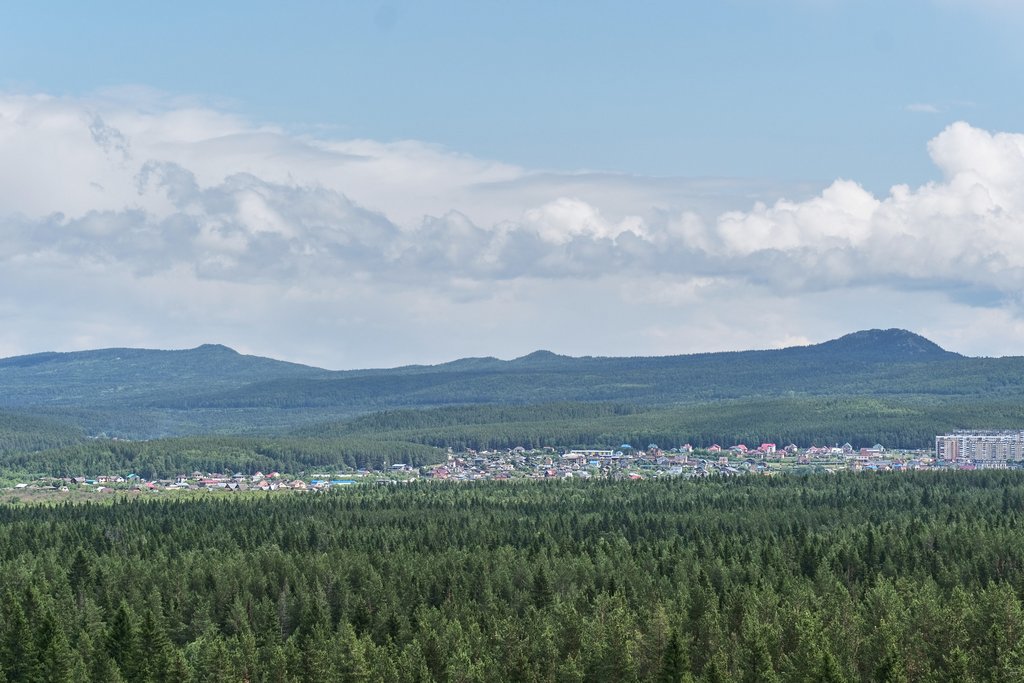
A key finding of the study is that it is not only the presence of a forest that matters, but also its location. Using wind data, the researchers calculated which forested areas lie in a region’s prevailing wind direction. Air currents carry cooler and more humid air from the forests into populated areas – over distances of up to 200 kilometres. This effect is particularly evident during the summer months and in periods of extreme heat.
The lower temperatures have a direct impact on energy consumption. Where there is more forest in the prevailing wind direction, the need for air conditioning decreases, and with it, electricity consumption. Ramelli, Xu and Rizzi have analysed data from the USA, where, unlike in Europe, air conditioning is widespread.
Nevertheless, the findings are relevant here too, says Ramelli: “Things are changing quickly, as anyone who tried to buy a portable air conditioner in Switzerland during the recent heatwaves knows. They were sold out everywhere. In this sense, our work highlights just how precious our local forests are in reducing our exposure to extreme heat. They provide a form of natural air conditioning that must be carefully protected.”
A loss of forest cover equivalent to one standard deviation would increase annual electricity consumption in the USA by around 37 million megawatt-hours – incurring additional costs of approximately 6.4 billion US dollars. A loss of forest on this scale would not be unusual, given past statistics.
This correlation could prove particularly relevant for data centres. According to forecasts, their electricity demand is set to more than double by 2030, with a significant proportion of this attributable to server cooling. The study shows that forests situated in the direction of the prevailing wind can lower temperatures even at sites with a high density of data centres, thereby reducing their energy requirements.
For the researchers, this has implications for environmental and economic policy. Forests should not be viewed merely as carbon sinks or habitats. They are also a form of natural infrastructure that mitigates heatwaves, relieves pressure on electricity grids and generates measurable economic benefits – an aspect that has so far been largely overlooked in political debates. "Forests can serve as a form of decentralized climate-adaption infrastructure. This an other benefits should be taken into account when evaluating forest preservation and afforestation initiatives", says Ramelli.
More articles from the same category
Discover our special topics