Research - 24.08.2026 - 16:00
In a trial expected to last six to eight weeks, a coalition of US states is accusing Meta of misleading the public about the safety of its platforms and knowingly designing features to keep children hooked to their platforms.
Prosecutors are also alleging that Meta routinely collected personal data from children under 13 without parental consent, which is a breach of US federal law. To understand more about the trial, we interviewed HSG Professor Miriam Buiten.
Why is this trial receiving so much attention?
Because it marks a change in how we understand what platforms do. For twenty-five years the law treated them as spaces for expression, and asked about individual pieces of content: who posted what. This case asks something different. It treats Meta as a business that designs a space and sells attention, and it focuses on the harm in the system rather than in any single post. So this case is not only about damages. It is about whether a court can order changes to interfaces and defaults, such as infinite scroll, autoplay, visible like counts, and disappearing posts. Such features appear to keep users engaged, children especially. Meta could be required to change its algorithms and to verify the age of younger users.
Is this significant only for Meta, or for the industry as a whole?
For the industry as a whole, because it reaches the business model rather than one company’s conduct. An advertising business runs on attention, and holding the attention of young users is particularly valuable, since they are the users of the next twenty or more years. If a government can require a platform to give up features that hold that attention, that changes the economics for everyone building on the same model. That is why Meta is defending this so hard, and why the rest of the sector is watching a case in which it is not a defendant.
Can you give us an example?
Infinite scroll. It is a deliberate design choice, made so that there is no natural point at which you stop. What is emerging through discovery in these cases is that Meta’s own researchers were documenting the effects of choices like this for years. The company could have built features that protect children better. The difficulty is that the effective versions cut into engagement, so what they implemented was often an optional, unmeasured version. If those choices can no longer be made freely, that changes how these companies operate.
This is an American court taking on an American tech company. Why does it matter in Europe?
Because the same shift is happening here, through a different instrument. Legal challenges on both sides of the Atlantic are moving away from holding platforms responsible for what users post, and towards what platforms themselves do through their design and their algorithms. In Europe that is the Digital Services Act: in July the Commission preliminarily found that the addictive design of Instagram and Facebook breaches it, naming much the same features these four states want changed. Brussels is expected to propose rules on children’s access to social media next month, and the UK, which already has children’s codes in force under the Online Safety Act, is debating going further.
So we are seeing convergence. For twenty-five years, the US and EU approached platforms very differently: the US strongly laissez-faire, based on a broad view of freedom of expression, Europe more interventionist. They still use completely different policy tools. But the underlying concern is now the same, and so is the target: how platforms are designed and governed. That creates the potential for real change.
What do you expect the verdict to be?
Whether Meta ends up paying very large penalties, or being ordered to alter its platforms, or both, remains to be seen. Mark Zuckerberg’s testimony will be worth watching, because he will not want to explain in open court how the algorithms behind his platforms are designed to work.
But I would not judge this case only by its outcome. What we have seen over the past few years is a cascading effect: with each case, the legal protections that once ended these disputes before the evidence was heard have unravelled a little further. Even if this trial does not deliver a full overhaul, it is unlikely to be the last word.
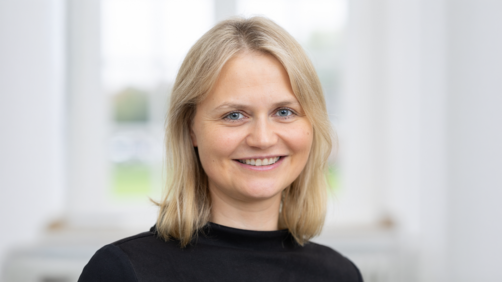
Miriam Buiten is Professor of Law and Economics at the University of St.Gallen. Her research focuses on the legal issues surrounding new technologies, AI & internet law and regulating digital markets. She was interviewed on CNBC earlier on this topic.
More articles from the same category
This could also be of interest to you
Discover our special topics