
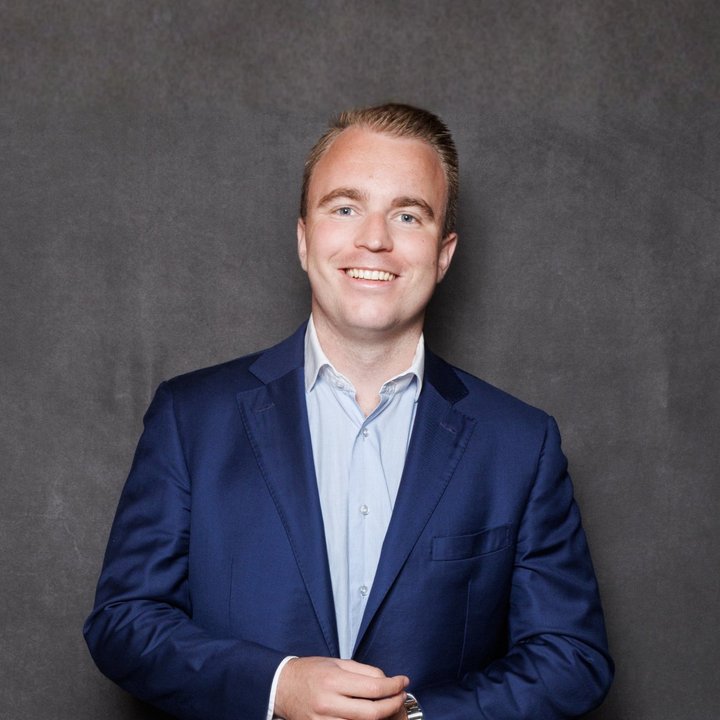
Tell us a bit about yourself and your background.
I quit investment banking in 2025 to learn social media — and ended up building a cigar company, teaching at HSG & Bocconi, and launching a coaching business.
Before that, I was on a fairly “classic” path. I grew up in Switzerland in an international environment, with an English/Colombian mother and a Swiss/English father, exposing me to different cultures early on. That later translated into living, studying, and working across the globe (US, Luxembourg, Thailand, Chile and now in Colombia).
I completed my Bachelor’s at the University of Zurich, followed by the Master in Banking & Finance at the University of St. Gallen. During COVID, I got to do a double degree in International Management at Bocconi (albeit virtually). Funny enough, I recently came across a video I recorded with the MBF team five years ago, encouraging students to apply to the programme. Watching it now feels like a full-circle moment — back then I was just getting started, today I’m back teaching in the programme. Still not something I can fully wrap my head around.
HSG’s Banking Days were the key entry point into Investment Banking for me. That’s where I secured an internship at UBS in the Large Cap Investment Banking team in Zurich, which led to a full-time analyst role in 2021.
Alongside working on M&A transactions, I got heavily involved in recruiting and training. I managed junior hiring processes, introduced new event & assessment formats, and later became line manager and staffer for interns. I also built and taught a weekly Learning & Development programme, covering communication, efficiency, and technical finance skills.
My decision to leave Investment Banking wasn't about leaving the industry completely, but rather about avoiding the “what if” later on. I wanted to take the opportunity to build something of my own while I could. Therefore, I spent time travelling across South America, learning martial arts I had always wanted to explore, and documenting the entire journey on social media — which is how I ended up teaching myself both long- and short-form content creation. Alongside that, I co-founded Culebra Cigars — turning a long-standing passion into my first real business — and returned to HSG and Bocconi as a guest lecturer. Out of all those experiences, NeverBanked eventually emerged: a platform through which I now help students break into Swiss Investment Banking.
Looking back, what key experiences shaped your path into investment banking?
Martial arts were the starting point. I began Kung Fu in 2011, which taught me discipline & resilience early on. In 2013, I travelled alone for the first time at 18 to Thailand, a completely new country and culture for me. I spent three months learning Muay Thai, preparing mentally and physically to eventually step into the ring for my first fight (win by KO).
Then came the Swiss Armed Forces. Becoming an officer in 2014 was my first real leadership experience — managing people, performing under physical and mental strain, and communicating clearly to a platoon of 30 recruits (often on little to no sleep).
Another defining experience was the KPMG International Case Competition. It was my first exposure to working on an actual business case — building a solution from scratch, working in a team under time pressure, and pitching it in front of senior professionals. We ended up winning the Swiss national round and placing 2nd globally in Kuala Lumpur. That experience opened a lot of doors early on, including an internship in Santiago (Chile) with KPMG’s Deal Advisory team. I worked on valuing a football club — combining classic DCF methodology with a more unconventional angle using an EV / Instagram followers multiple. When I later brought that story into interviews in Switzerland, it became a natural icebreaker and simply more memorable than the usual work stories.
Those experiences carried over into my academic journey. I went from being an average Gymnasium student to achieving top grades, which opened doors to selective events and conversations with industry professionals. That ultimately led me to HSG, where the Banking Days became the key gateway into investment banking.
You’ve been involved in recruiting and training interns, what gaps did you observe between academic preparation and industry expectations?
A few patterns came up consistently:
How did these insights lead you to create your platform, and what is its main objective?
While teaching my Practical IB Insights seminar to a handful of MBF students in Fall 2025, I noticed how many students still aim for a career in Investment Banking / High Finance but lacked clarity on what the job involves and how to get there. Shortly after, I coached my first students, helping them refine their profiles and prepare for interviews. They ended up securing internships across Investment Banking and Private Equity in Switzerland and Germany.
That was my "aha" moment — there's a clear market gap out there, both from a business perspective and on a personal level, as I’ve always enjoyed simplifying topics to help & teach others. As such, I spent New Year's 2025/26 building an educational platform, NeverBanked, supported by a growing social media presence on Instagram.
My objective is simple: help students who are in the same position I was in during my Bachelor’s — not fully clear on what Investment Banking is or how to get there. I focus on giving them clarity on the recruiting process, helping them build the right technical and practical skill set, and making sure they’re ready to hit the ground running from day one on the desk.
How did the MBF programme support you in bridging theory and practice in your career?
The Banking Days and similar networking events were probably the most valuable part for me — direct access to professionals with invaluable insights, all facilitated by HSG.
Seminars and group work helped build project management and communication skills, especially when outcomes depend on team performance rather than individual work.
Programming courses strengthened my problem-solving mindset and helped me understand systems. I still use that today, for example when building automations for our Culebra Cigars online store.
And finally, the theoretical foundation gave me a solid base from day one on the job. There’s obviously more to learn in practice, but it removes a lot of friction early on.
What practical advice would you give to current MBF students aiming to enter the industry?
Show up. Attend as many events as possible — both on campus and directly at firms. Meeting people in person still makes the biggest difference.
Get your story right. Your elevator pitch is something you’ll use constantly — both in interviews and coffee chats. Make sure it’s clear and memorable. A simple test: what’s the one thing someone would remember about you a week later?
Invest enough time in targeted preparation early. Understanding the recruiting process, refining your profile, and building relevant technical skills ahead of time will save you a lot of trial and error later on.