
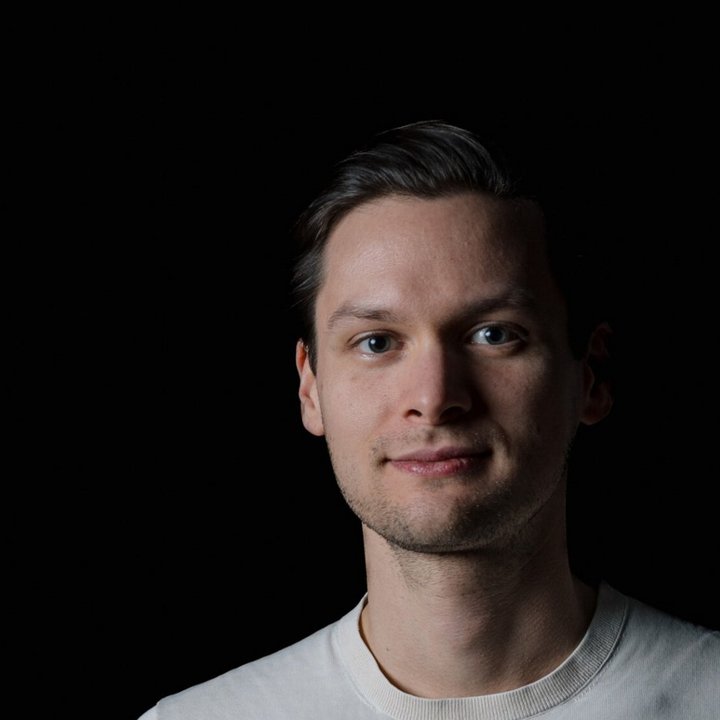
While studying in Hungary, how did you first come across the University of St.Gallen and what sparked your interest in pursuing your studies abroad?
There was a magazine I read at the time that covered different countries and universities, and I remember it really sparked my interest in studying abroad. After that, I started thinking about which countries I would enjoy living in, and combined that with identifying the top universities globally for a Master’s in Finance. This is how the University of St. Gallen’s MA in Banking and Finance ended up on my list.
Thinking back to your time in St.Gallen, what experiences, from your arrival to becoming part of the community shaped you the most?
I believe I was quite different from many of my peers in several ways (e.g., how I dressed, how I saw the world, and what my goals were). I arrived thinking that wearing shorts, a linen shirt, and clean sneakers counted as business casual - it quickly became clear that this was not the norm.
At the time, I was thinking about how to build a new type of bank and how to acquire customers for it. I also clearly remember that I had no intention of working at a large corporation, I wanted to build my own company. That said, I did end up spending a few years at other venture capital (VC) firms and two at McKinsey before eventually founding my own fund with a friend.
Which aspects of the MBF programme had the greatest impact on your professional development and career direction?
The community is truly unique in the field of finance, I studied alongside exceptionally smart and highly driven individuals. My peers were very ambitious and hardworking, and being around them had a strong impact on me, especially since I came from a very different path and background.
One of the biggest impacts on me was that I became much more humble after the first semester. Before that, I had achieved very strong academic results in Hungary, but suddenly I was in an environment where everyone was performing at the same or even higher level, it was a humbling experience.
In addition, the exchange semester at Tsinghua University added an incredible amount in terms of global perspective, diversity, and life experience. It was one of the best semesters of my life.
Did you encounter any support from the University of St.Gallen in terms of entrepreneurship and at what point did you realize you wanted to pursue the entrepreneurial path rather than a traditional corporate career?
I participated in several entrepreneurial groups at HSG, although this was not the primary focus of my programme. However, I always knew from the beginning that I wanted to pursue this path. At the same time, I am glad that before fully committing to it, I gained experience at both smaller and larger companies, where I was able to learn a lot.
How did your experience during the MBF influence your decision to co-found Nesprit and enter the venture capital world?
My master’s thesis already laid the foundation for this. During my semester in China, I developed the idea that in the pre-seed stage we only invest in the founder team, and I wrote my thesis on how such investments could be priced. I really appreciated the freedom to choose such a topic.
MBF gave me a new benchmark for international competition and work ethic, and helped push my limits. It also provided a comprehensive understanding of all aspects of the financial world that I may not have been familiar with before. During this time, I started to realize that not only the startup side, but also the investor side, could be interesting to me. Shortly after submitting my thesis, I started working at a VC.
I’d also add that the HSG MBF has opened a lot of doors for me in communities and professionally. It is clearly an internationally recognized and respected brand.
Nesprit focuses strongly on climate-tech and a people-centered investment approach. What makes this philosophy important to you as a founder and investor?
As I mentioned, this perspective started forming during university and has only strengthened since. Many investors claim they invest in teams or people, but in reality, they often prioritize product, market, or other factors and become biased by those.
We believe that at early stage, the only real value lies in the people and the team. As a result, we place much greater emphasis on analyzing founders, for example, we use a test designed specifically for startup founders, conduct human-focused due diligence, and organize dedicated “soft” meetings where we intentionally avoid technical or business questions and focus purely on the individuals and team dynamics.
Our pre-seed/seed ClimateTech focus in the CEE+ region is the result of extensive research aimed at identifying gaps. We analyzed multiple layers and built our thesis around areas where we found both clear need and strong potential.
Building a VC fund at such an early stage of your career is a remarkable achievement. What have been the most challenging and most rewarding moments along the way?
I tried setting up a micro VC fund about 1.5 years after working in VC because I had a very different vision and approach compared to what I had seen in practice, but it didn’t end up working out. After that, I had to take a step back and reflect on what went wrong and what could have been done differently. I then teamed up with a friend, David, who is a computer engineer and had worked at several startups before, and at the time was at BlackRock. I joined McKinsey, and together with David we developed a new thesis and started making angel investments.
One of the most stressful periods of my life was when we applied for public funding, we had to move very quickly, and the stakes were extremely high. When we succeeded, and additionally secured a family office as an Limited Partner (LP), that was a major achievement for us.
Raising a fund at a young age (especially in the current environment) is very challenging. You don’t yet have a strong track record, it’s not what investors are used to, and coming from CEE adds another layer of difficulty. Every LP commitment we secure through an immense amount of work feels like a huge success. We are now aiming to complete the first closing of our next fund, and once that is signed, I will consider it another major milestone.
Your entrepreneurial journey with Nesprit recently led to your inclusion in Forbes’ 30 Under 30 Hungary list by Forbes. What does this recognition represent for you at this stage of your career?
I’m happy about it since I’ve been reading Forbes for a long time and this list has always caught my eye, but I think for us it mostly helps on the PR side, getting into more founders’ minds, bringing in more inbound leads, and building a solid reputation in my view.
Alongside your professional journey, you remain actively involved as a board member of the Hungarian Alumni Club. Why is supporting the alumni community important to you, and what would you say to Hungarian students considering HSG and the MBF today?
I would like the many talented people who studied here to know each other and form a strong, vibrant community that people genuinely enjoy being part of. I feel a responsibility to help build this foundation now, so that it becomes a lasting and valuable network. I would definitely recommend HSG, especially for those who are interested in pursuing a career in finance or on the business side.