Research - 26.01.2026 - 10:00
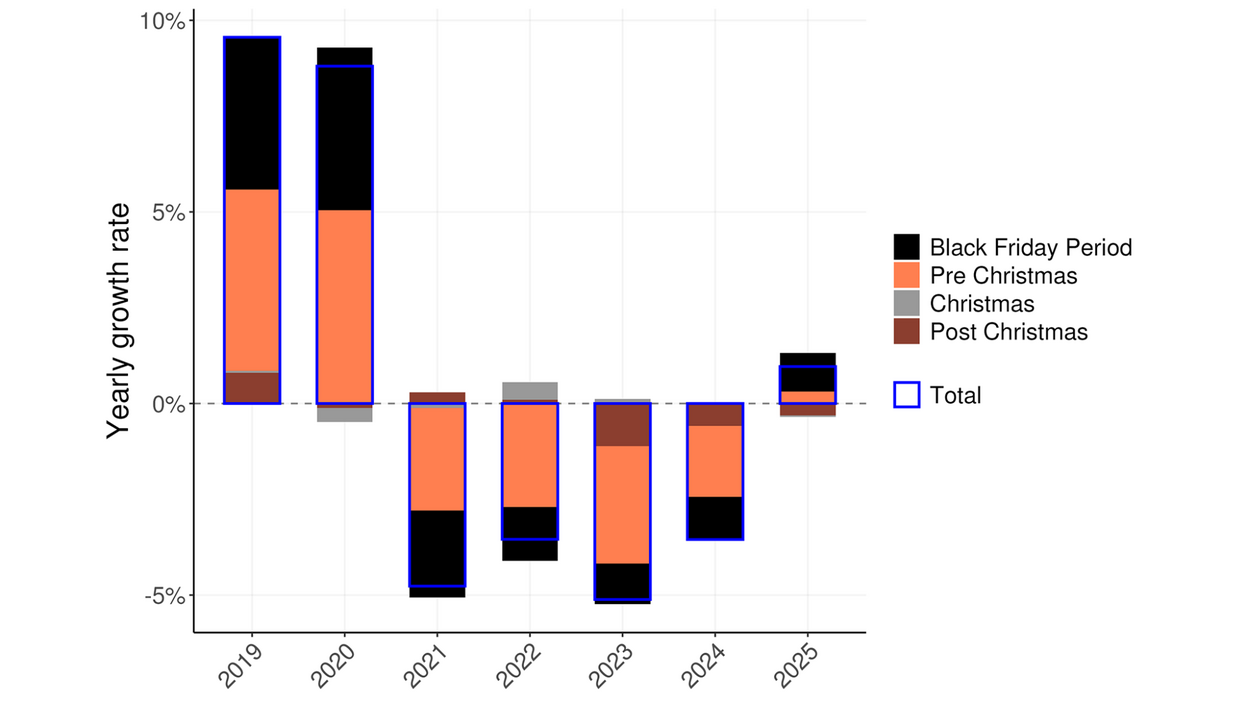
The 2025 Christmas season, from Black Friday through the pre-Christmas period to a few days after Christmas, had clear drivers. While Black Friday stabilised spending, online retail sales delivered growth. Consumption expenditures remained modest in the pre-Christmas period. Overall, spending levels were below the peak reached in 2020.
A review of the Christmas season shows that the Black Friday period in 2025 saw slightly higher spending than in the previous year. After several years of decline, this boost was enough to make spending growth over the entire Christmas season slightly positive again.
The results confirm earlier analyses of Black Friday week: discount campaigns lasted several days, and purchases were less concentrated on a single peak day.
Figure 1 illustrates the longer-term trend in Christmas shopping: the strong seasons of 2019 and 2020 were followed by a decline in spending between 2021 and 2024, particularly in the pre-Christmas period. Only in 2025 did a slight recovery become apparent.
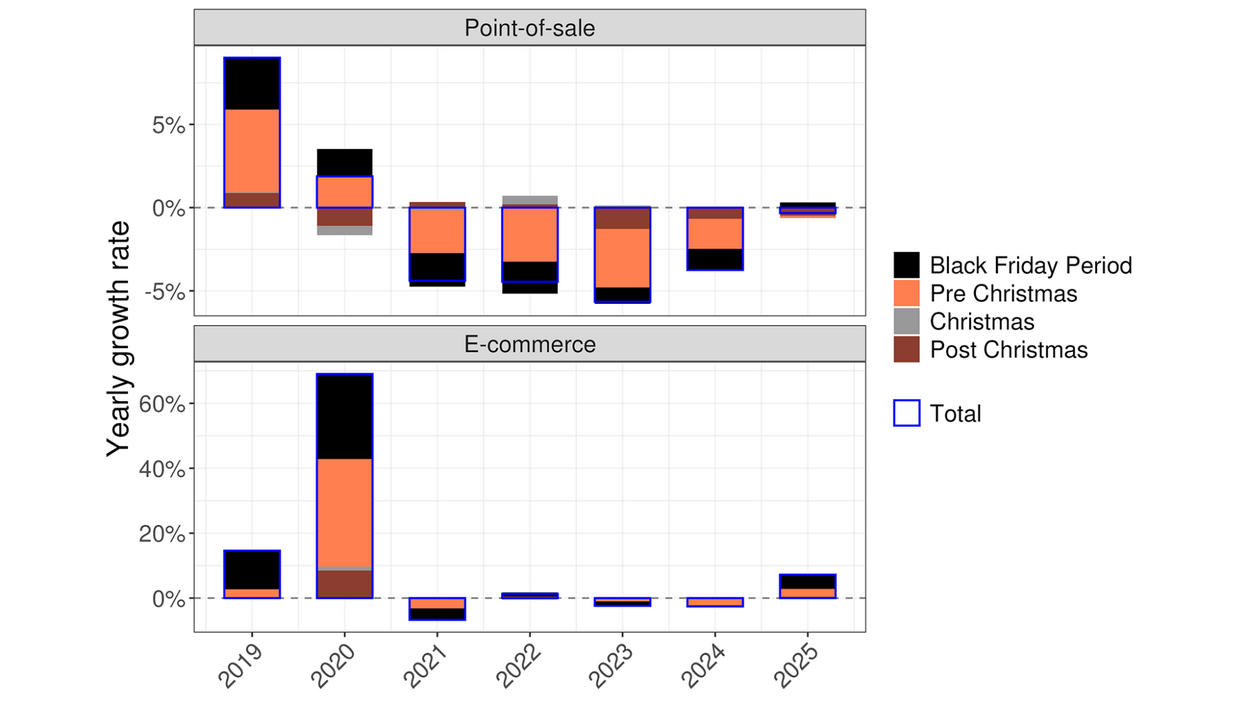
Figure 2 supplements this picture with a look at the sales channels: online retail sales stabilised after the strong increase in 2020 and recorded slight growth again in 2025, while spending in brick-and-mortar retail continued to decline.
The analysis by payment channel highlights the structural shift in consumer behaviour. While spending at brick-and-mortar outlets declined over several years, this downward trend largely came to a halt in 2025. Online retail, on the other hand, once again developed more dynamically: e-commerce spending rose by around 7% compared to the previous year, offsetting the slight decline in brick-and-mortar retail.
Despite the slight recovery, however, spending levels during the 2025 Christmas season in Switzerland remain well below the peak reached in 2020. Among other factors, the researchers cite changes in travel habits during the Christmas season as a possible influencing factor, due to more foreign travel and thus more expenditures abroad during the Christmas season compared to the pandemic years 2020 and 2021.
Overall, the balance sheet for the 2025 Christmas season shows a stabilisation of consumption expenditures – driven by online retail and demand that is less concentrated on individual peak days.
The data platform of Monitoring Consumption Switzerland is based on credit and debit card payments and mobile payments at the point of sale and in e-commerce by Worldline Switzerland AG as well as on the real consumer spending index (Consumer Spending Index, CSI) for the category “Retail: Other goods”. The index accounts for structural shifts toward card payments, enabling comparisons over multiple years. In addition, the index was adjusted for inflation for this study.
For the evaluation, the researchers divide the Christmas season into clearly defined periods: the start of the Christmas season consist of the Black-Friday period and covers the two weeks from 20 November to 3 December. This is followed by the three-week pre-Christmas period from 4 December to 24 December. The post-Christmas period is defined as the week from 27 December to 2 January.
Image: Unsplash / freestocks