Research - 27.02.2026 - 09:30
Prof. Patrick Emmenegger, what are the most common forms of electoral reform carried out with abusive intent?
In young democracies, various instruments were used. In Switzerland, for example, voting rights were restricted for certain groups of people, elections were public in most cantons at the beginning, which allowed for social control, and polling stations were sometimes strategically located to make it difficult for certain groups of voters to get there. However, we find forms of electoral manipulation that are only effective under certain electoral systems particularly interesting. This creates a direct link between electoral manipulation and electoral system reforms such as the introduction of proportional representation. One example of this is the so-called constituency geometry, i.e. the strategic design of constituencies to give certain political parties an advantage. It is primarily effective in first-past-the-post systems with small constituencies, which have to be regularly adjusted due to population shifts. The introduction of proportional representation systems and the associated significantly larger constituencies was intended to put a stop to such manipulation.
What are the most extreme cases you have analysed?
There are extreme examples of constituency geometry in various countries. In the USA, constituency geometry meant that in the early 20th century, almost all seats in the South were Democratic, while the vast majority of seats in the Northeast were Republican. From 1900 to 1964, the Democrats held every seat in the state of Louisiana! In other countries, the manipulation consisted of never adjusting constituencies. Germany divided its single-member constituencies on the basis of the 1864 census and did not adjust them again until the First World War. Shortly before the war began, certain constituencies had fewer than 25,000 inhabitants, while others had more than 300,000. Nevertheless, there was only one representative in the Reichstag for each constituency. Of course, this primarily helped the established political forces. These dominated the slowly growing rural constituencies. The rapidly growing constituencies in the industrial centres were won by the SPD but remained underrepresented.
In the USA, the issue of constituency geometry or “gerrymandering” is a perennial topic, currently in Texas (in favour of the Republicans) or in California (in favour of the Democrats). However, they also describe historical examples from Switzerland.
Switzerland provides countless examples of gerrymandering. In St.Gallen, the constituencies for the National Council elections were always adjusted whenever a Catholic conservative was able to win a seat. After the adjustment, the seat was lost again in the next election. In Zurich, despite a 26 per cent share of the vote in the 1902 National Council elections, the Social Democrats were only able to win two of 22 seats. Such disproportionalities existed in all larger cantons. It was not least thanks to such machinations that the Liberals were able to maintain their political dominance for a long time.
This only changed with the introduction of proportional representation in 1918, which is why the Liberals fought against proportional representation until the very end.
In Ticino, this even led to armed conflict in 1890. What was going on there?
The Ticino coup was the result of an ongoing conflict between liberals and conservatives. Whoever was in power tried to hinder the other side with the help of electoral manipulation. When the conservatives were once again in control, liberals stormed the government building in Bellinzona and took the conservative officials prisoner. A member of the cantonal government was killed in the process. The federal government then sent troops to Ticino and enforced the introduction of proportional representation. The canton of Ticino was thus the first canton to introduce this system, which was still very new and untested at the time. In Ticino, proportional representation worked in favour of the liberals, who were allied with the Free Democrats. At the national level, however, the Free Democrats wanted nothing to do with proportional representation. The Conservatives and Social Democrats had to push this through against the Liberals.
What effective mechanisms are there to protect democracies from abusive reforms?
Fundamentally, certain electoral systems are more vulnerable than others. The regular adjustment of constituencies in majority voting systems always carries the potential for manipulation. However, the stability of constituency boundaries in proportional representation does not mean that there are no distributional effects. In Switzerland, the cantons were defined as constituencies. The fact that this also created very small constituencies was the subject of heated debate when proportional representation was introduced. Ultimately, this favours the conservative parties, which are particularly strong in small, rural cantons. Transparency is one of the best ways to prevent abuse. Most voters reject electoral manipulation. If parties are caught doing so, they risk being punished at the ballot box. One problem, however, is that not all manipulation is recognisable as such.
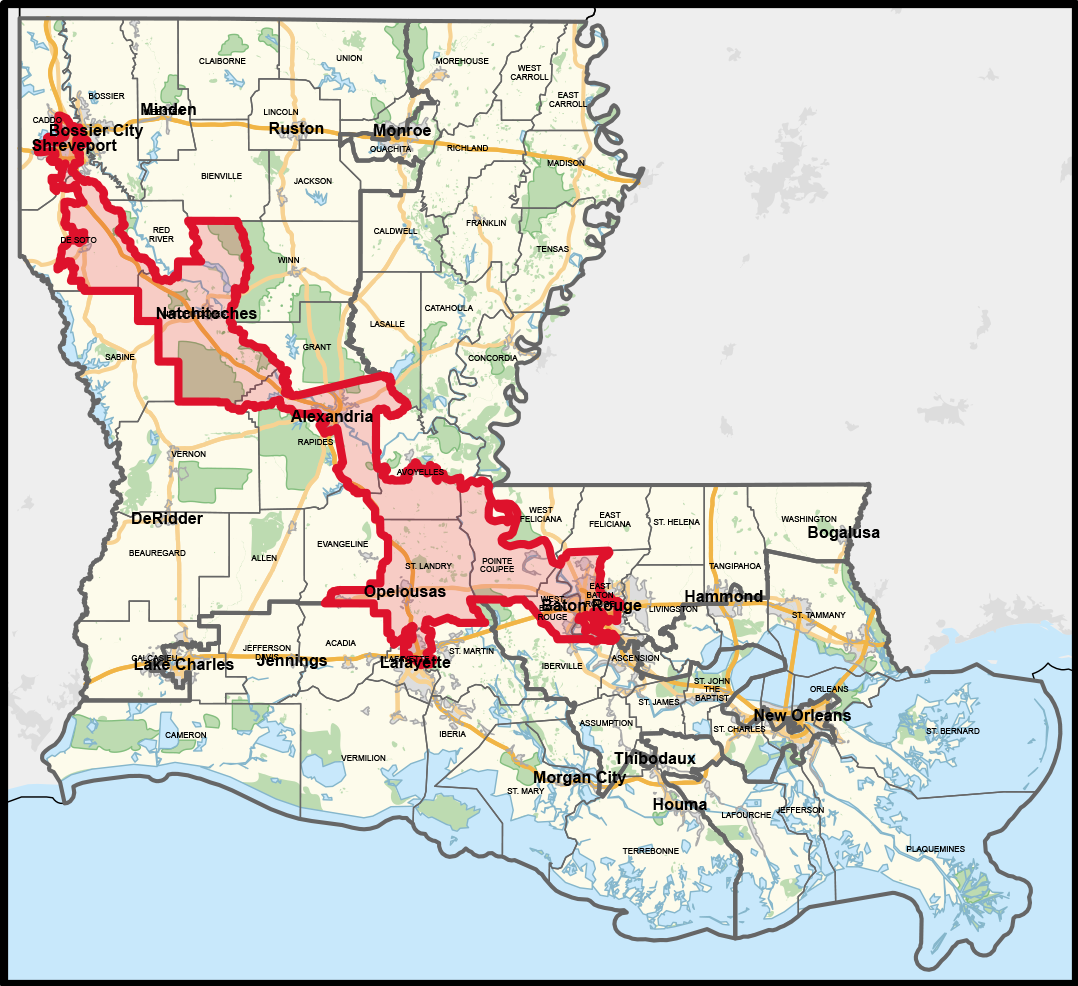
Certain interventions are justified on the grounds of protecting historical communities or ensuring the representation of minorities. In the USA, for example, there is the concept of “majority-minority districts.” These constituencies are deliberately drawn in such a way that a minority is in the majority there. This sometimes results in constituencies with very strange shapes. It is therefore not always obvious what purpose a rule or constituency boundary that deviates from the norm is intended to serve. This is also one of the reasons why the US Supreme Court argues that gerrymandering issues should be answered politically – and not legally.
Is there also potential for abuse in Switzerland's current political system?
Yes, but Swiss democracy has certainly reached a level of maturity that should prevent the worst excesses. A strong civil society and free media are very important in this context. Issues in Switzerland include the very different sizes of constituencies, the debate about certain cantonal electoral systems, which is also being heard in the Federal Court, the sometimes difficult-to-explain effects of list combinations, electoral thresholds and the lack of transparency in campaign financing. Nevertheless, our political system is certainly one of the most exemplary systems today.
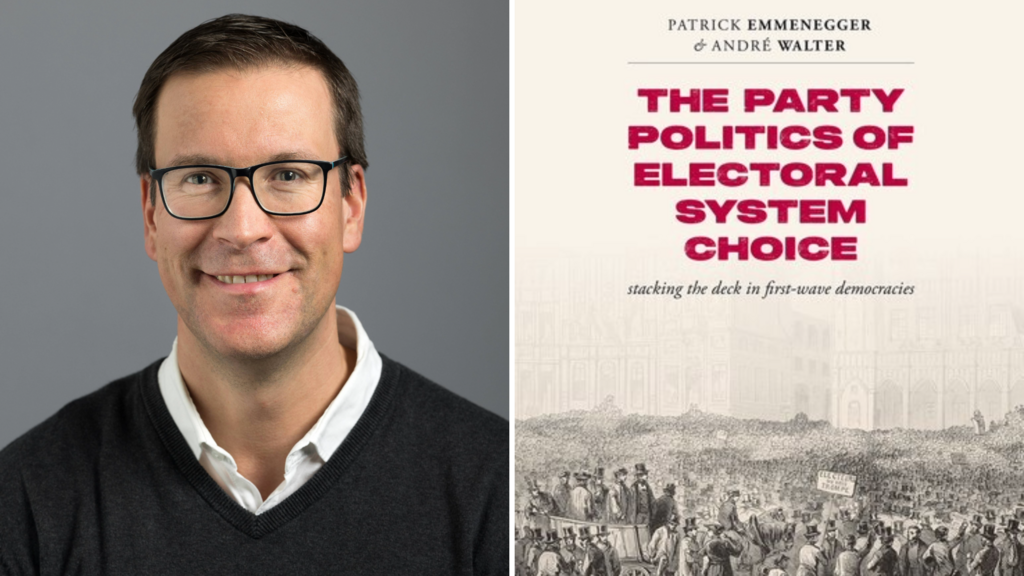
The book ‘The Party Politics of Electoral System Choice: Stacking the Deck in First-Wave Democracies’ can be downloaded free of charge as a PDF. Many thanks to the Swiss National Science Foundation SNF, which has made the publication financially possible as open access.
Map: Twotwofourtysix / Wikimedia
More articles from the same category