Campus - 23.02.2026 - 09:00
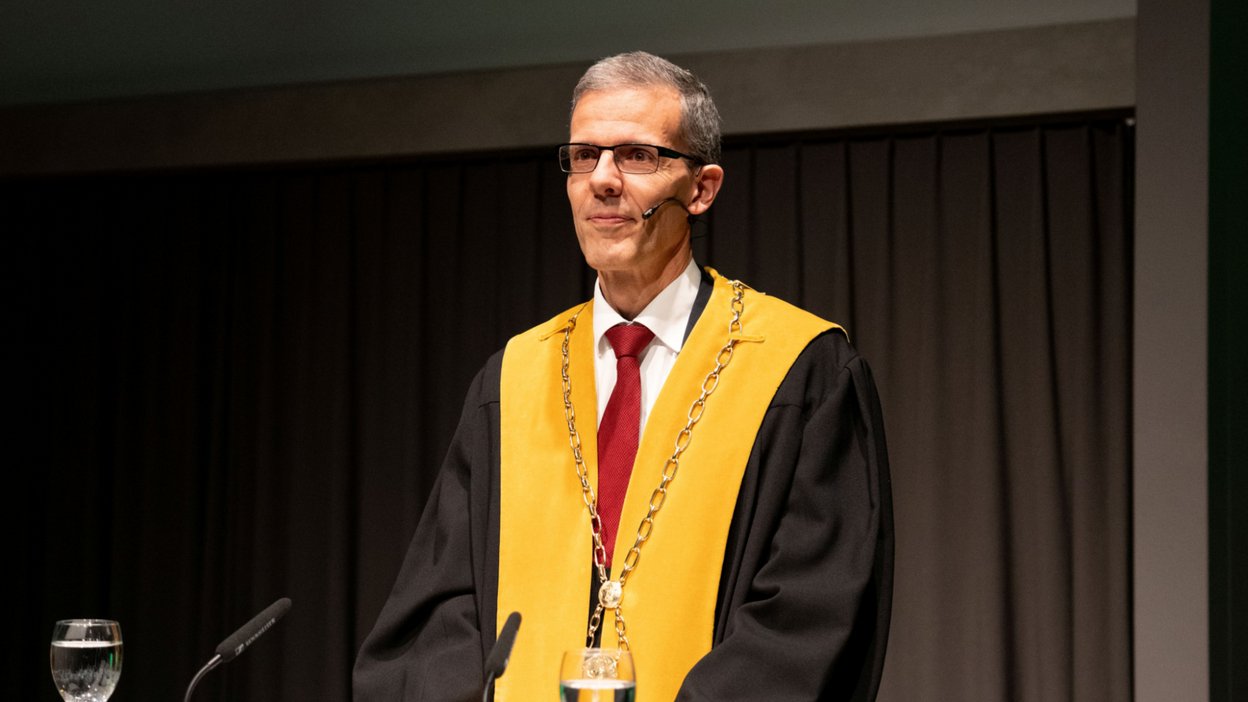
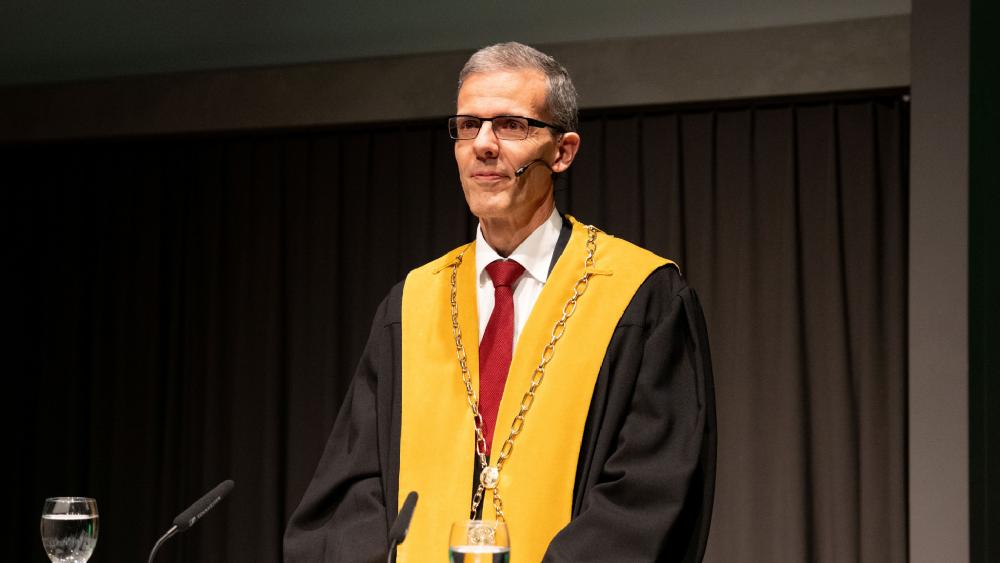
The doctoral students spent three to five years conducting intensive research on a wide variety of topics. These were years in which many things that had long been considered stable appeared fragile. “With your doctorates, you have contributed to the advancement of knowledge at a time when certainties are disappearing faster than new ones are emerging,” said President Manuel Ammann at the beginning of his speech. “You fought your way through and persevered.”
Doctoral degrees were awarded in the following subjects:
The keynote speech focused on a fundamental question: “How do you deal with uncertainty?" On the financial markets, the uncertain future is traded daily – with prices, derivatives and risk insurance. Risk modelling is very useful in financial practice. It enables forecasts to be made. However, according to President Manuel Ammann, models are insufficient at depicting particularly rare and extreme events – so-called “black swans”. Examples include the COVID-19 pandemic and the collapse of Credit Suisse.
The term black swans was coined by Lebanese author Nassim Taleb. In his “A Guide to a World We Don't Understand”, he distinguishes between systems and individuals that suffer from uncertainty and those that benefit from it. He calls the latter “antifragile”.
“Antifragile is not just robust: while robust things or systems withstand stress without changing, antifragile systems grow through challenges. Science belongs to this category. It improves through irritation. It becomes more precise through criticism. It becomes stronger through refutation,” explained Manuel Ammann.
In this sense, education at HSG is a kind of intensive training programme in antifragility, according to Ammann. The “backpack” that the graduates now carry with them contains key resilience factors:
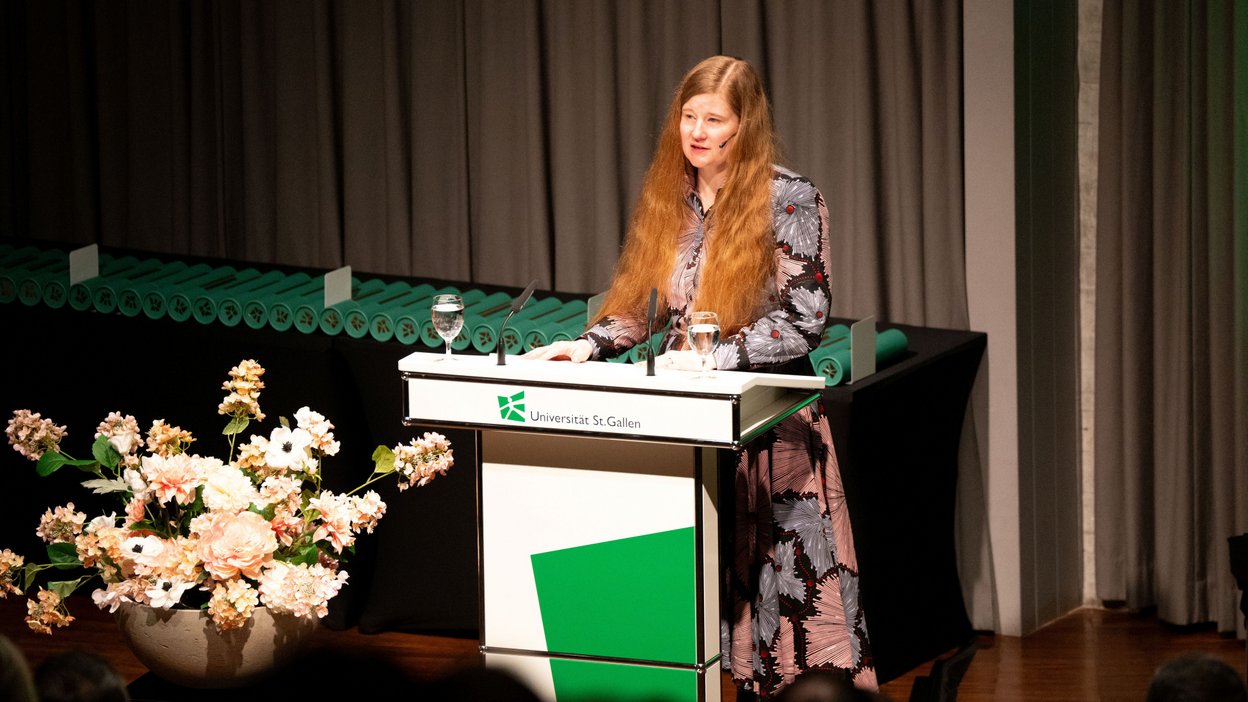
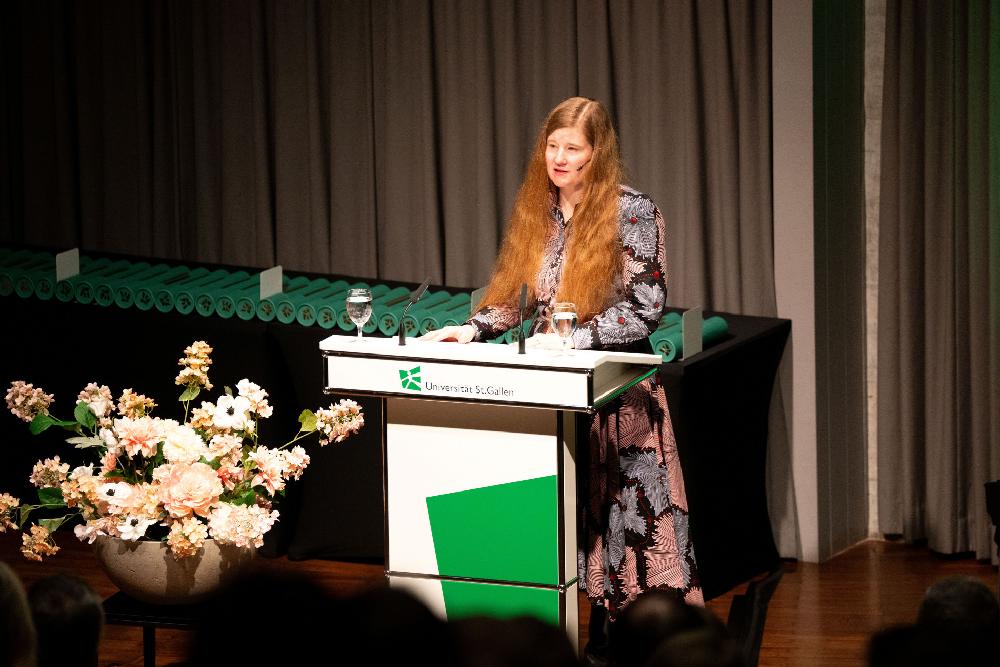
Responsibility was also the topic of the guest speech by Claudia Brühwiler, professor of American Political Thought and Culture, academic director of the St.Gallen Collegium and host of the podcast “Grüezi Amerika. Views from the Sister Republic” at the University of St.Gallen. She opened with a quote from Ian McEwan's novel What We Can Know: “Thinking is always in crisis.”
”It has never been easy to think slowly, abstractly and deeply. Congratulations, dear graduates and doctors, on joining the “thinking class”. Thinking, rethinking and thinking things through again – that was your daily task during your doctorate,” said Claudia Brühwiler.
She also reminded them that, as citizens, the new doctors bear responsibility for the current challenges posed by the ongoing crisis of thinking. First and foremost among these is the crisis of simultaneity: knowledge is available everywhere today – and yet it is worth less than ever before. The flood of information and AI-generated texts makes independent, deep thinking more urgent than ever. She also described a political crisis: “the rise of populist movements represents a revolt – not only against globalisation and its disruptions, but also against those who benefit from it. ‘And that's us,” emphasised Brühwiler. Thinking and discussing are freedoms. “Continue to think – boldly, courageously and empathetically,” she concluded, addressing the doctoral graduates.
Images: Foto Lautenschlager GmbH