Research - 20.02.2026 - 13:55
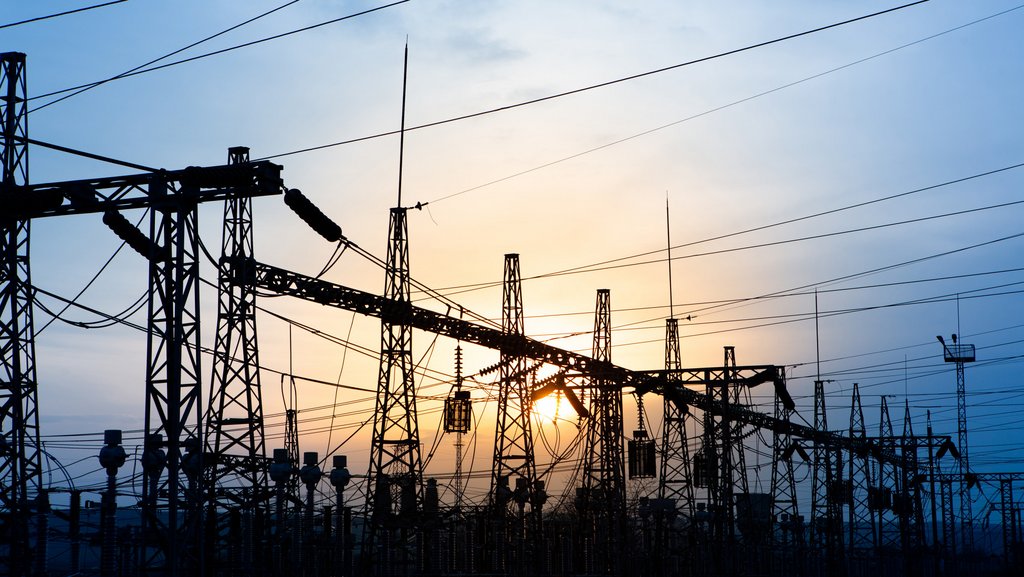
At the network control centers of Swiss electricity grid operator Swissgrid in Aarau and Prilly, there is a constant battle to maintain balance: the frequency in the Swiss electricity grid must be exactly 50 hertz for electronic devices to function properly. To ensure this, electricity production must always be adjusted to actual electricity consumption. However, this balancing act is becoming increasingly complex as electricity production is subject to greater fluctuations due to the increasing use of renewable energy. Ultimately, consumers bear the costs of this via grid fees.
Traditionally, large hydroelectric power plants in Switzerland provided the necessary balancing energy to compensate for fluctuations between production and consumption. But the market is changing. According to Prof. Dr. em. Karl Frauendorfer, former director of the Institute for Operations Research and Computational Finance at the University of St. Gallen (ior/cf-HSG) and former head of a now-completed research project on the subject, new players are increasingly getting involved. “So-called flexibility providers maintain pools of biogas plants, small hydropower plants, battery storage facilities, and even controllable large consumers such as heat pumps. They offer grid operators such as Swissgrid flexible electricity production or consumption to stabilize the power grid.” However, flexibility providers can also trade their electricity on the so-called intraday market. This helps to reduce system imbalances, for example from fluctuating renewable generation, even before balancing energy is required. In the current electricity market design, the intraday market and the market for balancing energy compete with each other, as power can only be offered on one of the two.
The transnational research project DigIPlat, in which ior/cf-HSG was involved and which was co-financed by the Swiss Federal Office of Energy, among others, has now analyzed how these flexibility providers can market their services optimally. The researchers were able to demonstrate that linking the two markets can increase market liquidity. “For a flexibility provider, this potentially leads to higher revenues, while end consumers benefit from lower grid fees,” says Dr. Michael Schürle from ior/cf-HSG. The researchers also examined the PICASSO platform, through which 15 EU countries already exchange cross-border balancing energy. PICASSO allows imbalances between participating countries to be corrected more efficiently, thereby reducing the amount of balancing energy required. Both of these factors ultimately lead to lower costs for end consumers in the EU.
Despite its physical integration into the European electricity grid, Switzerland is currently unable to benefit fully from it, according to Michael Schürle: “As the electricity agreement with the EU is still lacking, volumes on the Swiss intraday market have collapsed without cross-border trading.” In addition, Swissgrid has harmonized its bidding mechanism with PICASSO, but is not operationally connected to the automated exchange via the platform. “Whereas in the past, prices for balancing energy were linked to those on the electricity exchange, they are now formed in Switzerland on a separate market dominated by a few large suppliers with significant pricing power.”
For Michael Schürle, the research results therefore confirm that Switzerland would benefit from an electricity agreement with the EU: "By participating in the cross-border intraday market and in collaborations such as PICASSO, which would be made possible by an electricity agreement with the EU, local flexibility providers would have additional potential to market their services. At the same time, Swiss consumers could expect lower costs for stabilizing the grid." The electricity agreement between Switzerland and the EU is part of the Bilateral III negotiation package and is currently being debated in the Swiss parliament.
More articles from the same category
This could also be of interest to you
Discover our special topics