Research - 17.02.2026 - 11:00
Hello Dr. Andreas Wittmer, the aviation industry is expected to have emitted close to 950 million tonnes of CO2 in 2025. What did your study look into and why is it relevant?
Dr. Andreas Wittmer: This study, called Corporate decisions on sustainable aviation fuel: the cost-sustainability dilemma in business travel wanted to understand carbon emissions and alternatives in the aviation industry. Air travel produces a lot of carbon dioxide (CO₂), which contributes to climate change. We wanted to look specifically at business travel alone because it makes up about 17 % of all commercial aviation emissions. Even though that’s not the majority, it’s important because:
What is SAF? And what effect can it have on emissions and travel?
SAF is a cleaner alternative to regular jet fuel. It can be made from:
SAF can reduce greenhouse gas emissions by up to 80 % over its lifetime compared to normal jet fuel. The international air transport association estimates that Sustainable Aviation Fuel (SAF) could contribute around 65% of the reduction in emissions needed by aviation to reach net zero CO2 emissions by 2050. This will require a massive increase in production in order to meet demand.
So isn’t the change to SAF a simple one?
No, unfortunately. There’s a catch. SAF is much more expensive and currently is not available everywhere it is needed.
So then what did your study look into?
We surveyed sustainability managers, those responsible for helping their companies reduce emissions. And we gave them different SAF options. Each option varied by:
The survey asked questions focused on both short flights (like Zurich to Geneva) and long flights (like Zurich to New York).
What did you find?
Simply put, price is a big factor, and for long-haul flights it was clearly the most important factor. And we recognise that by surveying sustainability managers—those who care deeply about climate change—that they were very sensitive to cost. If the SAF surcharge was too high, they opted for the less expensive option.
Another interesting finding was that companies preferred options that utilised higher amounts of SAF demonstrating that companies want meaningful climate impact—not just small changes.
Was there a difference between short and long flights?
Yes, clearly. On short flights, companies were more willing to pay for high SAF percentages. However, on long flights, price became a bigger barrier and very expensive SAF options were rejected. This shows us two things. One, that there is real interest in SAF and lower CO2 emissions from companies, but perhaps not surprisingly, cost is the biggest obstacle.
Do you believe that SAF adoption is possible?
Yes, but to increase its utilisation:
Companies want to reduce emissions from business travel, but they must balance sustainability with financial responsibility. It seems that SAF could play a major role in reducing aviation emissions, but only if economic and policy conditions make it realistic for companies to adopt it at scale.
The study, Corporate decisions on sustainable aviation fuel: the cost-sustainability dilemma in business travel was authored by Dr. Andreas Wittmer, Managing Director of the Center for Aviation and Space and director at the Institute for Systemic Management and Public Governance at the University of St.Gallen, and Dr. Adrian Müller, Tourism Research Unit, Center for Regional Economic Development at the University of Bern.
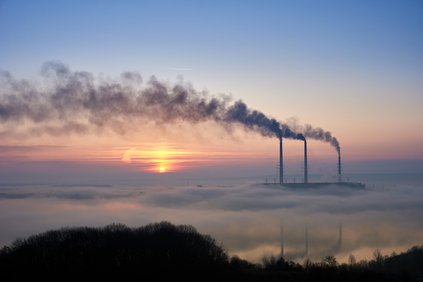
Image: Adobe Stock / Anton Gvozdikov
More articles from the same category
This could also be of interest to you
Discover our special topics