Opinions - 04.03.2026 - 12:00
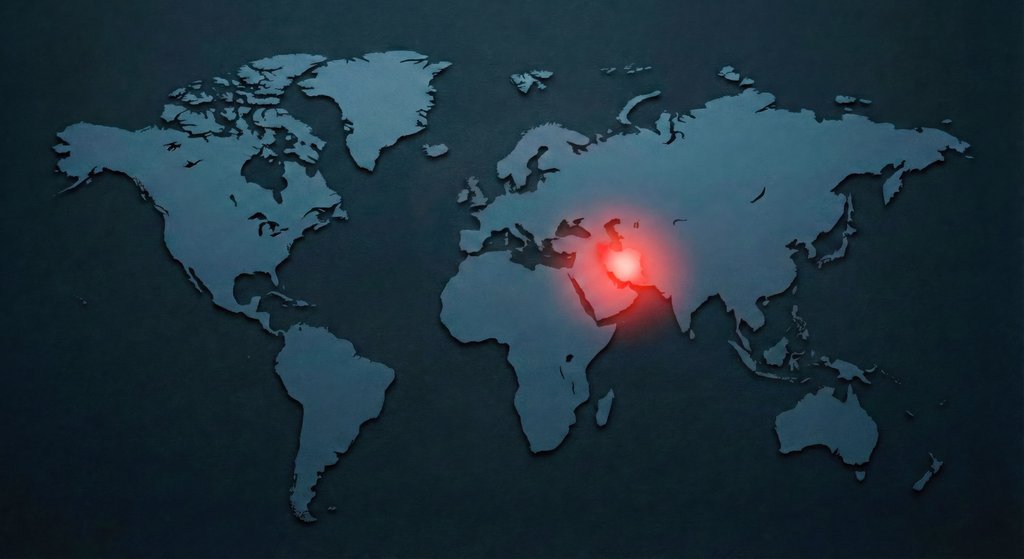
One of the most visible early effects of the conflict has been a rise in energy prices. Economist Stefan Legge observed this dynamic firsthand in St.Gallen, noting a tangible uptick at the pump. "If you expect a product to become more expensive tomorrow, you will try to buy it today. And that is exactly what we are seeing," Regional gas stations reportedly saw a 30–40% increase in sales compared to an average Sunday — a textbook example of expectation-driven demand. "Currently, the price reflects the possibility that this situation could worsen significantly. If it now becomes apparent that the situation in the Middle East is not developing so negatively after all, then the price will fall again."
Reto Föllmi, professor of international economics, similarly anticipates upward pressure on crude oil prices and a flight toward safe-haven currencies such as the Swiss franc. However, he also notes that, "Switzerland is less dependent on oil today than it was during the Iraq War in 2003. Back then, oil accounted for around 70 per cent of total energy consumption and today, it is just under 50 per cent." This structural shift means the Swiss economy is better equipped to absorb geopolitical energy shocks than it was two decades ago.
While much commentary has centred on immediate market reactions — oil, gold, and defence stocks — macroeconomist Guido Cozzi argues that long term consequences could be on their way. He stated, “Major geopolitical shocks do not just move prices; they redirect innovation. History is instructive. The oil shocks of the 1970s did not only generate inflation, they accelerated investment in energy efficiency, nuclear power and alternative energy research."
This longer view invites policymakers and businesses alike to look beyond short-term hedging and consider how the current crisis might reshape investment priorities, industrial strategy, and the trajectory of the energy transition.
The conflict also has significant implications for the Russia–Iran relationship — and by extension, for the war in Ukraine. Russia expert Ulrich Schmid assessed the death of Iran's supreme leader Khamenei as a strategic setback for the Kremlin. "Since the beginning of the war in Ukraine, Iran has been an important military supplier, especially of Shahed drones," he noted, adding that "Iran was an important but also problematic partner for Moscow." Beyond the immediate military dimension, Schmid points to a reputational consequence: Russia's inability to protect or support its partner undermines Putin's broader claim to serve as a guarantor for authoritarian regimes worldwide.
From a strategic and political standpoint, the US military strike against Iran carries substantial risks, according to Middle East expert Andreas Böhm. Böhm argues that "Trump is taking a big risk with this military strike against Iran." He pointed to a core domestic vulnerability: "If there's one thing that doesn't go down well in the US, it's images of coffins of fallen GIs."
Böhm also warned that Iran would seek to draw out any conflict, willing to absorb significant sacrifices in doing so. Perhaps most critically, he identified an absence of strategic clarity on the US side. "There is no endgame, no final goal that would allow them to declare victory." Without a defined victory condition, the US risks becoming entangled in a prolonged and costly engagement with no clear exit.
In the podcast “Grüezi Amerika” from Claudia Brühwiler, American Political Scientist James W. Davis explained that when the USA is willing to engage, “they are able to do so in a way that allows them to act almost with impunity through technological prowess and domination.
He continued, saying that,” Europe is sort of on the sidelines of something that's happening very close to its own borders. Europe has both political, economic, international legal reservations about what the United States is up to. It further destabilizes a region that is important for Europe because of energy supplies and further destabilizes a region that has been the source of large groups of refugees that are destabilizing European countries from within. I understand why Europe is sort of hesitant to get involved in this. That said, it is your backyard. Europe cannot be indifferent to what happens."
The ripple effects of the conflict reach even the civilian aviation sector. Andreas Wittmer, HSG's aviation expert, highlighted the logistical strain now facing airlines routing passengers through Middle Eastern hubs. "It is hardly possible to transport the entire demand for Asia that was booked via the Middle East hubs elsewhere on short notice," he explained, raising the additional question of "how long the hubs in the Middle East will have to operate at reduced capacity."
For travellers, the practical consequences are already tangible. A routine flight between Switzerland and Dubai, for instance, would now need to be rerouted — adding approximately 90 minutes to the journey. Multiplied across thousands of daily flights, such disruptions represent a significant challenge for airlines balancing passenger expectations, operational costs, and safety considerations.
Image: Adobe Stock / Lilith_Saly
More articles from the same category
Discover our special topics