Campus - 27.03.2026 - 11:50
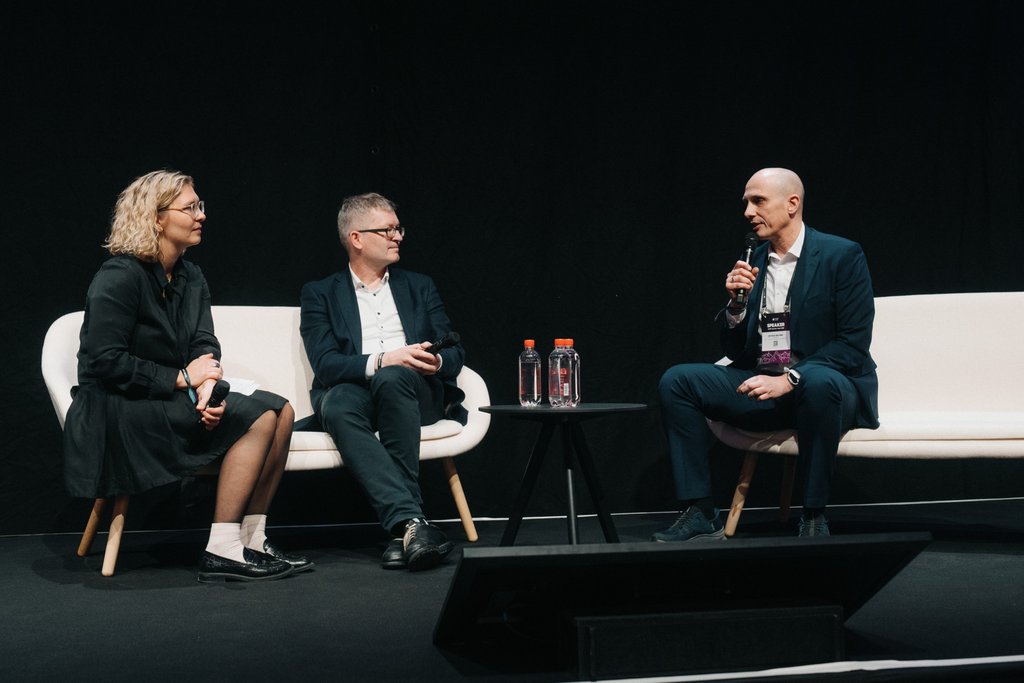
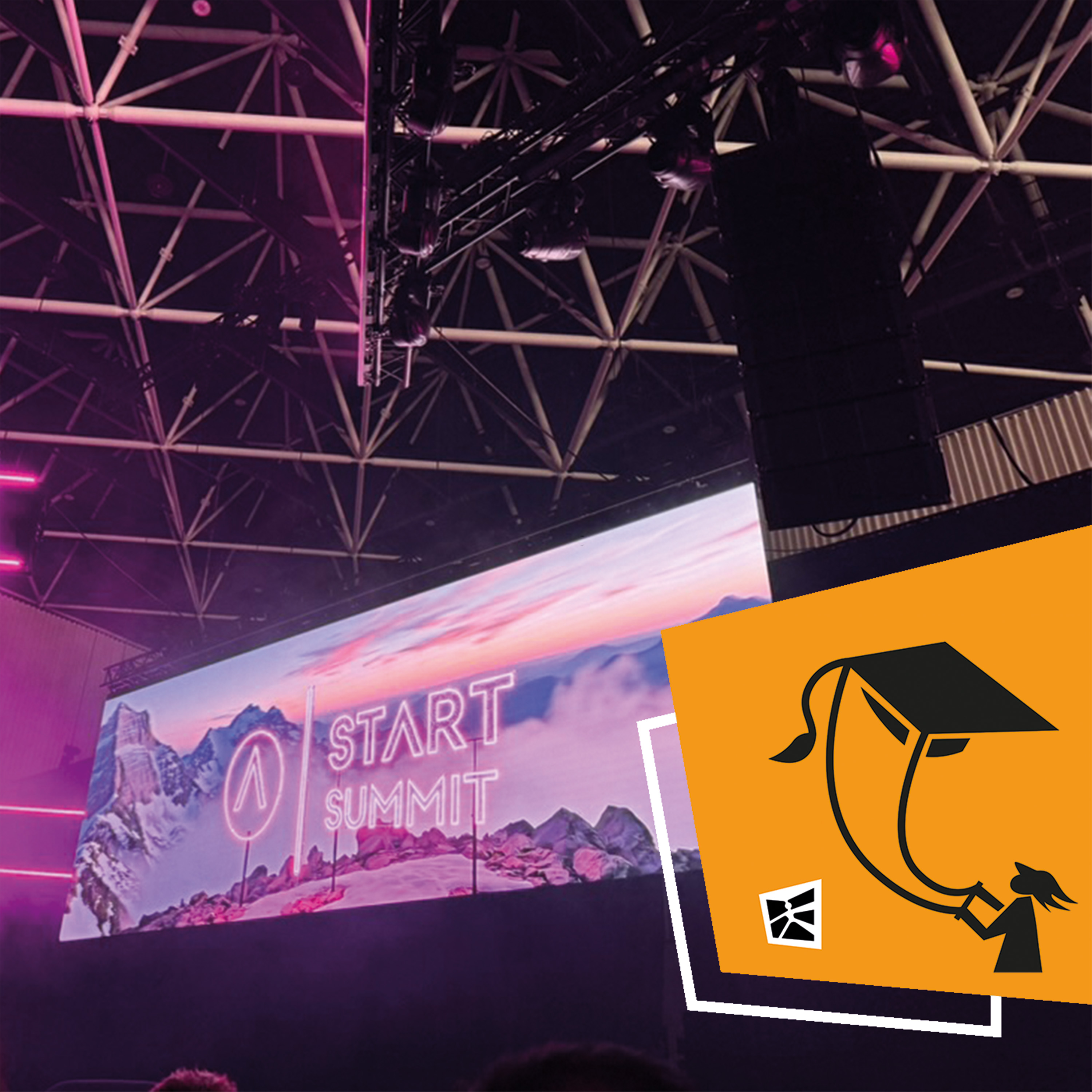
If you had to summarise the START Summit 2026 in three points: What does the conference say about the state of the European start-up scene
Firstly: The entrepreneurial spirit in Europe is alive and diverse – in particular, awareness of sustainable and socially relevant innovations has grown significantly. Secondly: The talent is there, but the financing and scaling phase remains a challenge. Thirdly: The increasing exchange between academia, established industry and start-ups shows that the European innovation landscape is maturing.
What surprised you most this year?
I was surprised by how extensively artificial intelligence is now being used as a tool for impact innovation: be it in the circular economy, in education or in healthcare. Some start-ups no longer view AI merely as a technology project, but as a lever for social transformation.
Many founders say that securing early-stage funding has become more difficult. Have you noticed this trend too?
Yes, definitely. Risk appetite has cooled following the boom years; many investors are paying closer attention to capital efficiency and clear business models. But there is also a positive side to this: teams that are holding their own now often have greater substance and a longer-term perspective.
More and more capital is flowing into deep tech rather than consumer start-ups. Is this a strategic strength for Europe?
Absolutely. Deep tech is in Europe’s DNA – we have strong research institutions, a tradition of engineering and excellent talent. The key now is to combine this scientific excellence with entrepreneurial speed. If we succeed in doing so, Europe can become a leader in fields such as AI, quantum or climate technology.
Are universities today the most important driver for new start-ups in Europe?
They are a key driver, perhaps not the only one, but an indispensable one. Universities not only produce technology, but increasingly also entrepreneurial talent, interdisciplinary networks and a culture of experimentation. In our collaboration with partners such as ETH or TUM, we see how academic ideas give rise to marketable innovations.
Europe produces many start-ups, but few global tech giants. What is missing most: capital, talent or courage?
All three elements play a role, but I would say: it is above all courage – the courage to scale up. In Europe, we tend to start with perfection rather than a quick market test. More confidence in uncertainty, more ‘trial and error’ and a stronger growth mindset would help us produce global champions.
Is a new innovation cluster actually emerging in the Alpine region? And how can it compete with tech hubs like Shanghai or Silicon Valley?
Yes, I can see that clearly. Universities, investors and companies are increasingly networking systematically between Geneva, Zurich, St Gallen and Munich – we are ‘running the engine rooms’, as Helmut Schönenberger aptly put it. If the Alpine region reaches its critical mass and pools its strengths, a European ‘Tech Valley’ could emerge here. Collaboration across national borders and institutional silos is crucial.
What drives the new generation of founders in 2026?
They are more pragmatic, values-driven and global than previous generations. Many want not just to build a unicorn, but to create a ‘meaningful business’ – a company that makes a real difference. Their thinking is international from the outset, yet at the same time very conscious of social responsibility.
Was there a start-up at the summit where you thought: This could become a future European tech champion?
Yes, there were several exciting candidates – I was particularly impressed by a team working on sustainable materials, which combines a clear scientific foundation with a scalable business model. Start-ups like this demonstrate how scientific entrepreneurship can work in Europe.
If we meet again in 2030: how will we know whether Europe’s start-up strategy has worked?
By the fact that we no longer talk about ‘European champions’, but about global companies that naturally come from Europe. Success means that knowledge, capital and talent come together in a self-reinforcing cycle. And that innovation not only emerges here, but also grows and remains.
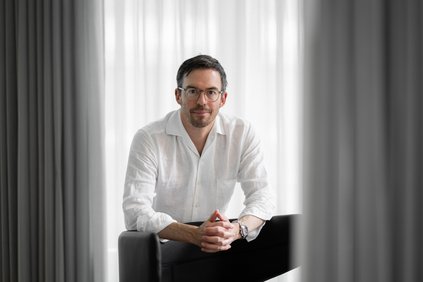
Prof. Dr Dietmar Grichnik is Vice-Rector for Innovation and Quality, a member of the Rectorate, Full Professor of Entrepreneurship and Director of the Institute for Technology Management at the University of St.Gallen (HSG). HSG Entrepreneurship builds a bridge for knowledge transfer to bring value-creating companies to life.
More articles from the same category
This could also be of interest to you
Discover our special topics