Campus - 14.01.2026 - 10:00
'Coaching is crucial today – especially in view of AI and new uncertainties. Students must be specifically prepared for the challenges ahead.' With this statement, HSG president Manuel Ammann summed up at SQUARE what this 8 January 2026 was all about: the future of the University of St.Gallen's coaching programme – and the question of what role personal support plays in a rapidly changing educational landscape.
For 25 years, the HSG coaching programme has been supporting students in their personal development. Around 1,500 students have been supported by approximately 150 coaches to date. These include professional coaches as well as HSG alumni with many years of practical experience.
The programme focuses on self-reflection, taking responsibility, social skills and orientation in transitional phases. Students learn about their personal strengths and how to use them effectively, or they work specifically on their weaknesses. The programme is currently on hold, but is set to be relaunched and may reach more students in the future.
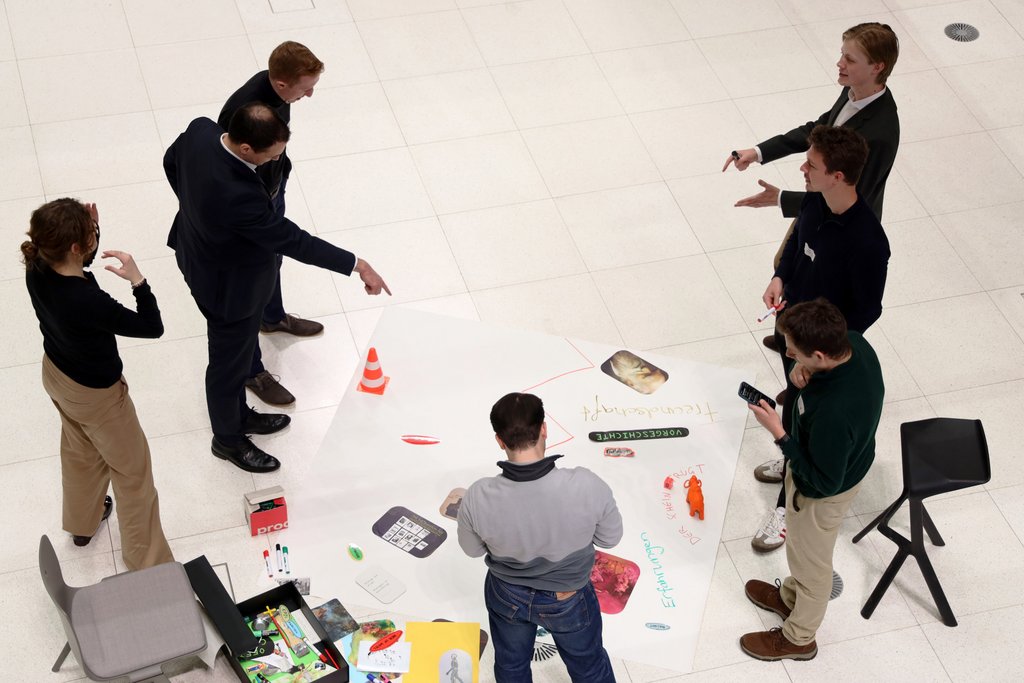
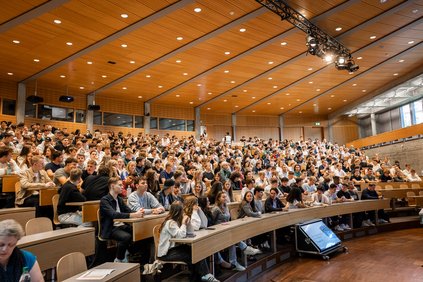
The anniversary was not only a celebration, but also an intensive joint brainstorming session: The approximately 130 participants – including coaches and former programme participants – worked out ideas for how the coaching programme could be further developed in twelve workshops. After the workshops, the participants met, reported to each other on their discussions – and, in the process, continued to build Melser's art installation with materials provided by the artist.
The upheaval was already visible upon entering SQUARE: booming, muffled, repetitive sounds could be heard – real recordings of earthquakes translated into acoustic signals. They were part of an installation by artist Sam Melser, which combined a wild colour painting with rocks and barrier tape. 'The coaching programme is undergoing radical change – as is the entire educational landscape with AI, digitalisation and changing learning habits,' said Julia Nentwich, HSG Adjunct Professor and head of the coaching programme.
In his keynote speech at the anniversary celebration, HSG new work researcher Hans Rusinek spoke of an 'earthquake in knowledge work'. Management, analysis and coordination tasks in particular are coming under pressure from AI, while at the same time work is facing a crisis of meaning and legitimacy. 'But crises are emergency exits from stagnant understanding,' said Rusinek. Coaching can help to shape transitions and imagine new possibilities.
In his keynote speech, HSG alumnus and Edtech founder Niels Rot fundamentally questioned the university: 'Would you study again today? And how would you organise today's universities if you could start from scratch?'
Despite all the upheavals, however, Rot relativised that there is still no real alternative to university. His plea: universities must develop into companions and advisors for lifelong learning.
Julia Nentwich then spoke about social developments that also affect universities: digital distance from the university and growing complexity are fundamentally changing what it means to study. Her conclusion: 'Away from learning through control and towards relationship-based learning – this may be less perfect, but it is meaningful and motivating.'
More articles from the same category
Discover our special topics