Campus - 30.03.2026 - 07:00
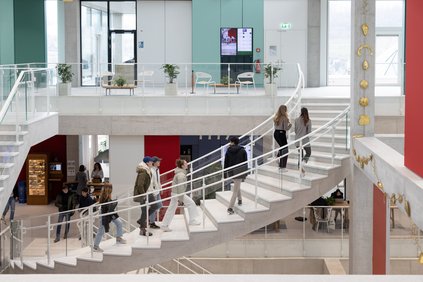
How can democracy be understood – and defended – in the digital age? Students and lecturers from the University of St. Gallen (HSG) explored this question in a series of workshops for pupils at the Kantonsschule am Brühl. The focus of the event held at HSG on 26 March was a topical issue: dealing with fake news.
The workshop series was designed at the school’s request, which dedicated a day to the topic of ‘Democracy and Fake News’. “The workshops were designed to be as interactive as possible and to give both teachers and pupils a practical understanding of the topics,” says Gulnaz Partschefeld, Head of the HSG Events Office, who put together the workshop programme at HSG. Alongside the HSG, other institutions in St. Gallen took part in the initiative, including the OST University of Applied Sciences, the University of Teacher Education and the arthouse cinema Kinok.
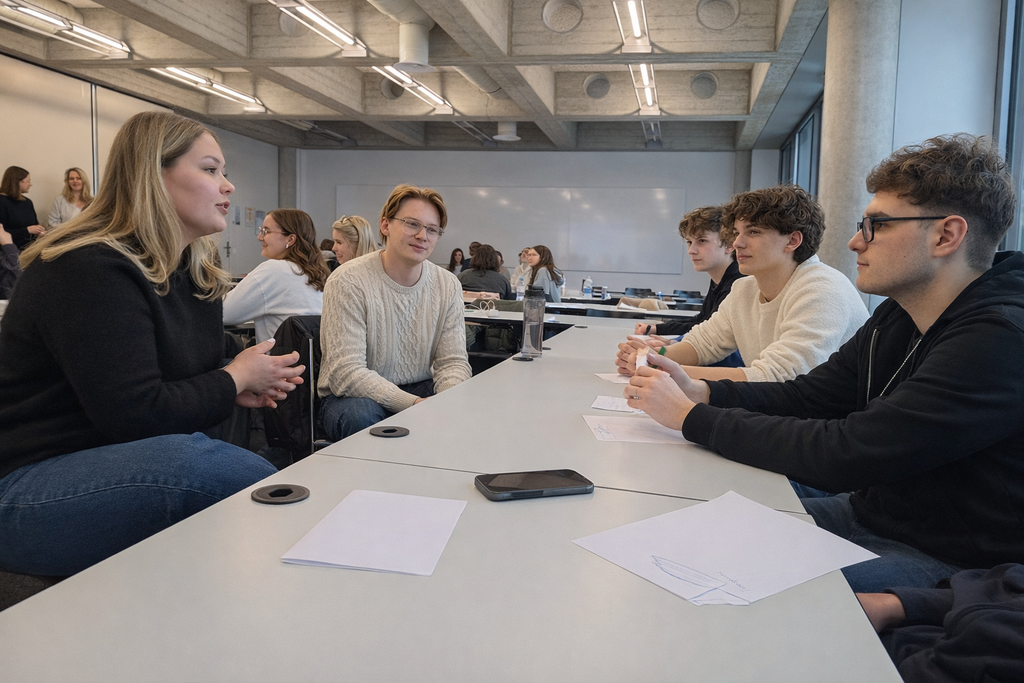
In terms of content, the workshops deliberately focused on different perspectives. These ranged from fundamental questions of democratic theory to current challenges in the digital information landscape. In the workshop ‘Democratic Curiosity’, for example, HSG philosophy professor Christine Abbt discussed with students why curiosity is a central prerequisite for social participation and thus for democracy.
Following an introduction by Abbt, the pupils discussed various questions in groups – for example, how democratic curiosity can be strengthened in a digitalised society. The discussions were moderated by HSG students. They did so as part of the HSG course ‘The Challenge of Democracy’, which they are taking with Abbt in the spring semester of 2026.
Other sessions focused more heavily on the analysis of knowledge and media. The workshop ‘That’s scientifically proven… isn’t it?’ led by Carina Gröner, Head of the HSG Writing Lab, raised awareness of scientific standards and demonstrated how well-founded findings can be distinguished from orchestrated disinformation. Meanwhile, HSG political scientists Klaus Dingwerth and Amber Zenklusen explored fundamental questions in political science regarding fake news – such as why fake news exists in the first place and how it influences democracy.
The workshop ‘Truth vs. Hype’ led by Gulnaz Partschefeld and Jacqueline-Gassr Beck, meanwhile, focused on current media dynamics: How does fake news emerge in the digital space? What role do artificial intelligence, narratives and visual staging play? And how can mechanisms of manipulation be identified?
Partschefeld noted that the tension between democracy and fake news highlights just how crucial the ability to critically evaluate information is. The aim is not only to raise awareness of the issues, but also to provide concrete tools: “Pupils should learn to understand democratic discourse and to navigate it as informed participants.”
More articles from the same category
Discover our special topics